


01
Emirati high-speed rail, year one
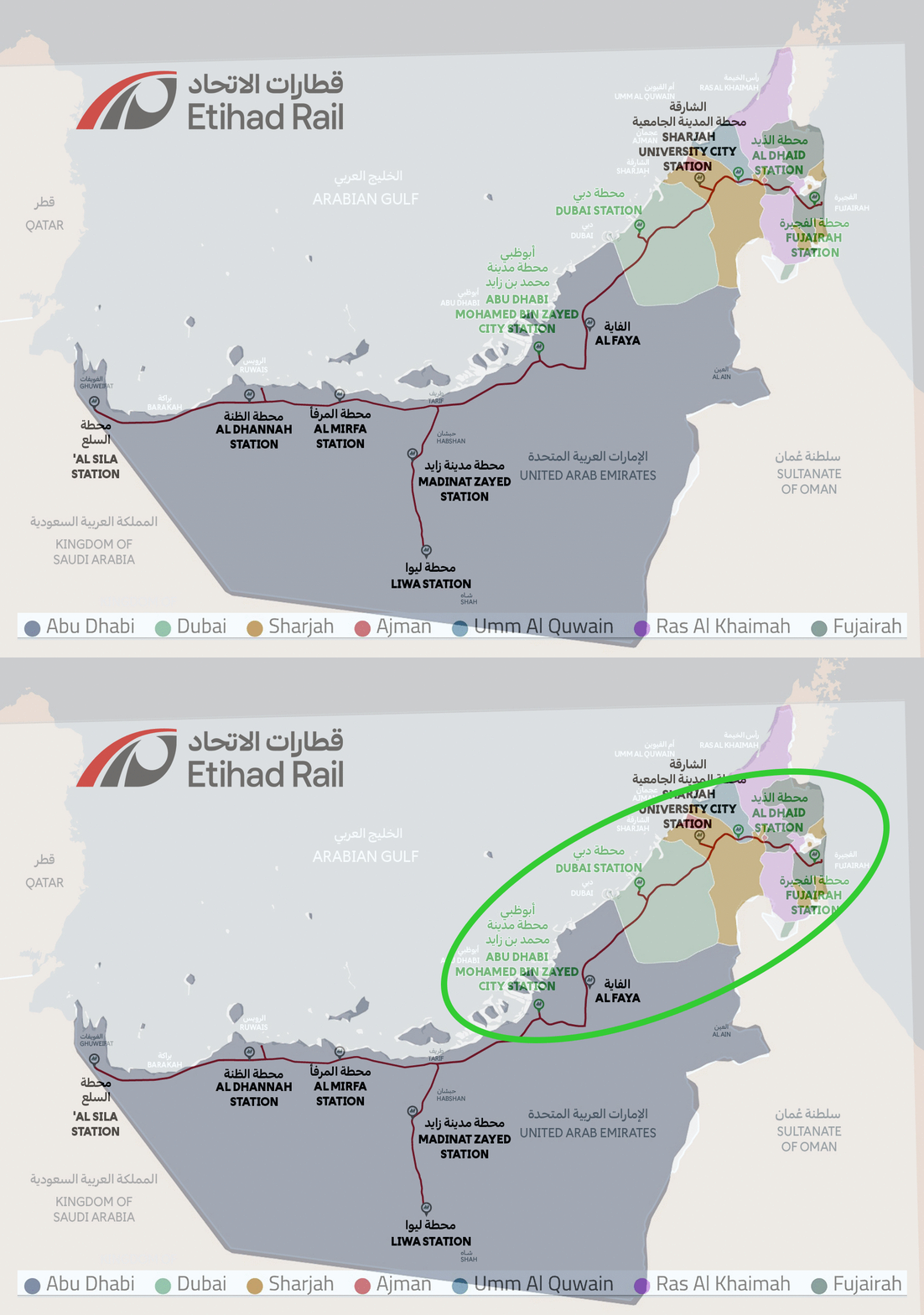
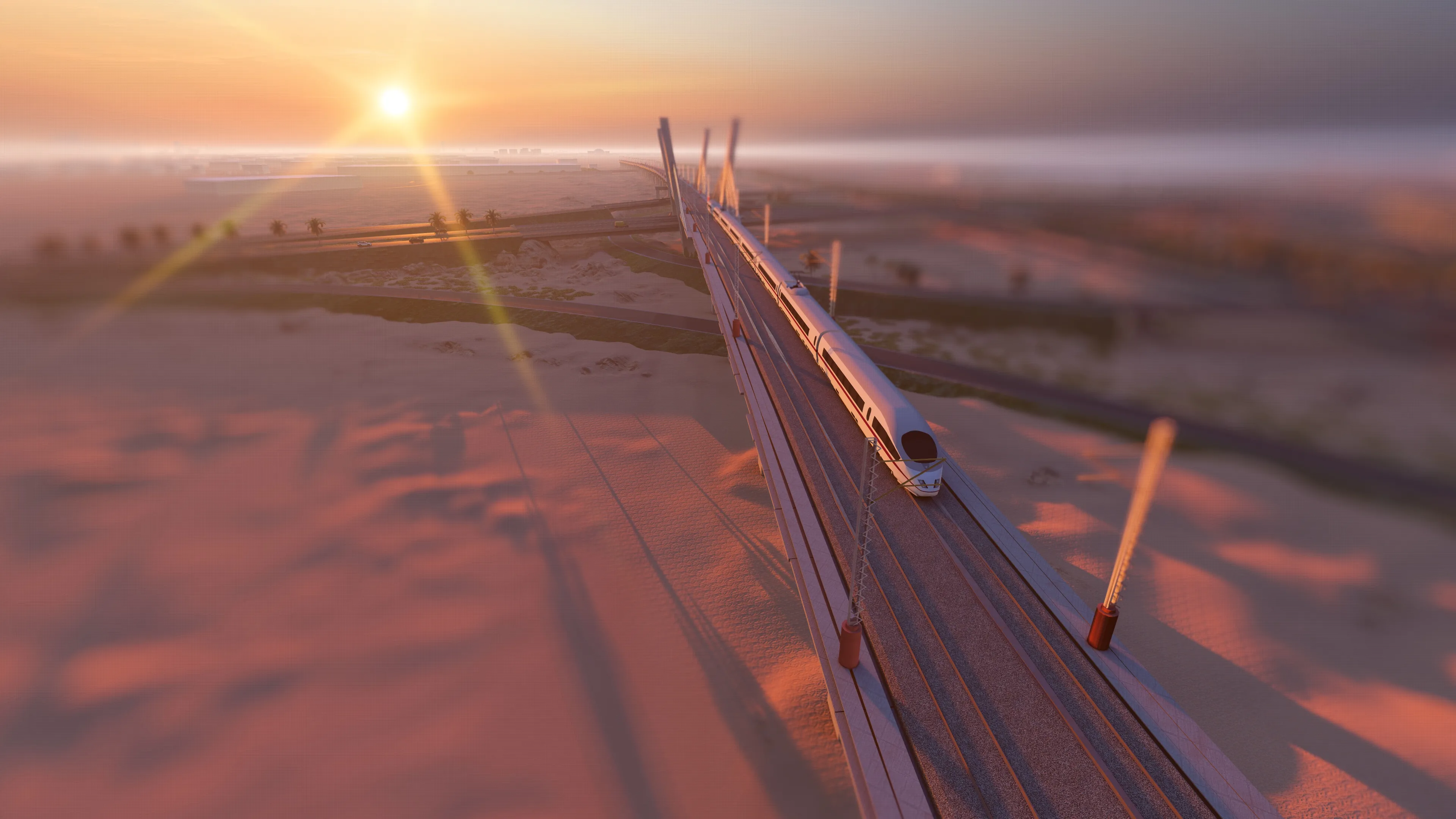
A healthcare worker from Fujairah became the first passenger on the United Arab Emirates' inaugural high-speed rail service, this past June 30, 2026. In less than two hours, he travelled the 258 km separating the stations of Al Hilal, in Fujairah, and Mohamed bin Zayed, in the capital, Abu Dhabi. Shortly afterwards, in September, services began calling at new stations in Sharjah to the north and at the eagerly anticipated Dubai stop, linking the country's two largest cities, and the heart of its economy and urban life, by rail for the first time.
Thus began what the operator of the line, Etihad Rail ('unity' in Arabic), has described as 'a new chapter in the mobility of the United Arab Emirates', the first passenger railway in its history. It is a major 900 km rail corridor from which more stations will gradually open to connect 11 cities across the country at high speed (200 km/h), from the large metropolises and coastal industrial cities to the quieter northern emirates and the oases of the inland desert regions.
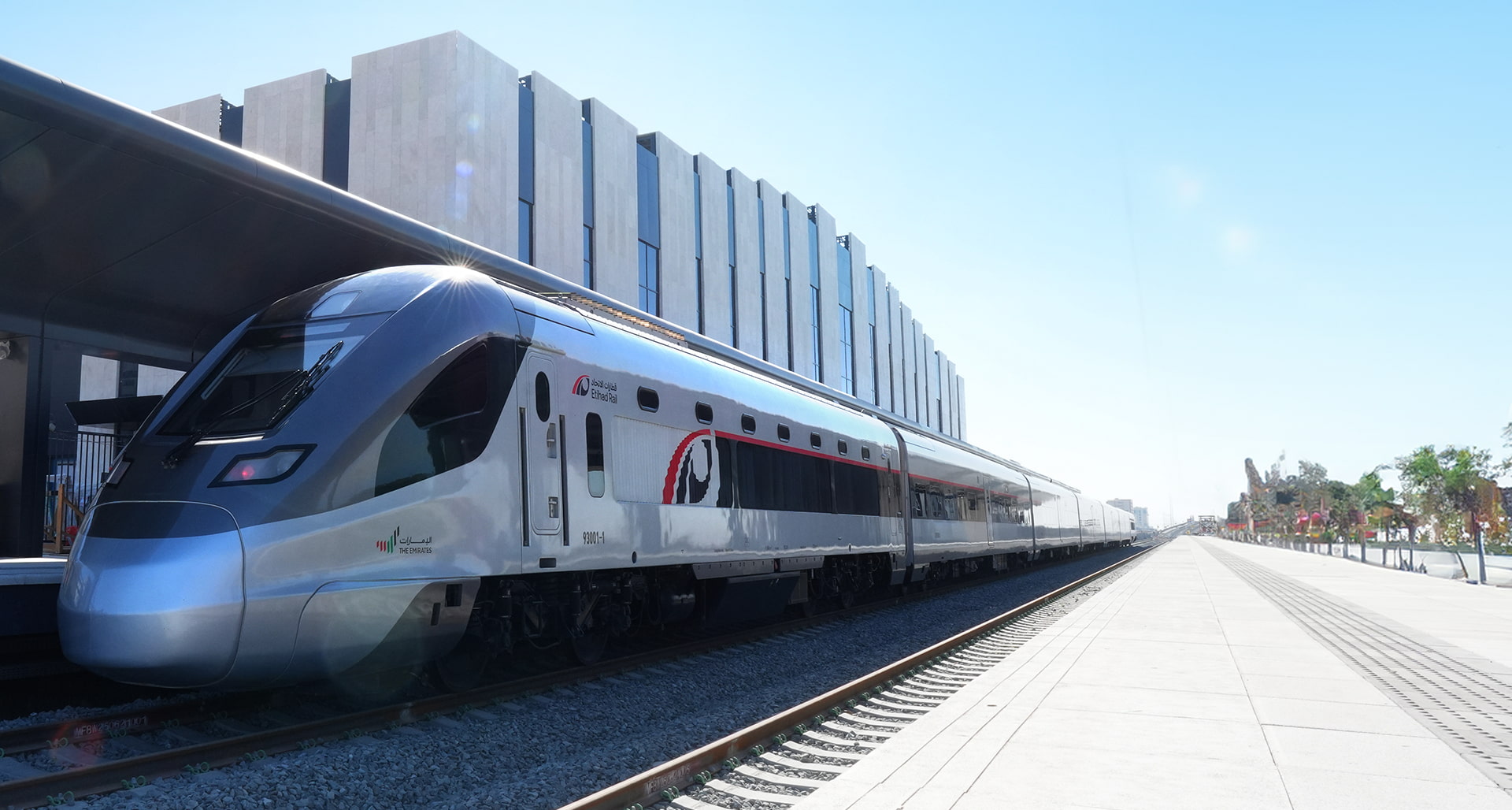
The fleet of trains is manufactured by the Spanish firm CAF (13 trains) and the Chinese firm CRRC. Each train can carry around 400 passengers, and they are specially designed to operate in desert environments and under high temperatures. Photo: Etihad Rail
Over the coming years, the network will continue to expand. Ineco has contributed to the preliminary design of key future sections that will be added to those already in service: a new dedicated 350 km/h link between Abu Dhabi and Dubai, scheduled to open from 2030, and a future extension from the capital to the oasis city of Al Ain, the country's fourth-largest city, located around 150 kilometres to the east.
"High-speed rail is an infrastructure investment with a long-term economic impact. (...) boosting productivity growth, labour mobility and regional development. Etihad Rail.
Since 2022, Ineco has been part of the consortium responsible for preparing the preliminary design of both sections, alongside Sener and Renfe, acting as a subcontractor. This preliminary design stage is crucial, preceding the drafting of the detailed construction projects and the tendering of works. It is at this point that the overall solution is defined, providing the project's broader blueprint and establishing the main characteristics of its key elements, including the general alignment of the railway corridor, the configuration of the line, and the relationships between its various components, such as track, stations, power supply systems and control facilities.
Within the consortium, Ineco's specific responsibilities included a number of key activities, such as preparing the initial passenger demand study, which, for example, determines platform and station sizing as well as train service frequency; producing the preliminary designs for eight of the main stations; carrying out geotechnical and geological investigations of the terrain; designing tunnels; and defining infrastructure protection systems to meet the challenges of a desert environment, including adequate drainage for flash flooding and measures to mitigate sand accumulation. Ineco also assessed the energy and railway telecommunications requirements for the entire line and planned the reinstatement of the roads intersected by the railway alignment once construction had been completed.
Seven emirates, one country
With Etihad Rail, the UAE marks a new milestone in its history, which began in 1971–72 when seven historic emirates united into a federation shortly after the discovery of oil beneath their soil: Abu Dhabi and Dubai, the largest and most internationally renowned, and the northern emirates: Sharjah, third in size and boasting prominent academic and cultural activity; Fujairah, the only one with a coastline on the Gulf of Oman and a strategic industrial port, and the three smallest, Ras Al Khaimah, Ajman and Umm Al Quwain. Together they have a population of 11.7 million, according to the United Nations.
Just 50 years after their foundation, they have transformed into a modern, urban and technological nation that has achieved feats such as sending a space probe to Mars and constructing the tallest building in the world (the famous Burj Khalifa). With an economy growing at over 5% annually, the UAE promotes itself internationally as a global business hub and luxury tourist destination. At the same time, it preserves its history and traditions, linked to nomadic life in the desert and activities such as fishing or pearl diving which are showcased on the ground or in museums across the country to international visitors, who numbered over 23 million in 2025, according to official sources.
Today, the country is steadily advancing towards a more diversified economy, with the expansion of its rail network, first through freight services since 2023 and now with passenger operations, helping to boost key sectors such as tourism, which already contributes 13% of GDP, alongside business and logistics. Etihad Rail is a project of vast economic and geopolitical scope, and will connect the Emirates with its neighbours Oman (via the joint Hafeet Rail project) and Saudi Arabia, connecting with the future Gulf Railway.
02
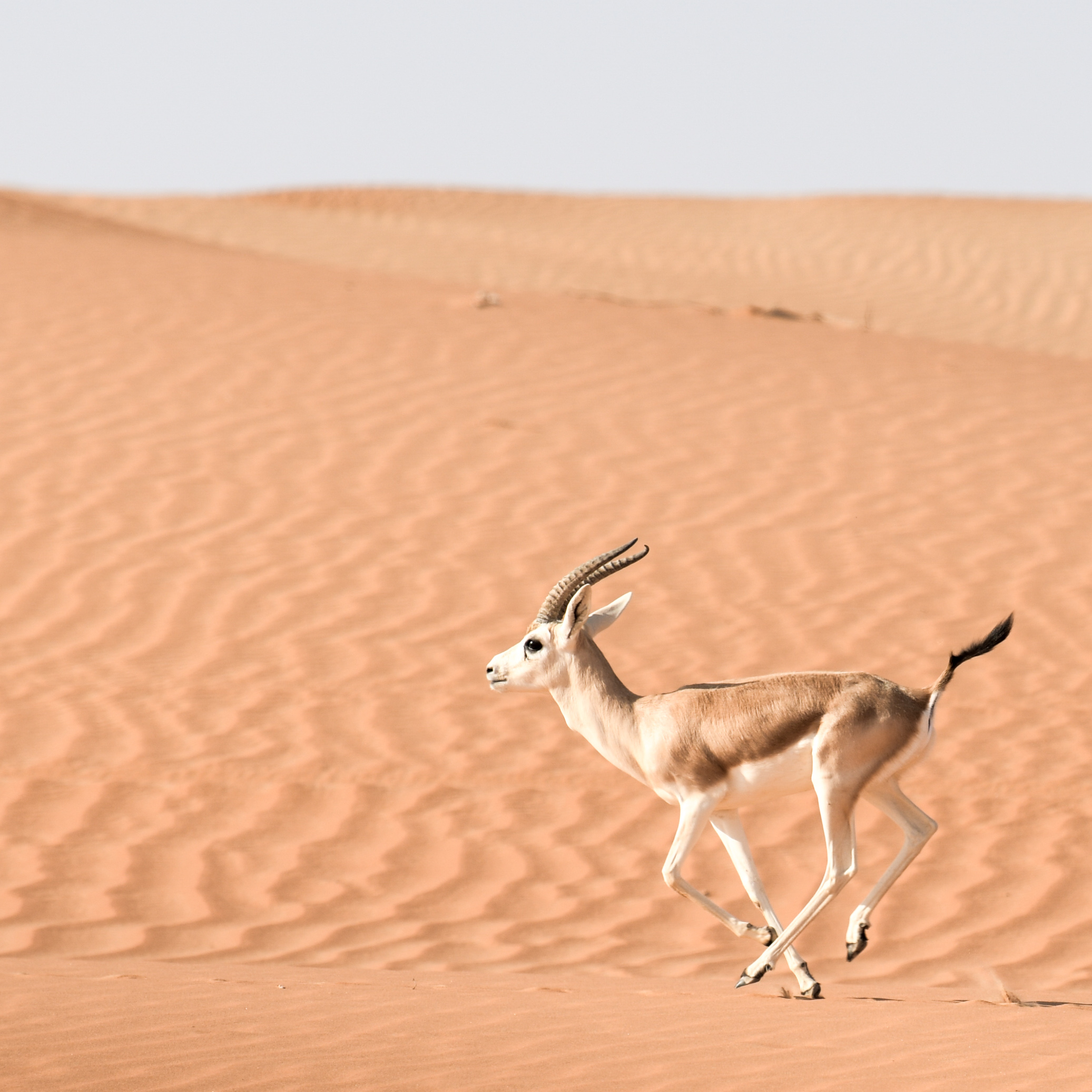
From the land of gazelles to the City of Gold
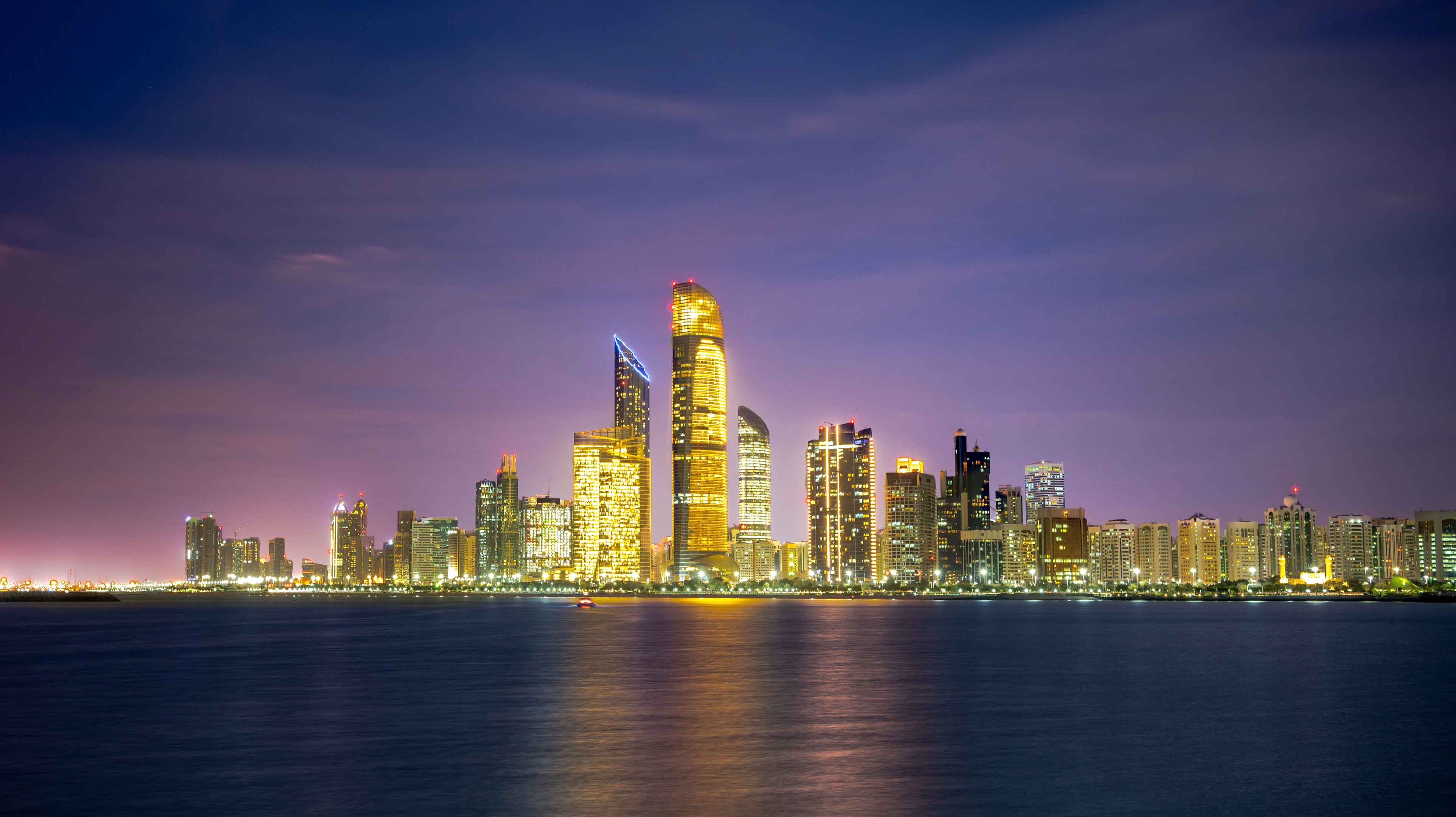
View of the city of Abu Dhabi, with the Corniche waterfront in the foreground. Photo: Abu Dhabi Tourism
The central section of the new railway corridor, inaugurated in September 2026, already connects Abu Dhabi and Dubai, the country’s economic and population hub, in just under an hour, around one third of the time required by road.
From 2030, however, the two cities, which in many respects function as a single megacity, will be just 30 minutes apart thanks to a new dedicated electrified very high-speed line operating at 350 km/h. Ineco was responsible for the preliminary design of the route and of the corridor’s principal stations.
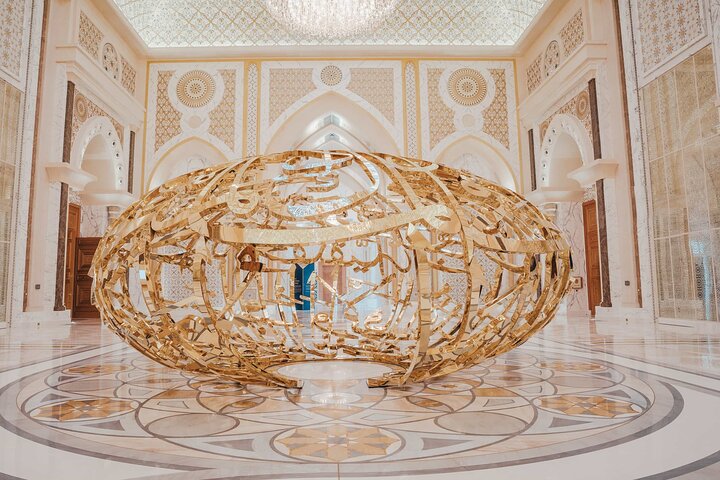
Abu Dhabi is the capital of the emirate of the same name, whose name means “Land of the Gazelle” in Arabic. It is by far the largest emirate, covering 85% of the UAE’s territory, and is home to 94% of the country’s oil and natural gas reserves. On its coastline lies the federal capital, where around one million people live. There, at the Qasr Al Watan presidential palace, a striking three-dimensional sculpture displays, in large Arabic lettering, a quotation by Sheikh Zayed, the nation’s first president and founding father: “Wealth is not money or oil; wealth lies in people, and it is worthless unless devoted to serving them.”
This maxim has guided the direction of the country which, in 2021, on the occasion of the first half-century since its foundation, launched the “Projects of the 50”, a series of far-reaching strategic initiatives that included its railway programme. High-speed rail is the major national commitment to reduce congestion in large cities and bring closer and connect an entire country.
"The UAE Railway Programme is part of the “Projects of the 50”, a series of economic projects aimed at accelerating development (…) It includes three key projects: the first is the freight rail, (…) the second is the passenger service. (…) At a speed of 200 km/h, it will connect 11 cities across the UAE, (…). The third project is the Integrated Transport Service (…) a light rail network (…) to facilitate transport within cities. UAE Government, 2021.
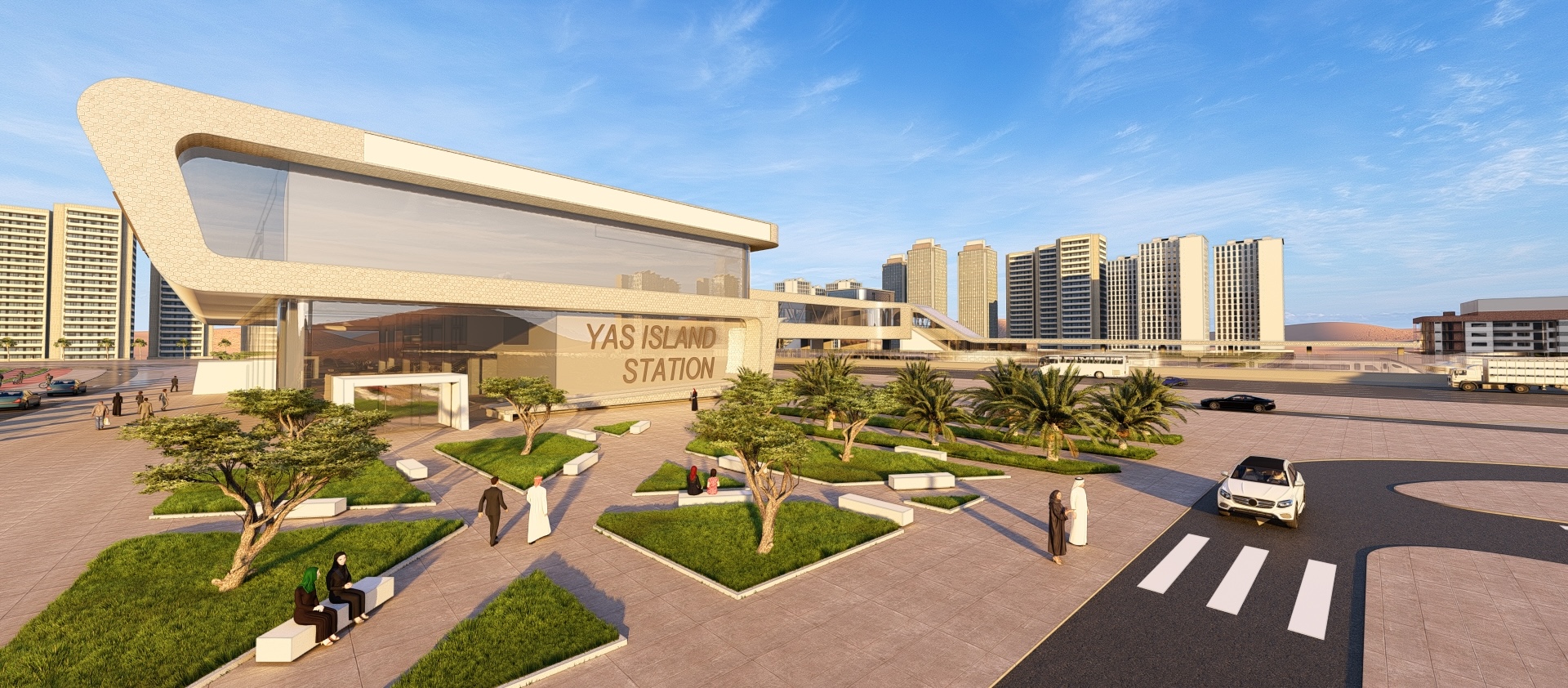
Design of Yas Island station, at grade with an access footbridge. Photo: Ineco
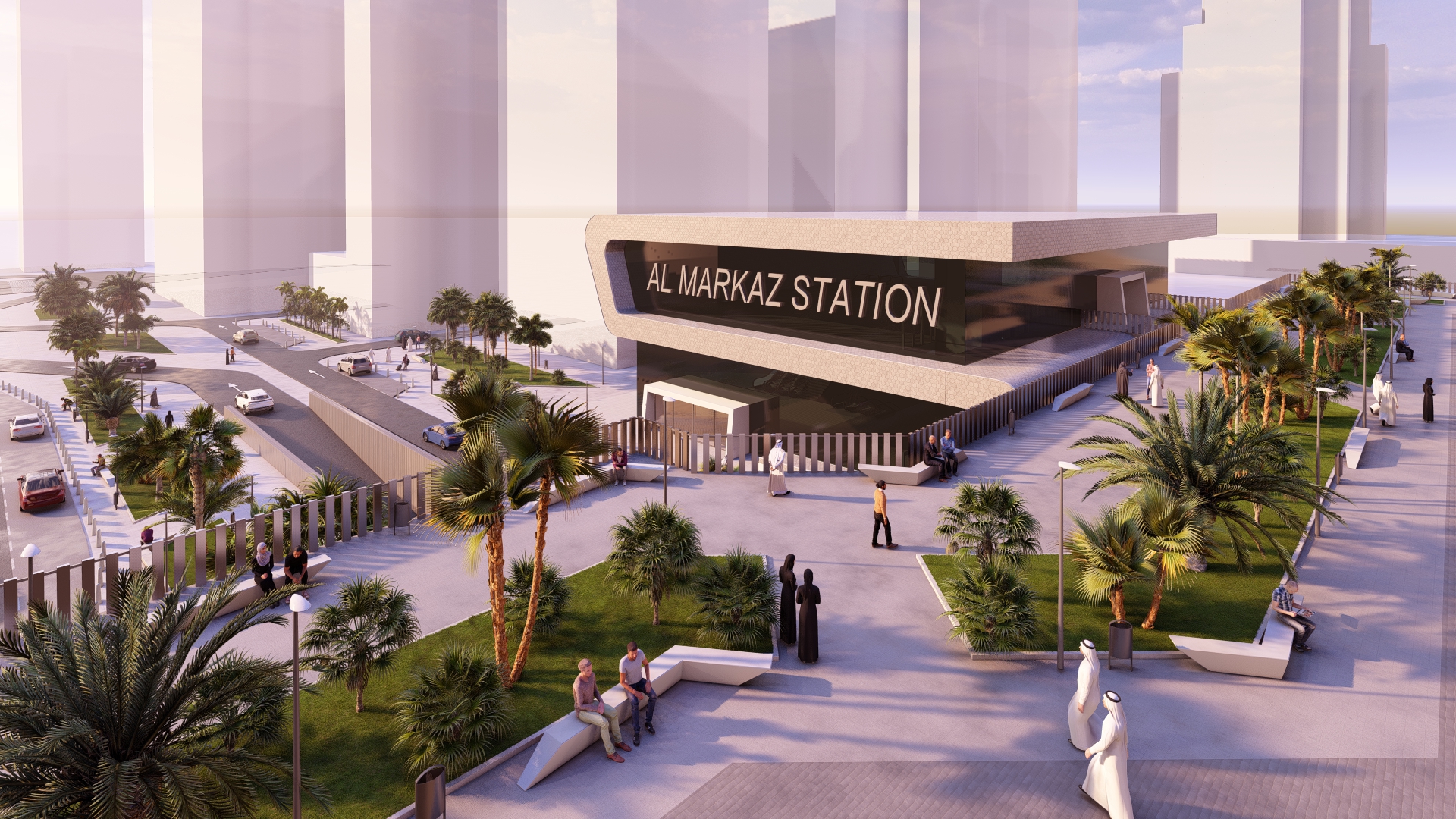
For the capital, a coastal urban centre partly situated on islands (some of them artificial), Ineco has prepared preliminary designs for four of the most important stations of the future 350 km/h link to Dubai, featuring different proposals to facilitate their integration into the urban fabric. Notable among them are Yas Island, an artificial island entirely dedicated to entertainment with four major theme parks (with two options, underground and on a viaduct), and Abu Dhabi Airport, underground.
Preliminary conceptual designs have also been developed for two additional stations: Terminal station in the business centre, with two possible locations, and Saadiyat Island in the city's cultural district, a natural island dominated by the avant-garde architecture of major museums, including the Louvre Abu Dhabi.
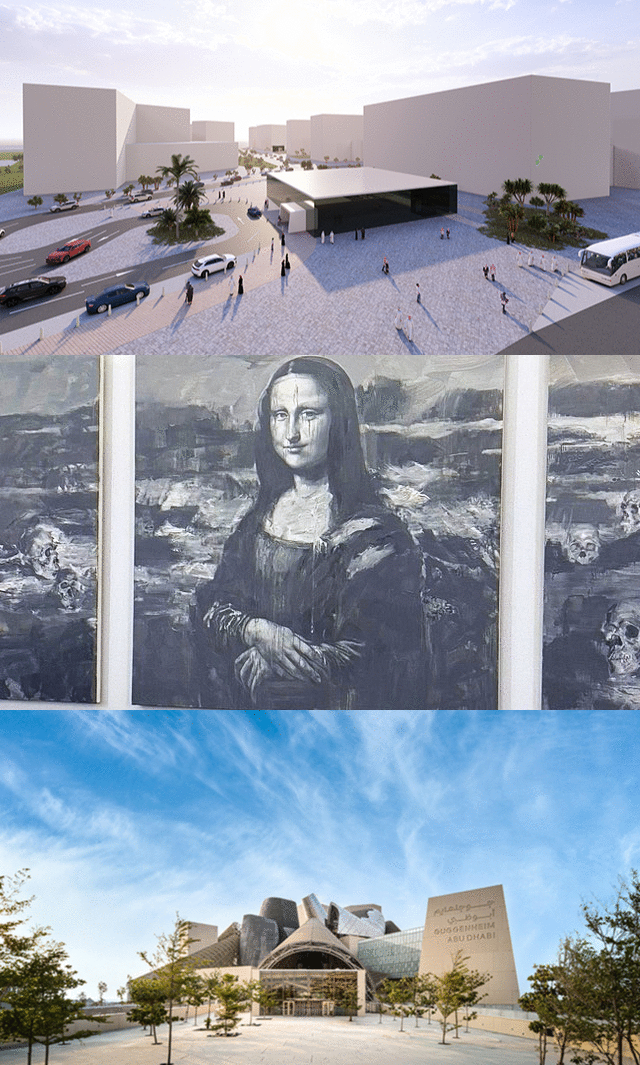
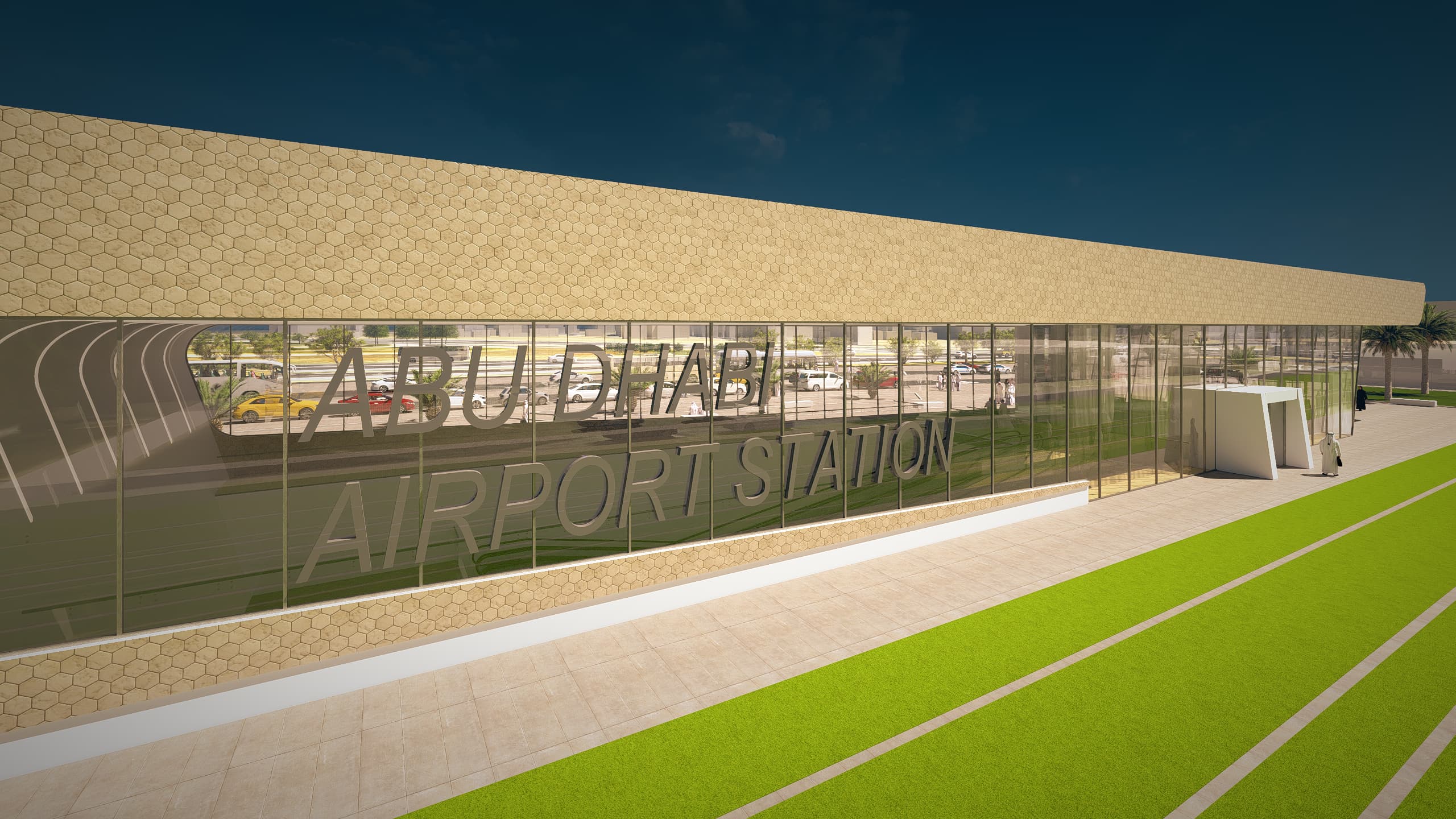
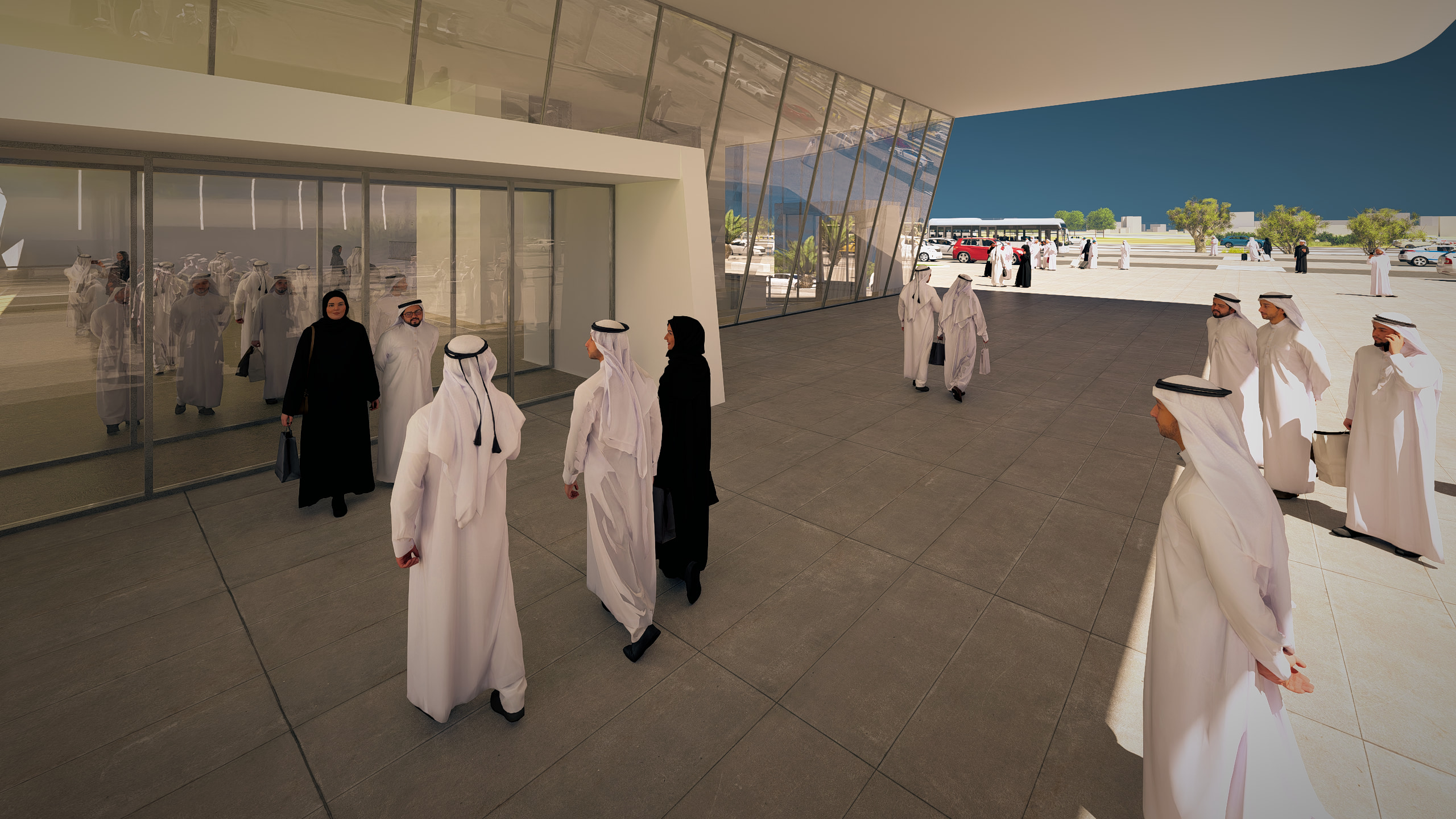
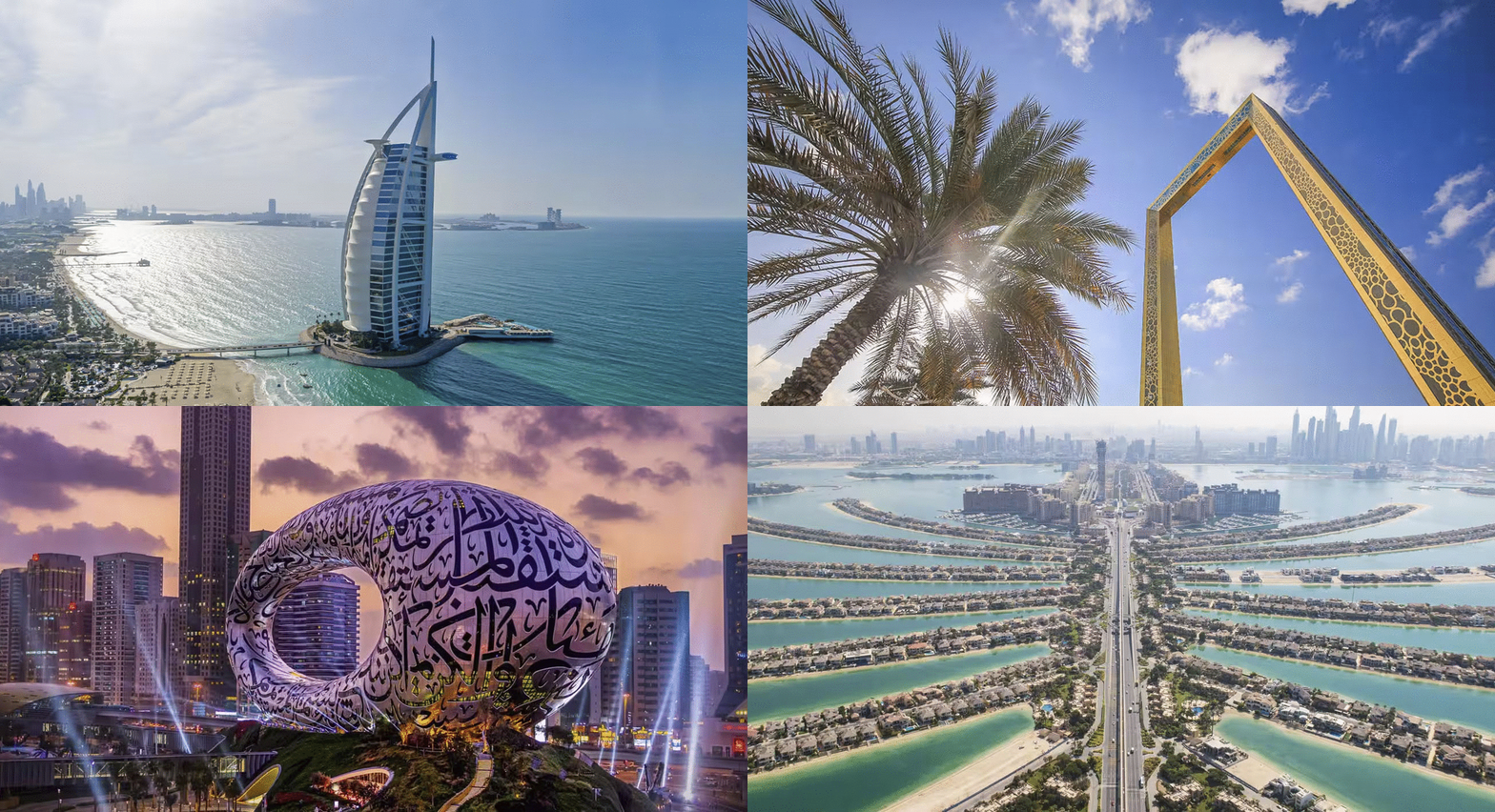
Around 150 kilometres to the north lies the city of Dubai, capital of the emirate of the same name. Home to 5.3 million people, according to the United Nations, it is the largest city in the United Arab Emirates and a global centre for trade and finance, sectors which, alongside tourism, underpin its economy. Renowned across the globe for its striking skyline, featuring the 828-metre Burj Khalifa, the world's tallest building, together with iconic landmarks such as the Burj Al Arab and the artificial island of Palm Jumeirah, the city is also known as the “City of Gold” in recognition of the remarkable expansion of the gold trade in recent decades.
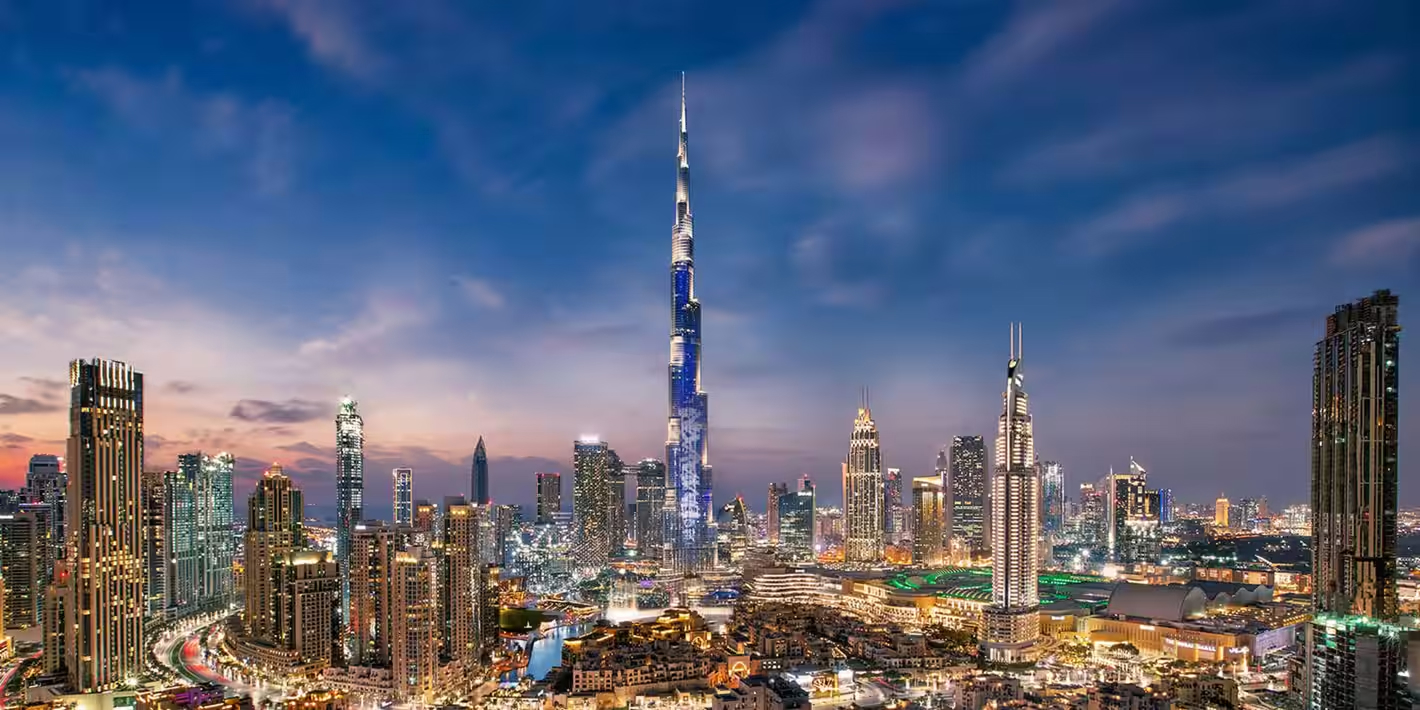
The iconic Burj Khalifa, the tallest building in the world, dominates the Dubai city skyline. Photo: Visit Dubai
Ineco has worked on the design of the two stations for this section in Dubai, situated at two rapidly expanding locations in the city: Al Jaddaf, a residential area in the north of the city, and, at a basic and preliminary level, the station at the new Al Maktoum Airport.
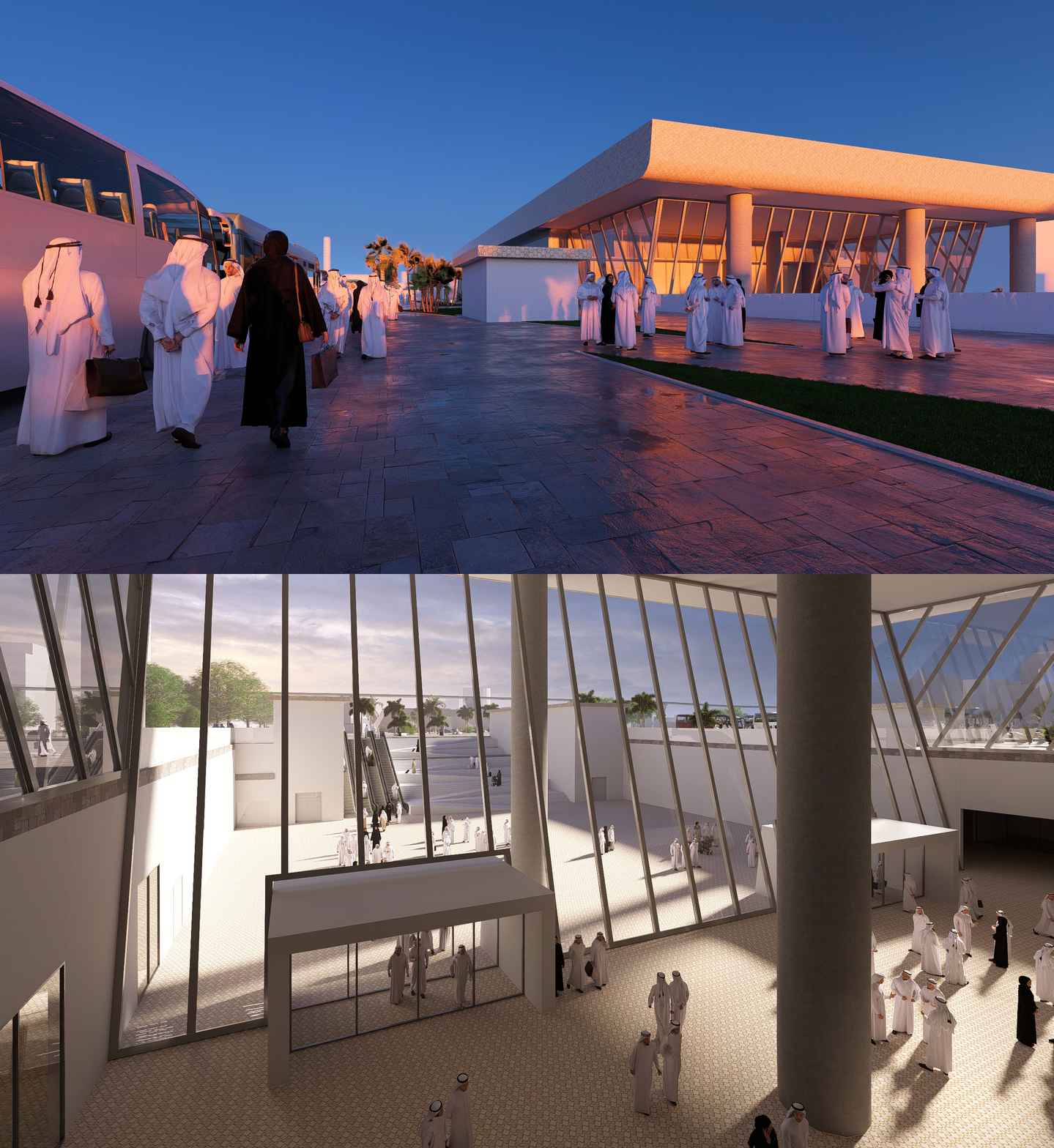
It is the emirate's second airport and aims to progressively become the world's highest-capacity airport by 2050, with five runways and an annual traffic of 260 million passengers.
03
The desert garden
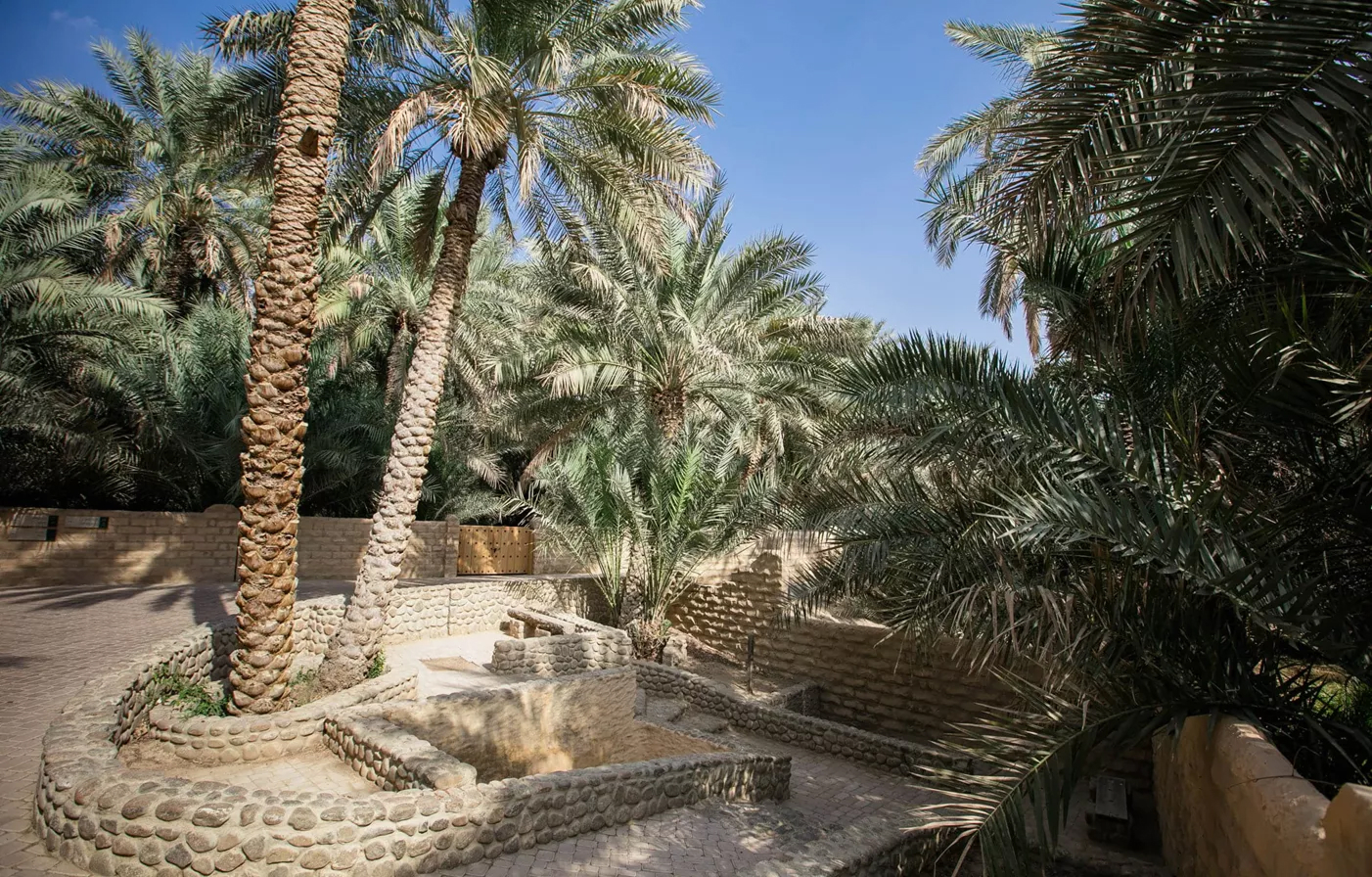
Beyond the large urban areas, the landscape of the Emirates is almost entirely desert. Yet, like all deserts, it is home to oases that have been inhabited for thousands of years. The largest oasis in Abu Dhabi, and in the United Arab Emirates as a whole, is located to the east in the Al Ain region, a name that means “the spring” in Arabic, close to the border with Oman. Here lies the city of the same name, where the future Etihad Rail station connecting it to Abu Dhabi will be located.
Ineco has contributed to the preliminary design of the route alignment and the station, although an official schedule to start construction has not yet been released.
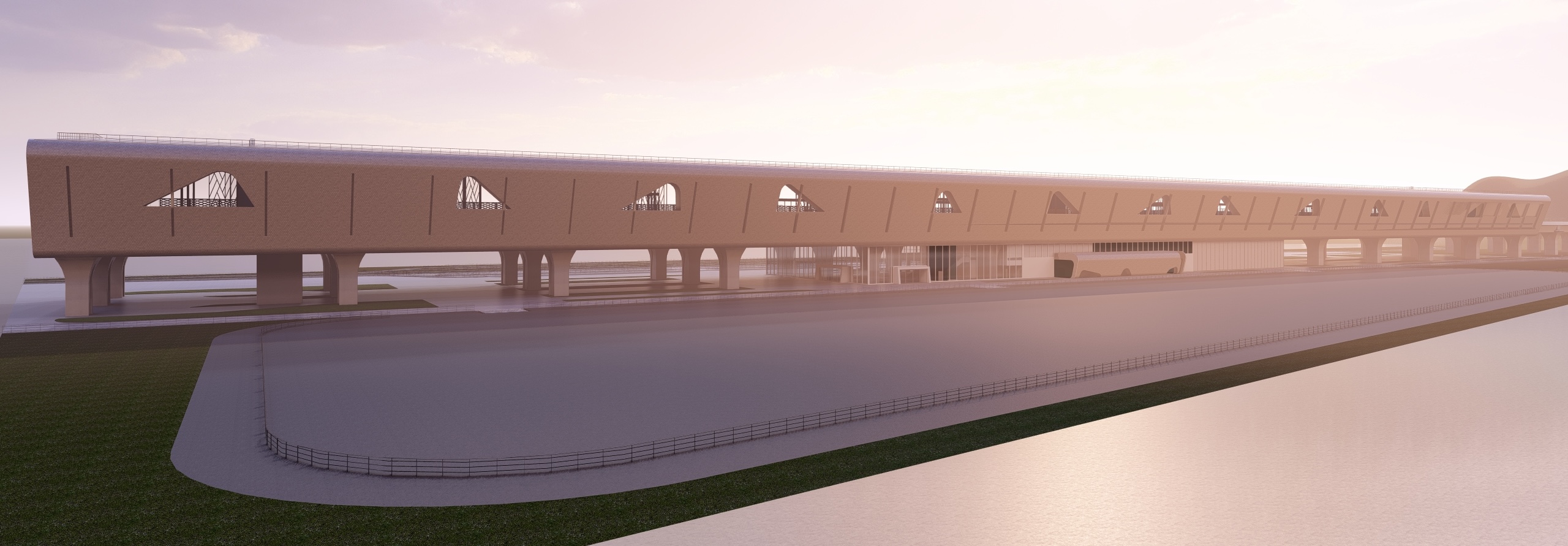
Design of the future Al Ain station, of intermediate size. The tracks and platforms are elevated on a viaduct, under which an access building is located. Photo: Ineco
Al Ain is the country's fourth most populous city, with just over 870,000 inhabitants, according to 2025 United Nations estimates. However, its skyline is very different from that of Abu Dhabi or Dubai: it does not have a single skyscraper, as construction is restricted to a maximum of four storeys.
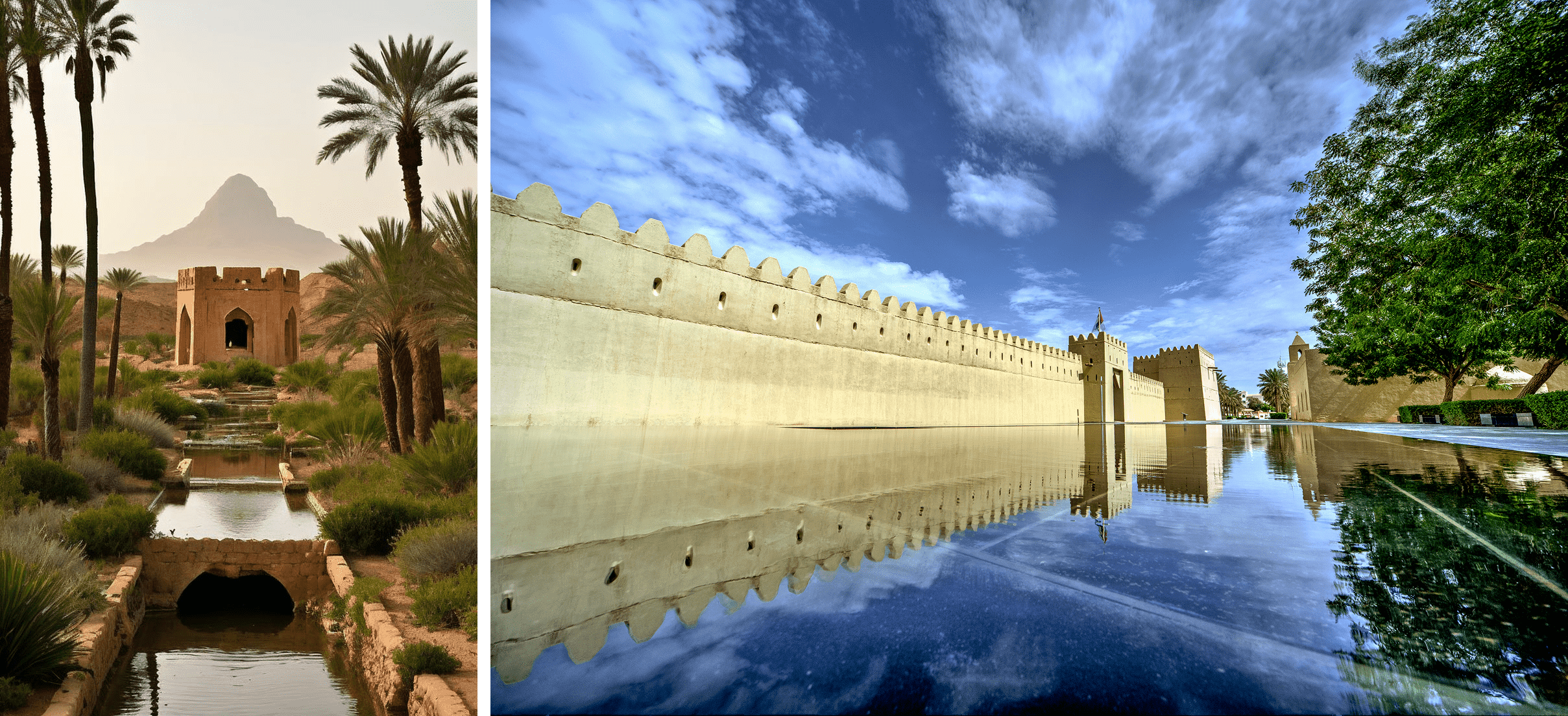
Al aflaj irrigation system (Photo: Wikipedia_ Littlemissboring) and 19th-century Al Jahili Fort (Photo: Wikipedia_ Michael Peter Glenister).
Known as the “Garden City” of the Emirates, it is a prominent agricultural area and home to the National Water and Energy Center, affiliated with the United Arab Emirates University, a pioneer in research into water conservation, renewable energies, and sustainability. It is an area of great historical importance, where the ancient al aflaj irrigation channel system (declared UNESCO Intangible Cultural Heritage of Humanity in 2020) continues to be used today to irrigate 1,200 hectares of palm groves.
Challenge in the dunes

One of the proposed solutions is the use of vegetative barriers to curb the movement of sand towards the tracks. Photo: Ineco
Designing a high-speed line in the heart of the desert entails tackling unusual challenges, such as the action of the wind and the natural movement of large volumes of sand. Ineco has taken part in mitigation studies for this phenomenon, defining specific solutions to protect the infrastructure and ensure the safety and reliability of railway operations.
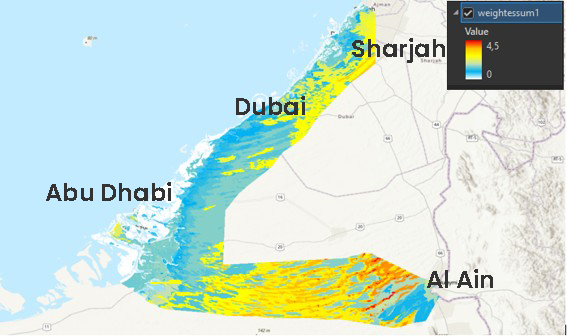
Map showing the sections of the alignment most exposed to sand accumulation (in red and yellow). Source: Ineco
The combination of analysing geological, geomorphological, and meteorological constraints with specific high-speed criteria has made it possible to identify the sections most exposed to sand accumulation and define tailored solutions for each situation. These include sand-trapping systems using ditches and berms, permeable barriers, specialised fencing, landscape integration with vegetation in urban areas, and specific measures for tunnels, structures, and maintenance areas
04
Connecting a Nation
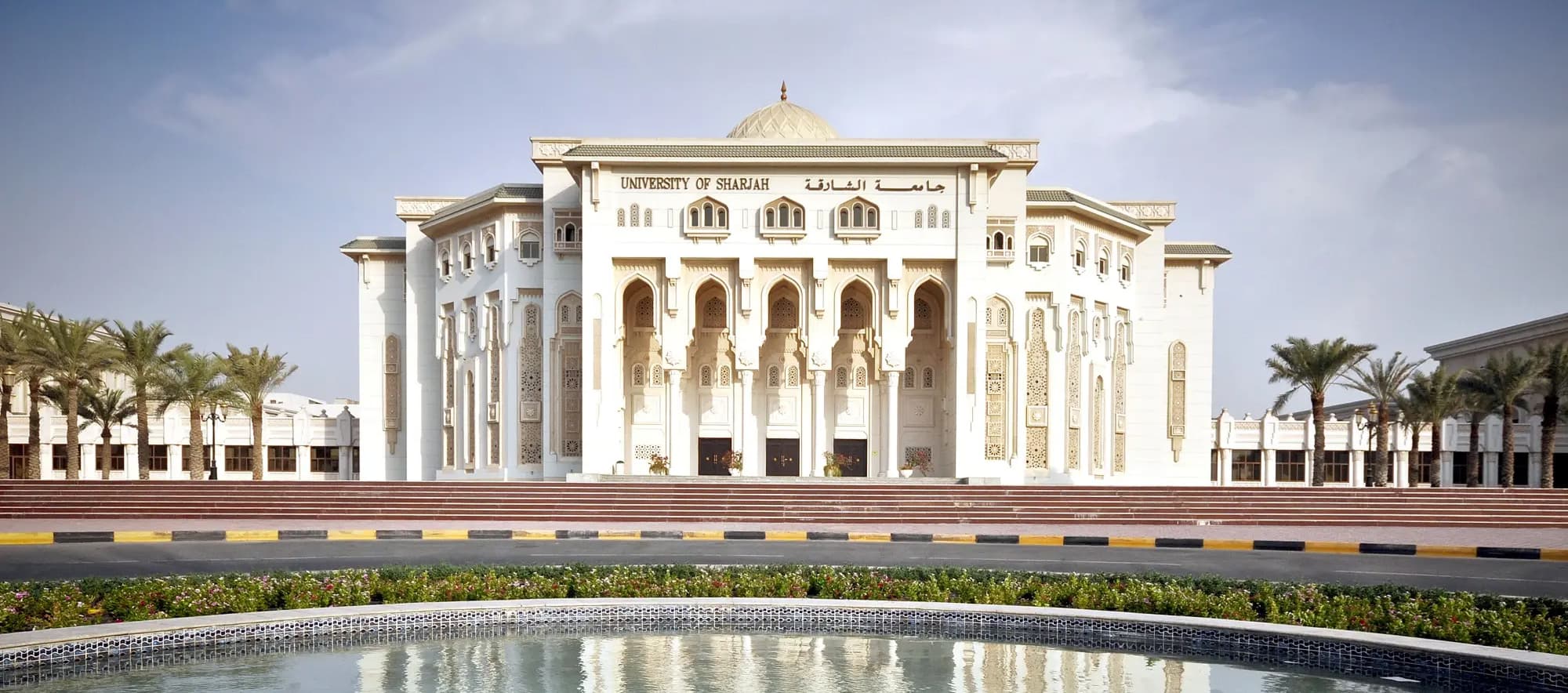
As it heads north, Etihad Rail reaches Sharjah, the UAE’s third-largest emirate and one of its key economic centres, home to major industrial free zones. The emirate is also renowned for its university sector and vibrant cultural scene. Ineco designed the Etihad Rail section from Dubai to Sharjah, as well as the first of the emirate’s two stations. Following the opening of Al Dhaid station in September 2026, a second station, University City, is scheduled to enter service in March 2027. Together with Fujairah station, which became operational in June, and the stations in the western Al Dhafra region, due to open during the final months of 2026, all outside Ineco’s contract, these additions will complete the initial phase of the line.
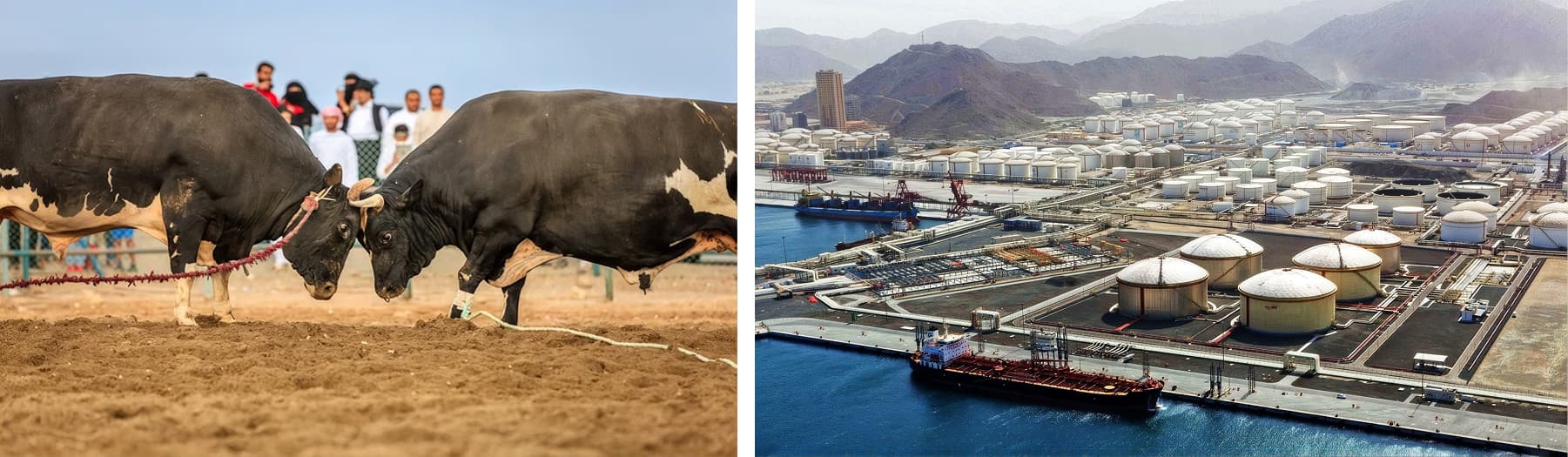
Fujairah: The storage tanks at the Port of Fujairah can hold 18 million m3 of fuel. To the right, traditional bull-butting (bullfighting), highly popular in the emirate and neighbouring Oman. The “bouts” are bloodless, and indeed the best “fighters” are highly prized and receive special care. Photo: Deposit Photos
Etihad Rail has announced that “as part of the next phase of the project, feasibility studies will be conducted to assess the expansion of the passenger railway network to other emirates”.
Owing to their close proximity to Sharjah and Dubai, the three smaller emirates of Ajman, Umm Al Quwain and Ras Al Khaimah (RAK) are also set to benefit from the improved connectivity that the new high-speed railway will provide. All three have industrial free zones and are developing residential, tourism, and industrial projects to boost their economies, in which agriculture and fishing, as well as traditional boatbuilding, still carry weight.
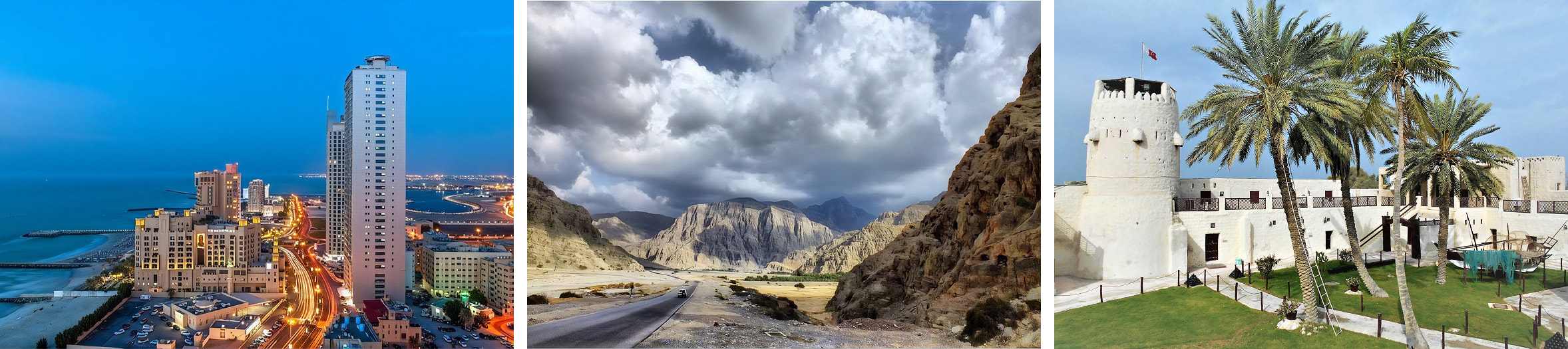
The three northern emirates are less than 100 km from Dubai and Sharjah. At just 15 km away, Ajman is the closest, whilst mountainous Ras Al Khaimah, home to the UAE's highest peak, Jebel Jais at 1,935 m— is the furthest. Halfway between them lies Umm al-Quwain (pictured, Al Ali Fort), the country's least populated emirate. Photos: Ajman Tourism / Wikipedia_Ulises Icardi / RAK Tourism Authority.
“The station locations have been chosen to complement existing population centres as well as areas earmarked for future development. Our aspiration is for the network itself to drive further growth.” Azza Al Suwaidi, Deputy CEO of Etihad Rail Mobility.
At the other end of the corridor, heading west, Etihad Rail will also continue to expand throughout the vast desert region known as Al Dhafra. Here, far from the mountains and mangroves of the north and the great metropolises of the centre, lie inland towns and highly important industrial areas: Mezaira'a and Madinat Zayed in the Liwa Oasis; the city of Al Dhanah, close to the gigantic Ruwais refinery (the largest in the Middle East and one of the largest in the world); Al Mirfa, home to a major water desalination and treatment plant; and Al Sila, the final station on the Etihad corridor, next to the border with Saudi Arabia. In a few months, all of them will be connected by the new railway, once again realising the principle of “unity” that inspired the foundation of the country more than fifty years ago.
Ineco in the Emirates
The company has been present in the region for over 25 years, working on major airport and railway projects, such as the supervision of the expansion and ORAT services for Kuwait Airport (since 2020), and, since 2012, on the Middle East's first high-speed railway, the Haramain High Speed Railway in Saudi Arabia between the holy cities of Mecca and Medina (2012–2028).
In Saudi Arabia, Ineco has also carried out various works for Dammam Airport (Master Plan, a Sustainability Management Plan, and implementation of the baggage handling system, BHS, 2019–2020). For the Sultanate of Oman, it designed bus transport plans and flight procedures for several airports, as well as conducting various aeronautical and airport studies.
It first worked in the UAE over a decade ago, providing ORAT (Operational Readiness and Airport Transfer) services for the new terminal at Abu Dhabi Airport (2014–2017) together with Aena Internacional, and delivering the project management for the expansion of Fujairah Airport between 2015 and 2018.


