


01
When Stones Speak
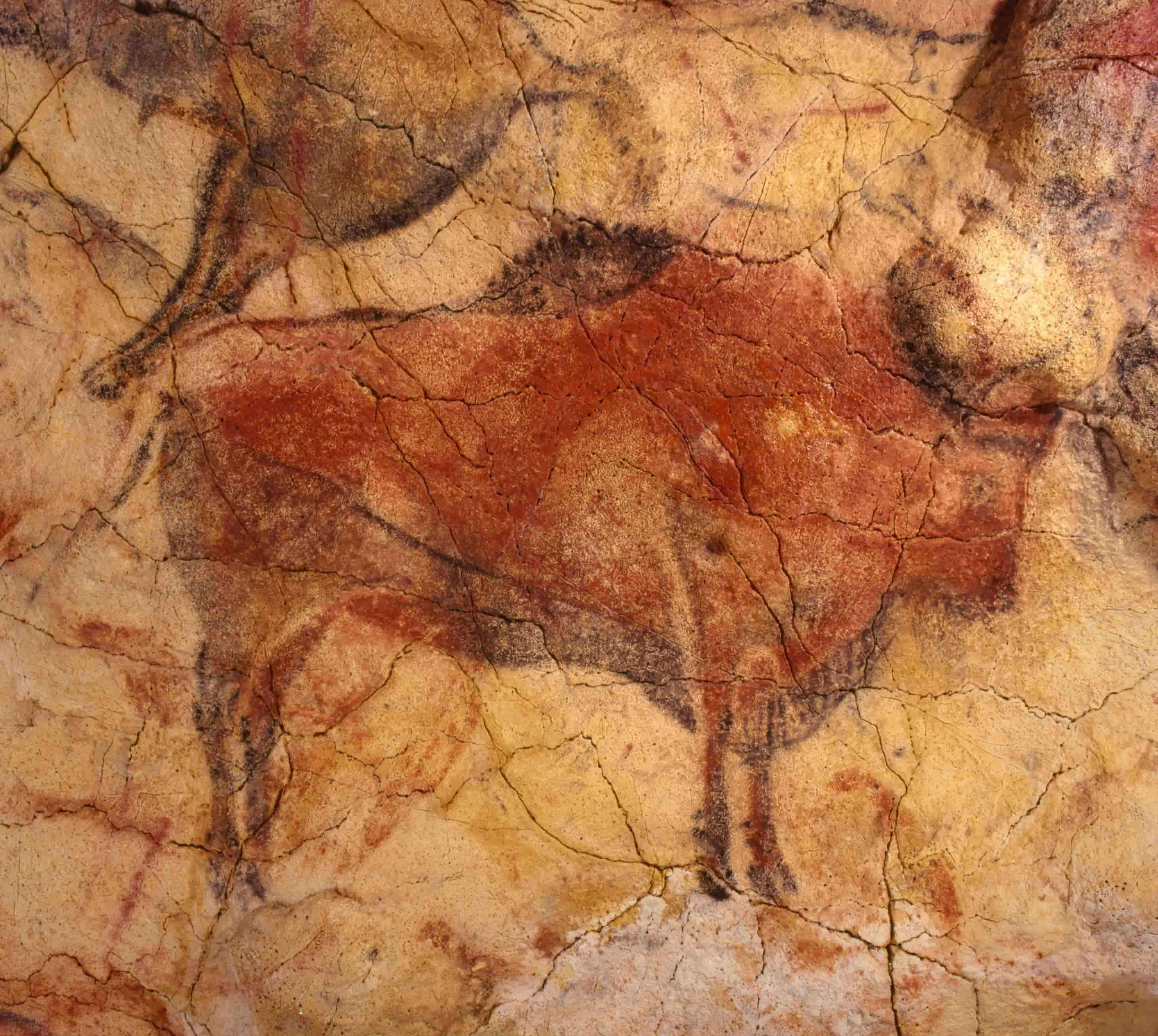
Santillana del Mar, Cantabria, July 2001. The new Altamira Museum and 'Neocave' were inaugurated, an exact reproduction of what has been called the 'Sistine Chapel' of cave art, in order to prevent the deterioration of the paintings, created between 11,000 and 36,000 years ago.
Twenty-five years later, this unique site, a World Heritage Site, will be reproduced again, but this time with innovative, state-of-the-art technology: Ineco is developing a digital twin of the Cave for the Spanish Cultural Heritage Institute (IPCE), together with the Altamira National Museum and Research Centre, using an HBIM (Heritage Building Information Modelling) solution, which combines 3D data, sensors and artificial intelligence.
The model is much more than a simple digital reproduction: it is a collaborative platform that will allow researchers and technical teams to access not only the three-dimensional geometry of the Cave from any device, but also real-time data from environmental sensors. Together with the museum's wealth of historical and scientific records, the project is set to transform the conservation and study of this prehistoric treasure of global importance.
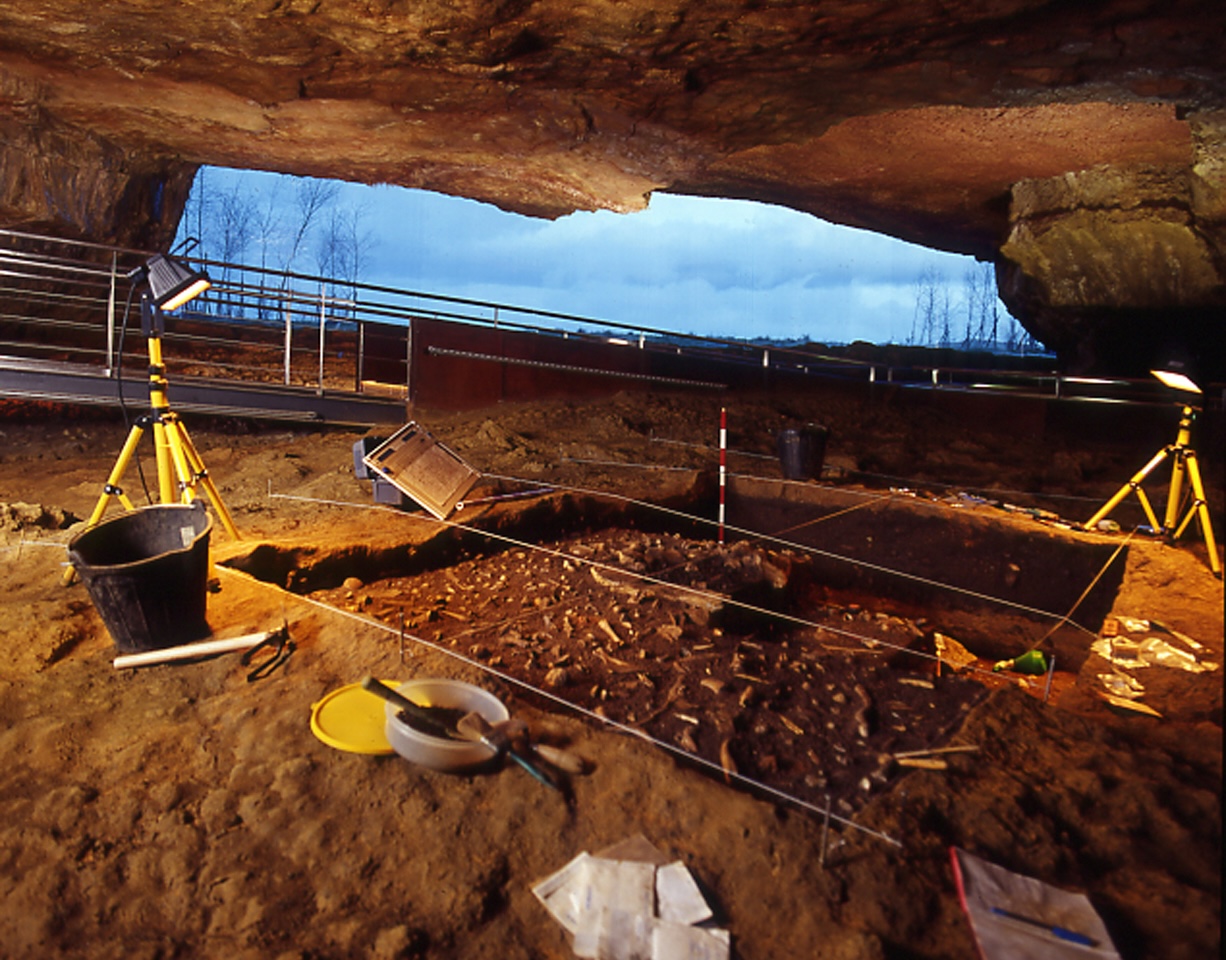
Interior of the Altamira Neocave, which offers visitors a meticulous recreation of the original, closed to the public since 2002 to prevent its deterioration. Visits resumed in 2014, although limited to five people per week (250 per year) selected by public draw. PHOTO CAPTION: Ministry of Culture-Altamira Museum
‘Heritage is what we inherit from the past, live with in the present, and pass on to future generations. It is an irreplaceable source of life, identity and inspiration’. United Nations Educational, Scientific and Cultural Organisation (UNESCO)
Madrid, autumn 1937. In the midst of the Spanish Civil War (1936-1939), the fighting reached the southern area of Madrid, extending to the surroundings of what is now the Manzanares Linear Park
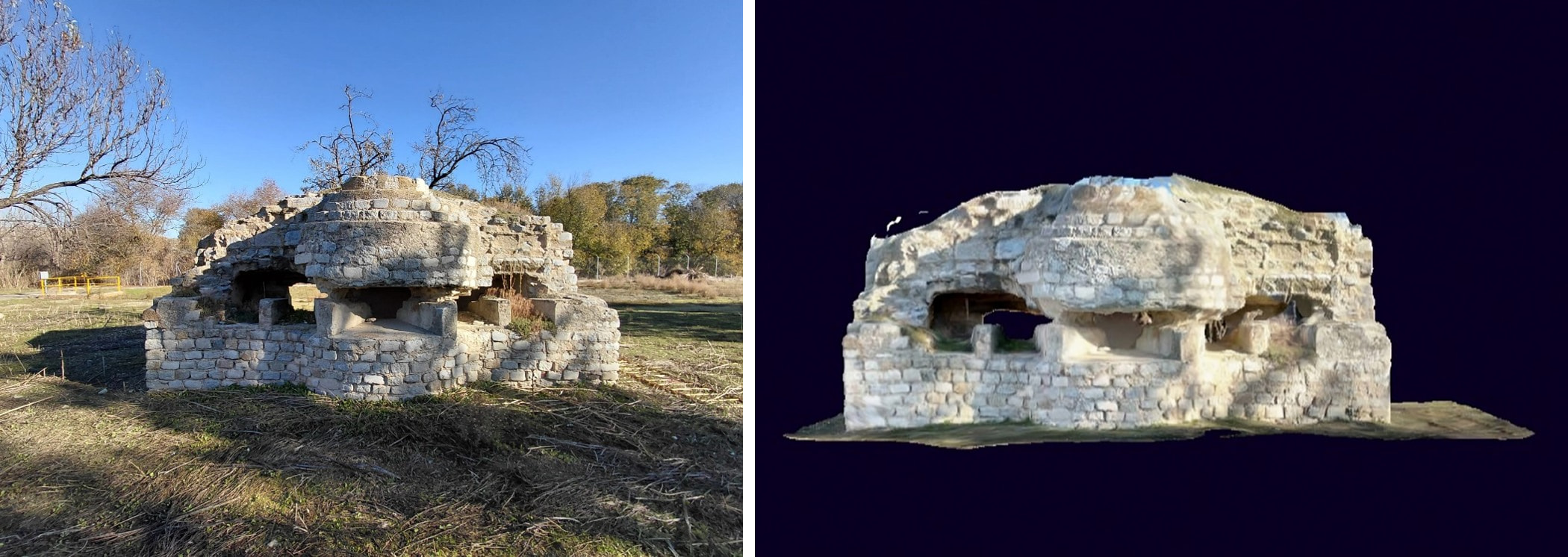
Today, the site of the former battlefield is occupied by EDAR Sur, Spain’s largest wastewater treatment plant, which has been in operation since 1983. Within the complex, which is closed to the public, stands a small structure with a rectangular floor plan and a semicircular façade. Nearly ninety years after the conflict, its granite and brick walls still bear visible scars of the fighting, marked by bullet holes and shrapnel damage.
The EDAR, which supplies a population of 2.9 million people, is in the process of expansion and renovation, which directly affects the plot where the bunker is located, a unique architectural testimony to one of the darkest periods in Spain's history.
For this reason, the Directorate-General for Water, Ministry for the Ecological Transition and the Demographic Challenge, has taken the first steps to ensure its long-term conservation and has commissioned Ineco to carry out an initial preliminary study that will serve as the basis for the future restoration project.
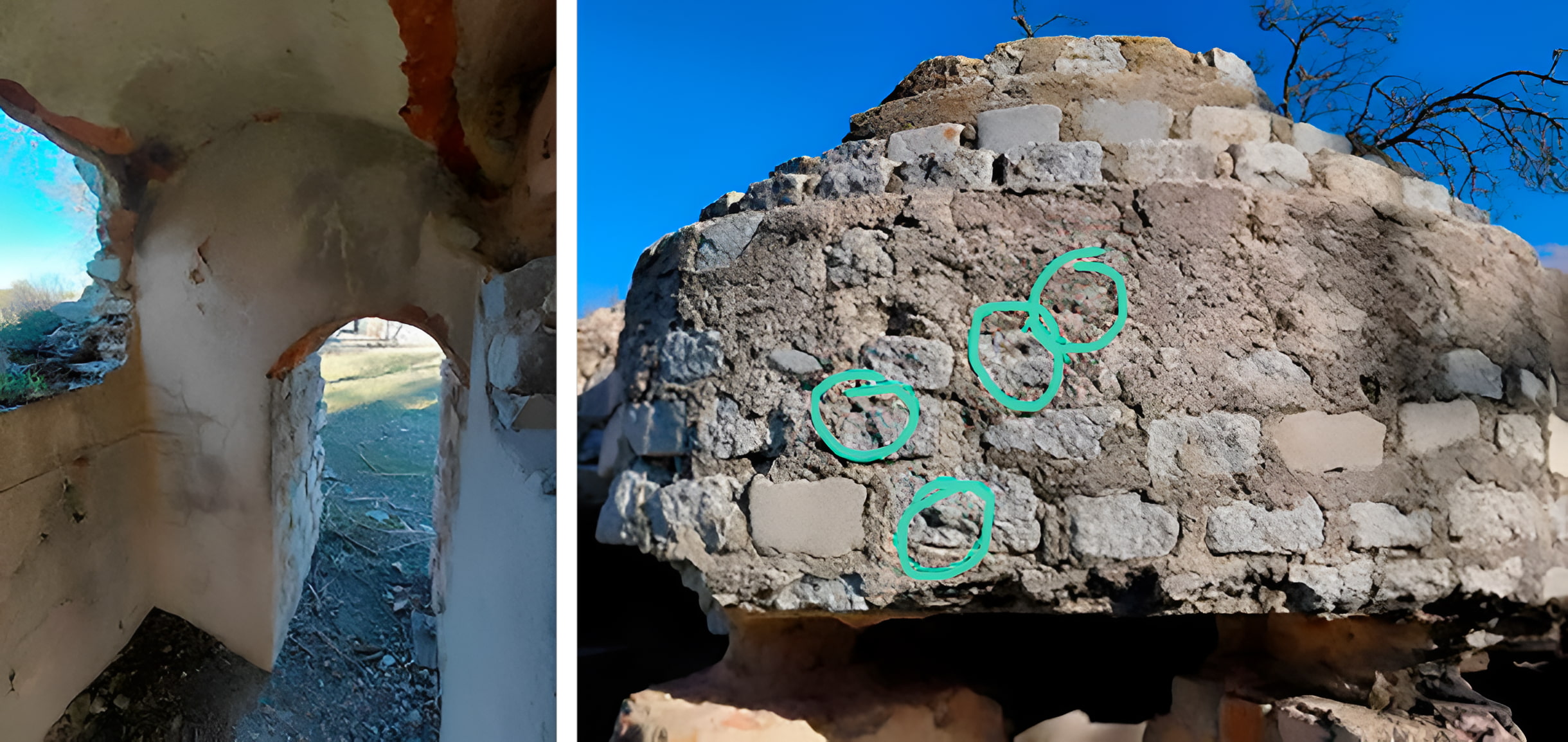
Interior of the bunker and projectile or shrapnel impacts. Photos: Ineco
After examining the structure and generating a 3D model, the initial proposal is to repair the damaged parts with materials similar to the originals, dismantle the bunker stone by stone, move it to another location within the same site and reconstruct it with total precision, including the bullet impacts.
Both projects illustrate the breadth of Ineco's work in managing and safeguarding cultural heritage from widely different historical periods, much of it hidden from public view. An activity in which it has accumulated a track record of almost three decades since it began carrying out its first environmental construction management tasks in 1999.
The company currently has specialised, multidisciplinary teams made up of professionals from various fields: archaeology, architecture and cultural heritage technicians, among others, who provide a wide variety of services to public sector entities.
Among them, Adif stands out due to the volume of work, but also Renfe, Aena, the State Meteorological Agency (AEMET); the Directorates- General for Water, Roads, and Traffic, and, since 2026, also Red Eléctrica Española, for whom it has deployed a specialised technical office that has taken on the numerous interventions for the protection of the entity's cultural assets throughout the country.
Ineco's cultural heritage experts carry out a wide variety of tasks and provide advice throughout the project life cycle and at any stage, from planning to construction. Their great challenge is to make the conservation and research of cultural assets compatible with the continuity of work execution and compliance with deadlines.
This 360º, comprehensive, and client-tailored service is unique to Ineco among public companies, and it helps to reinforce their role in the responsible management, coordinated intervention, protection, and conservation of thousands of cultural assets from all eras.
From Noah's grandson to Homo antecessor
Although it may seem paradoxical, archaeology is a relatively recent field of knowledge. While vestiges of other eras have been discovered all over the world since antiquity, their valuation and interpretation followed criteria very different from those of today.
Over the last 150 years, the development of scientific thought in general, technological advances, and contributions from other disciplines, such as geology, physics, chemistry and zoology, among many other disciplines, as well as the social sciences (history, anthropology, and many others) have completely transformed this field of knowledge and, with it, the vision and interpretation of the past.
From the Renaissance until the end of the 19th century, the main interest in the search for and discovery of ‘antiquities’ was collecting among the wealthiest classes. In fact, the study of physical vestiges of the past was called ‘antiquarianism’, with a very marked preference for specific periods (classical, above all) and little or no attention to historical and anthropological context, which led to the trafficking of objects, looting, relocation, and destruction of archaeological sites.
In parallel, explanations of the past, especially the remote past, relied on sources such as legends, myths, or traditions based on literal interpretations of the Bible passed down from author to author. This happened, for example, in Spain with the myth of Tubal, one of the grandsons of the biblical patriarch Noah, as the founder and first king of Iberia.
It is from the beginning of the 20th century that the scientific approach to the excavation, study, and dating of vestiges of the past was consolidated, both archaeological, that is, constructions or artefacts linked to human activity, and palaeontological: fossil remains. The emergence of the theory of the evolution of species, starting with Charles Darwin, changed the course of many fields of knowledge, including those that study the past: history, archaeology, and palaeontology.
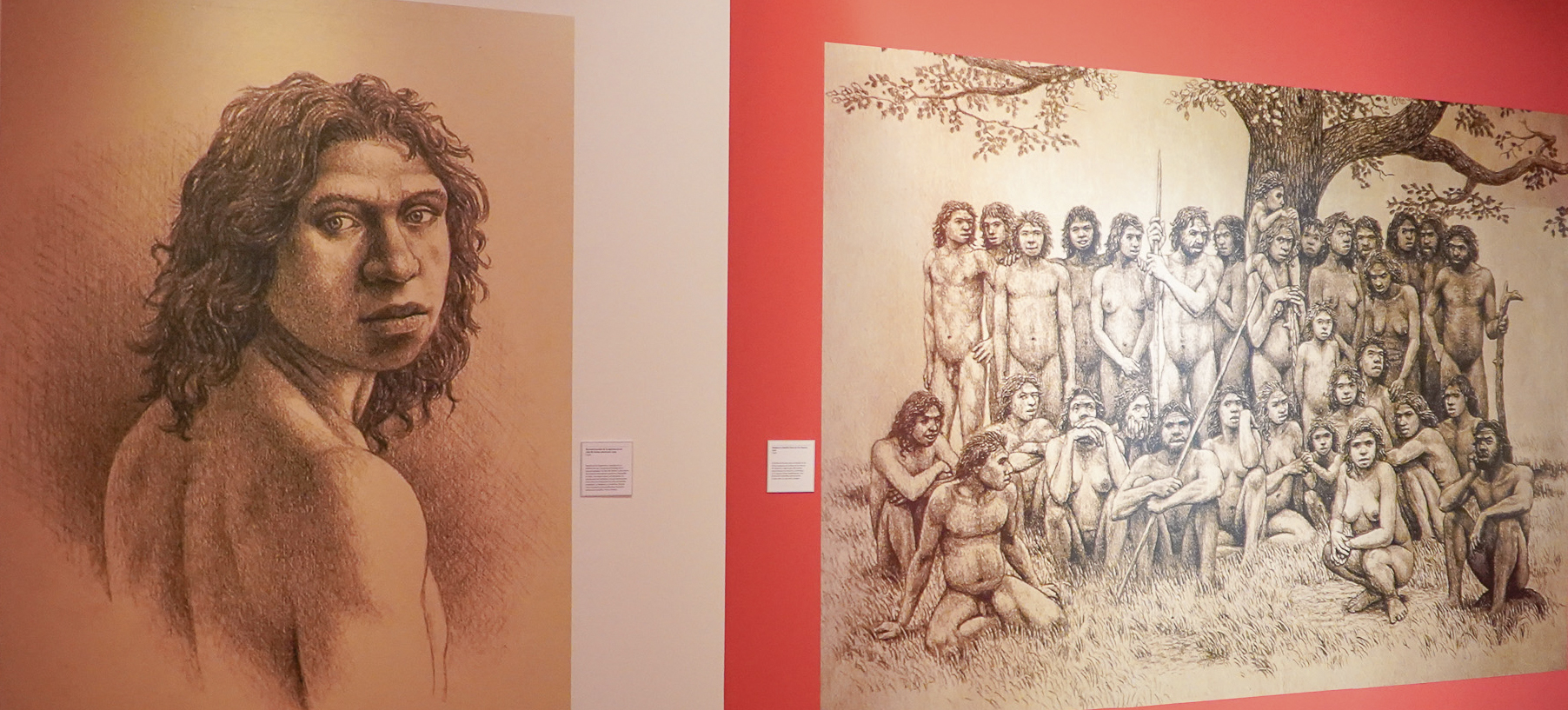
Representations of Homo antecessor (pencil drawings, 1999), among the 80 original works by paleo-artist Mauricio Antón that are on display until August 2026 at the Museum of Human Evolution in Burgos (MEH). Photo: MEH
A sample of this evolution over the last century and a half can be seen in the change in attitude of the scientific community and the general public towards world-class discoveries such as the Altamira paintings in Cantabria and the Atapuerca sites in Burgos. Both sites, discovered at the end of the 19th century, are now declared UNESCO World Heritage Sites.
In the first case, the scientific community of the time considered that, due to their quality and technique, the paintings could not have been executed by ‘cave’ dwellers, which is why the rejection and scepticism towards their discoverer, Marcelino Sanz de Sautuola, were total. The subsequent discovery of other similar caves in Spain and France finally vindicated Sautuola, who received a posthumous apology from his main critic, the French prehistorian Emile Cartailhac, in a famous article published in 1902.
As for the Atapuerca sites, although there are written references to the place dating back to the 10th century, it was not until much later, at the end of the 19th century, that the construction of a large trench for a mining railway revived interest, which increased from the 1960s excavations onwards. But it was the great discoveries of the 1990s that made the site world-famous: to date, among many other remains, fossils of five different hominid species have been found, including one unknown until 1994, Homo antecessor.
02
Liquid Challenges
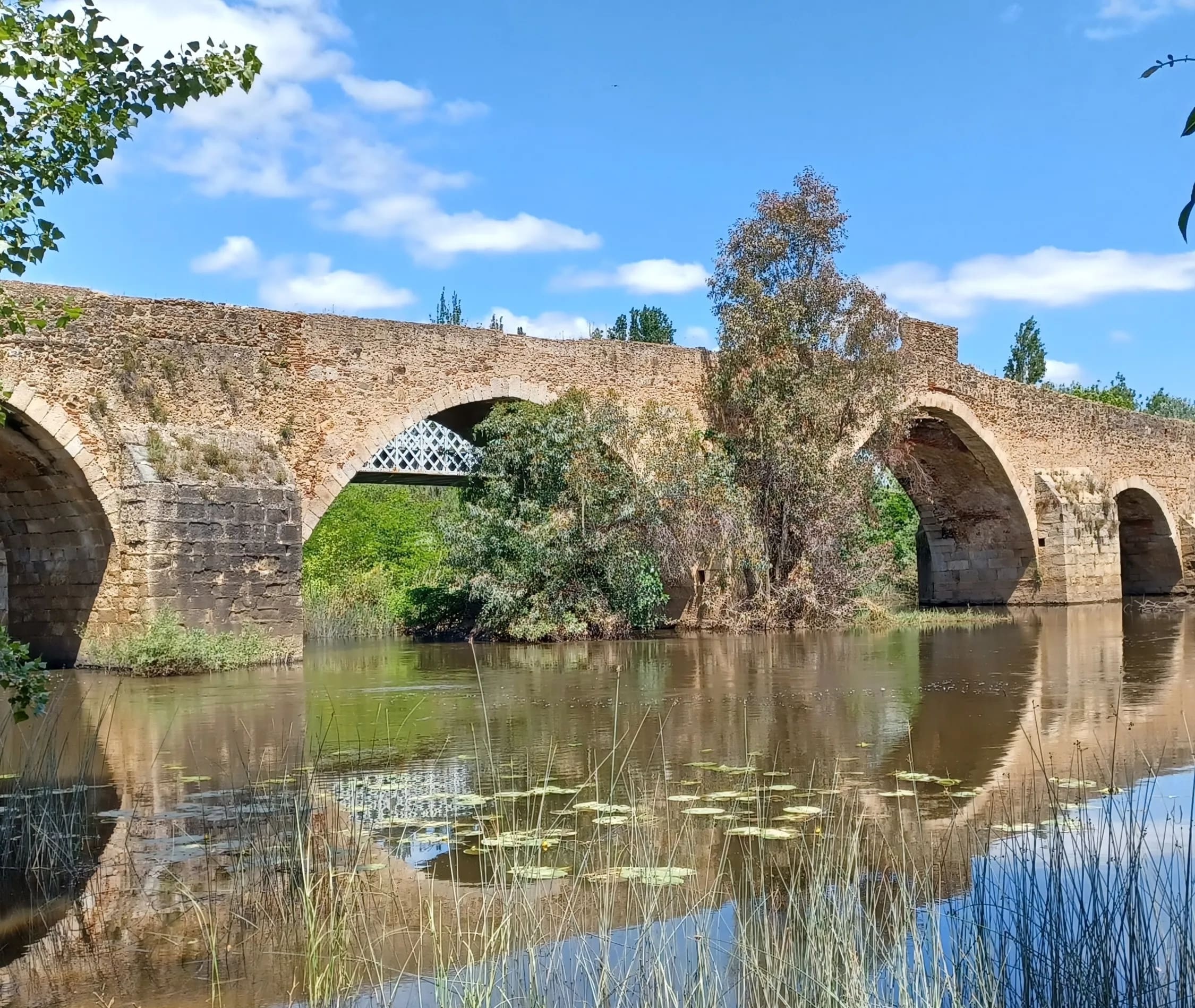
Badajoz, 19 February 1811. Spain is plunged into the Peninsular War. To try to stop the French, the Hispano-Portuguese troops under the command of General Mendizábal partially blew up the Cantillana bridge over the Gévora river, a strategic crossing between Cáceres and Badajoz. But they failed and were ultimately defeated. The battle resulted in more than 4,000 prisoners and a thousand casualties... including the bridge itself, already four centuries old at the time, which was severely damaged.
Despite subsequent attempts at reconstruction, the deterioration it was already suffering continued, worsened by the effects of the weather and the flooding of the Gévora river. Built in the 16th century, in the time of Emperor Charles V, with ashlar, masonry and brick, its current state is critical. The collapse of the central part and the tilting of some of the piers make crossing impossible and threaten its stability and structural integrity.
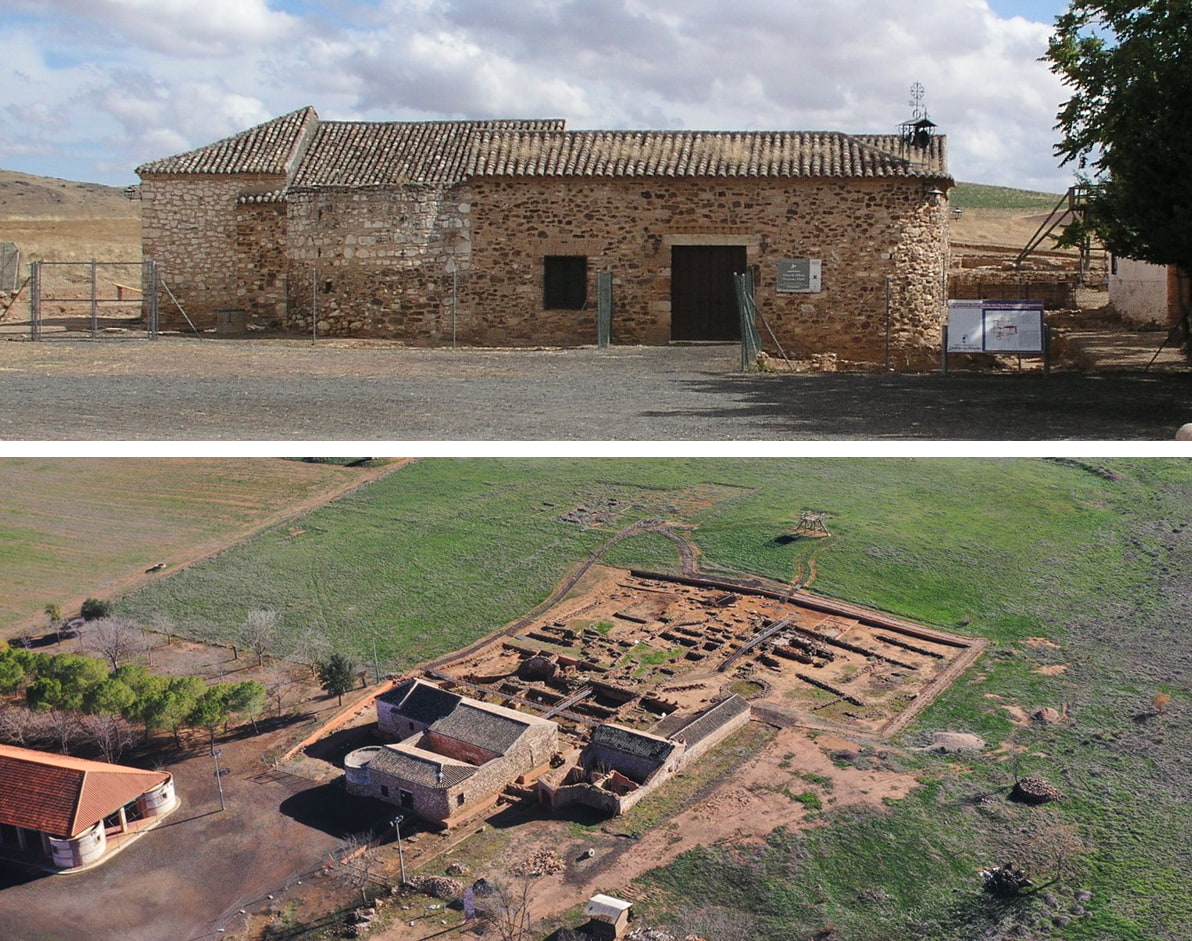
Hermitage of Nuestra Señora de Oreto y Zuqueca and general view of the archaeological site. Photos: Castilla-La Mancha Culture Portal
Granátula de Calatrava, Ciudad Real, summer of 1996. The opening of the new Jabalón reservoir, built just four years earlier, threatened to flood the old medieval hermitage of Nuestra Señora de Oreto y Zuqueca, located right on its banks and below the water level, which had already covered the nearby Baebio bridge.
The excavation of a drainage ditch around the temple accidentally uncovered the first remains of what turned out to be a large site spanning a period of two thousand years. In the following decades, the ruins of the ancient Iberian city of Oretum, the northern capital of the ancient pre-Roman region of Oretania, were excavated and prepared for opening to the public, as well as hundreds of burials and structures resulting from the passage of the Romans, Muslims, Visigoths and Christians who inhabited the area.
The first attempt to stop the flooding failed and in December 1996, after an episode of heavy rain, the water reached up to a metre in height inside the hermitage.
Other subsequent attempts to protect the temple and the site were also unsuccessful. What nearly two thousand years buried underground had failed to destroy could be swept away in a matter of years by the same enemy threatening the bridge in Extremadura: water.
Together with the old Baebio bridge, the hermitage and the 17-hectare site form a complex declared Asset of Cultural Interest (BIC, the Spanish designation Bien de Interés Cultural) since 2024. This is the highest level of heritage protection, but the threat of flooding from the Casaquemada stream and the Jabalón river continues.
For this reason, Ineco has been commissioned by the Directorate-General for Water to develop a project for the rehabilitation of the hermitage and flood prevention. To carry this out, it has conducted a study of alternatives that includes geophysical and archaeological survey work, a heritage impact study, together with extensive negotiation with the competent bodies, such as the Spanish Cultural Heritage Institute (IPCE).
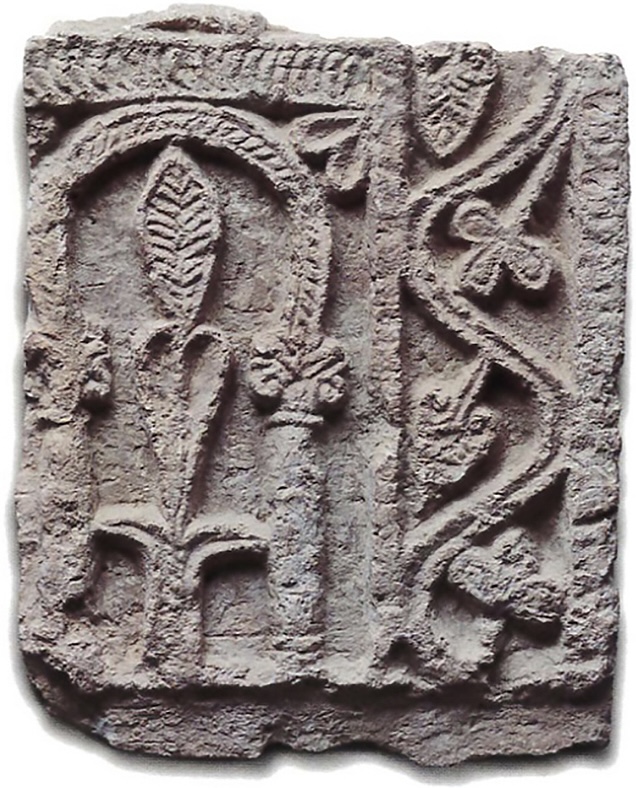
At the same time, about 340 kilometres to the west, in Extremadura, the Cantillana bridge is also the subject of another heritage rescue project by the Directorate-General for Water, in which archaeology, engineering and architecture converge.
Declared Asset of Cultural Interest (BIC, in Spanish) in 2022, in 2026 the central administration took over the bridge rehabilitation project in which a multidisciplinary team from Ineco is participating, made up of specialists in historical structures, geotechnics, hydrology, environment and heritage, with the aim of restoring its functionality.
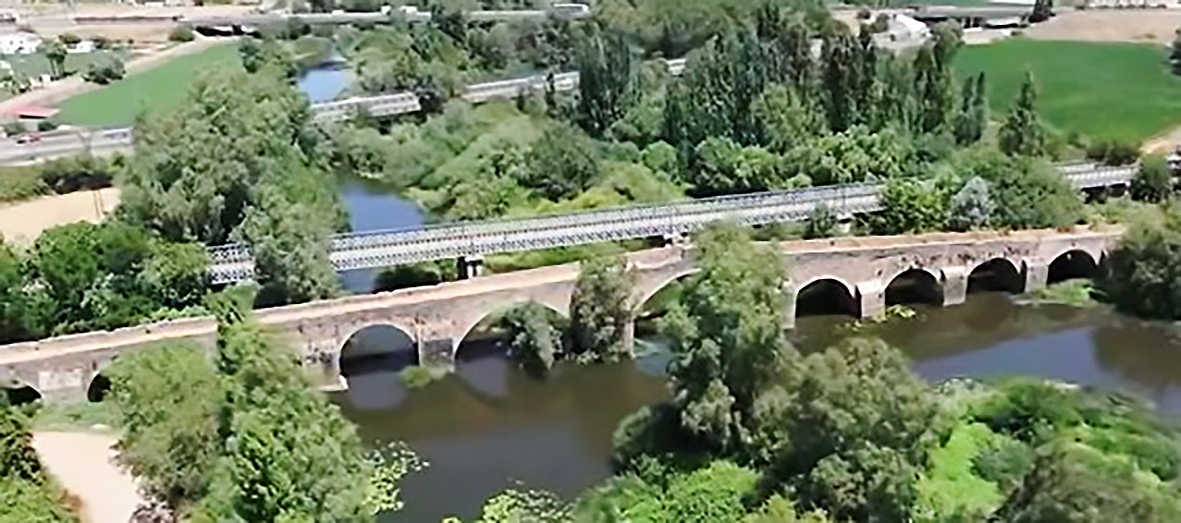
General view of the medieval Cantillana bridge and the two built subsequently in the 19th and 20th centuries (metal and concrete), with which it forms a historical complex of great interest. Photo: Ineco
The project plans for the reconstruction and stabilisation of the structure using materials and techniques that will replicate the originals, also recovering symbolic elements such as the two inscribed slabs that crowned the main span, one of which is preserved in the Archaeological Museum of Badajoz. Ineco's heritage advisory team has identified more than 150 epigraphic elements (inscriptions) that will be restored, such as 14 stonemason's marks and eight pieces of graffiti from different eras.
‘The illustrious city of Badajoz ordered this bridge to be built with the common acorn. It was made in four years by Gaspar Mendez, during the reign of the Catholic Emperor Don Carlos…’ 1535 inscription on the slab that crowned the Cantillana bridge, preserved in the Provincial Archaeological Museum of Badajoz
Adding to the complexity of the engineering challenges is the complete lack of original construction documentation, in other words, no plans have survived. Advanced technology has helped bridge that gap: using drone photogrammetry, an extremely accurate, georeferenced and photorealistic 3D model has been created. Once reconstructed, the bridge will be able to return to use as part of a greenway cycling route.
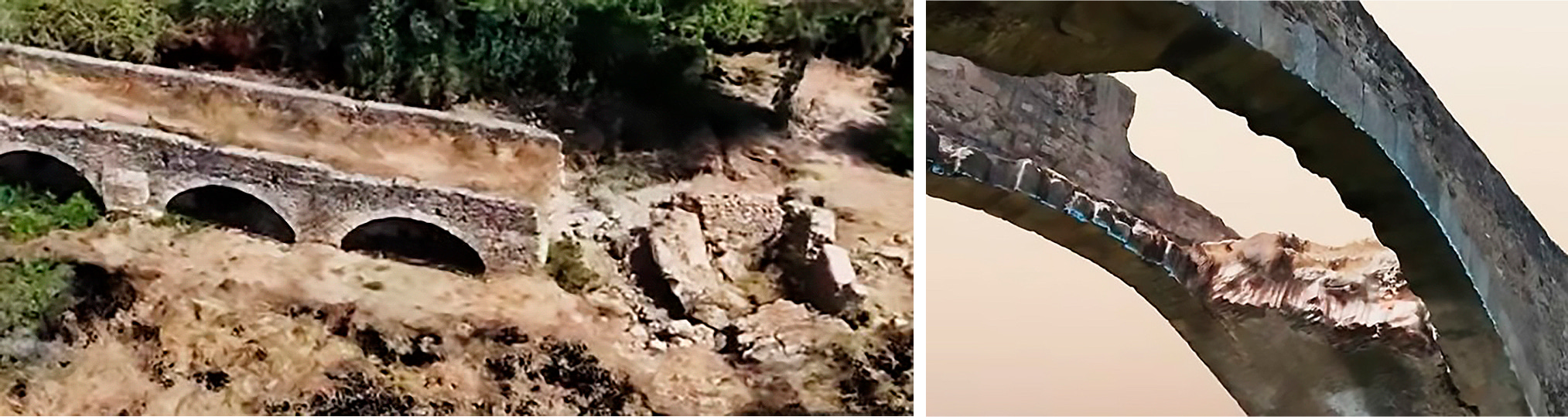
The 3D model accurately reproduces the structural damage. Images: Ineco
The case of the Cantillana Bridge illustrates how, in recent years, not only the conservation of cultural heritage assets has evolved, but also the very concept of heritage itself. Alongside this evolution, the relationships between the disciplines involved (archaeology and palaeontology, history, architecture, geology and engineering) have been transformed, as have the technological tools employed, the role of public authorities, and society’s perception of heritage as a whole.
Beyond the museum
The approval of Law 16/1985, the first national law of the democracy for the protection of what was then called ‘historical’ heritage, marked a turning point. Since then, the concept has evolved a lot. The law established the transfer of powers in this area to the 17 autonomous communities, which, except for the autonomous cities of Ceuta and Melilla, began to develop and approve their own laws, more detailed and specific than the general regulation.
Before its promulgation, unforeseen findings during construction works were considered an inconvenience, as the famous Spanish engineer Carlos Fernández Casado described in 1980: ‘Upon hearing of any archaeological find, the work is paralysed, and this situation can be prolonged for several months or even indefinitely, causing real disruption,’ which is why a drastic solution was chosen: ‘...to prevent the findings from reaching the knowledge of the municipal authorities, the builders are in a great hurry to destroy everything that has appeared and is about to appear.’
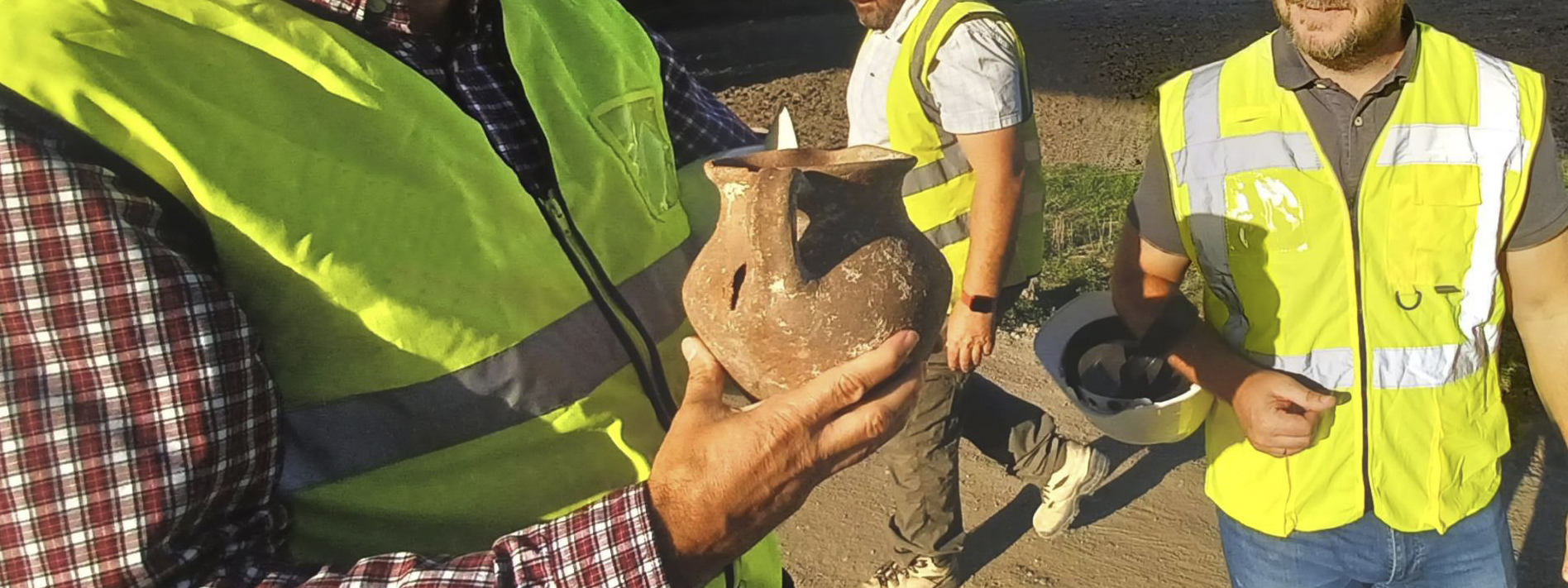
Pottery vessel found at the La Gavia site, Madrid. Photo: Ineco
Since 2019, the different regional regulations have been updated to reflect the transformation and expansion of the notion of ‘cultural heritage’ that has been taking place over the last few years, in addition to tightening heritage control measures in civil works.
In October 2025, the National Archaeology Plan was approved, agreed upon with the regional governments. The document focuses, among other aspects, on the social dimension and the new paradigm of the ‘cultural landscape’, which encompasses not only archaeological remains but also their sociocultural context and their relationship with the territory. The Plan includes the new approaches to archaeology: on the one hand, the preventive one, avoiding the loss or destruction of heritage, as in the case of the Oreto Zuqueca site, and in parallel, the social and educational one, which considers it as an element of collective identity and emphasises its dissemination to the public.
Interdisciplinary relationships between contemporary archaeology and other experimental and social sciences have also evolved, and the application of new technologies has become widespread, such as those applied in the Cantillana bridge project: 3D models obtained by non-destructive laser scanning, satellite location, drone photogrammetry, etc., and laboratory analysis techniques: DNA studies, isotope or carbon-14 dating... All of them are very useful both for fieldwork and for their subsequent study and dissemination, both to specialists and to the general public.
03
The Radar and the Sabre-Toothed Tiger
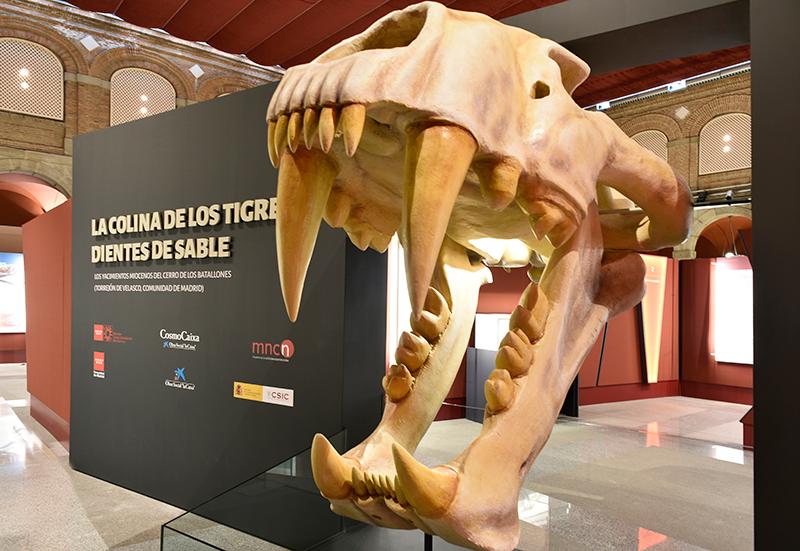
Torrejón de Velasco, Madrid, summer 1991. During mining surveys, bones were discovered that were eventually identified as belonging to Upper Miocene fauna dating back around 9 million years. They were found in extraordinary abundance and an exceptional state of preservation. The site, known as Cerro de Batallones, is unique in the world because, unlike most fossil deposits, it is dominated by the remains of carnivores, including bear-dogs and sabre-toothed cats. Of the 30 species identified so far, as many as 10 were predators. The fossils also include giant tortoises, ancestors of giraffes and horses, deer, rhinoceroses, as well as birds and reptiles.
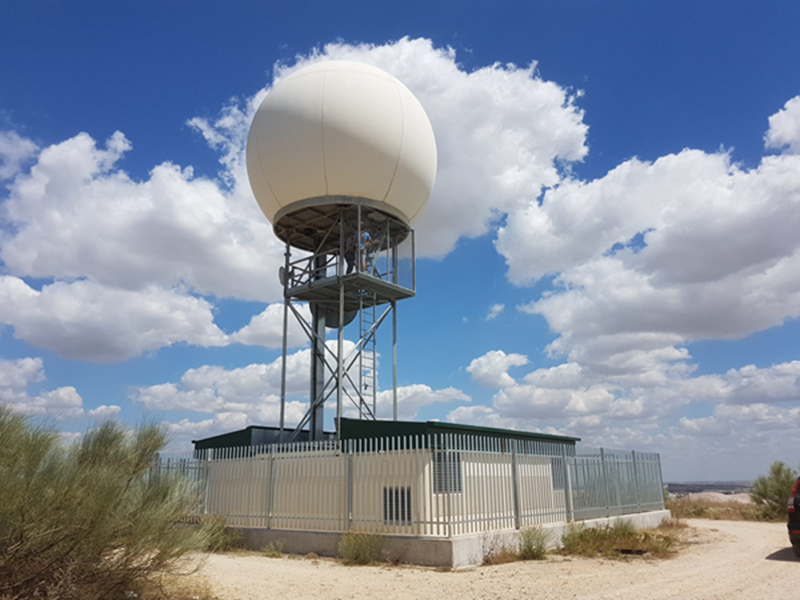
A few years after the first findings, in 1996, the State Meteorological Agency, AEMET, installed a Doppler weather radar next to the site, on top of the 707-metre-high hill above sea level. This location was not arbitrary. In this type of facility, the location is a critical factor that is carefully selected, as a wide variety of aspects must be taken into account to optimise the equipment's operability: coverage, absence of obstacles, existence of radio interference, etc. Its purpose: to locate rainfall and hail within a radius of between 100 and 150 km and track its movement and forecast its path, also taking into account wind speed.
In 2026, the radar has been completely renovated with state-of-the-art dual-polarisation technology, as part of AEMET's national programme initiated in 2021 for the renewal of its national network of 15 radars, which also includes the construction of three new ones (in Salamanca, Ciudad Real and Tenerife).
Ineco has worked for the last six years on project drafting, technical assistance and construction management, including on-site environmental and heritage monitoring of all activities. In the case of the Torrejón de Velasco radar, to avoid any impact on the Cerro de Batallones archaeological sites, designated an Asset of Cultural Interest (BIC) in 2002, extensive precautions were taken, strictly delimiting the areas of operation and carrying out exhaustive on-site monitoring.
This is the ultimate goal of the work of professionals like those at Ineco, who have been involved in multiple projects throughout the country, contributing to the discovery, conservation, and enhancement of thousands of heritage assets of all kinds, from prehistoric fossils to isolated buildings or entire settlements, agricultural structures, monuments or burials found during the construction of high-speed lines, highways, port access roads or airport expansions.
Many of them are now part of museum collections throughout Spain, while others have been documented, protected, and conserved in situ for future study. But that is the end of a process that begins long before a single cubic centimetre of earth is moved: a journey through time.
04
A Journey Through Time… on Site
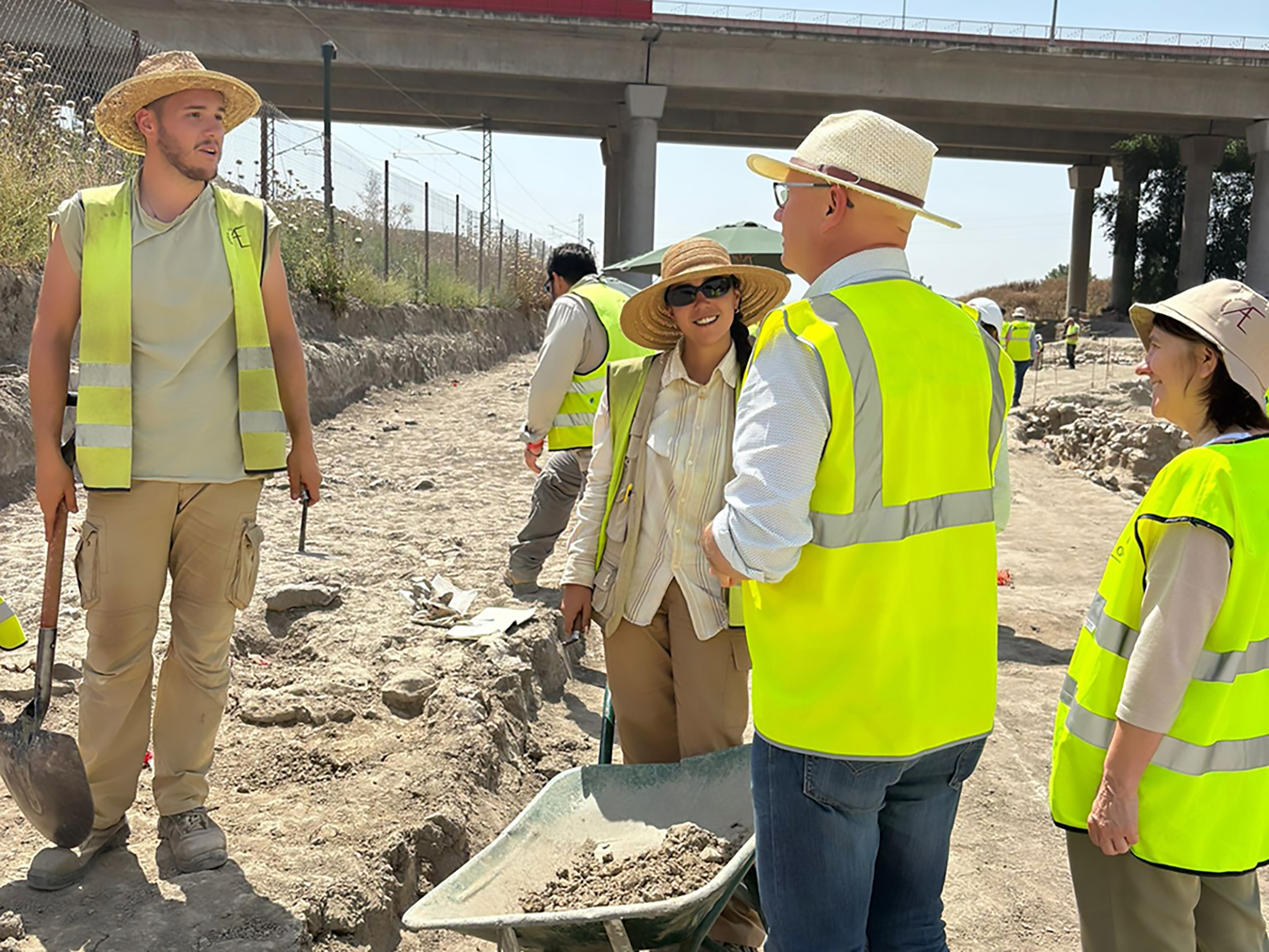
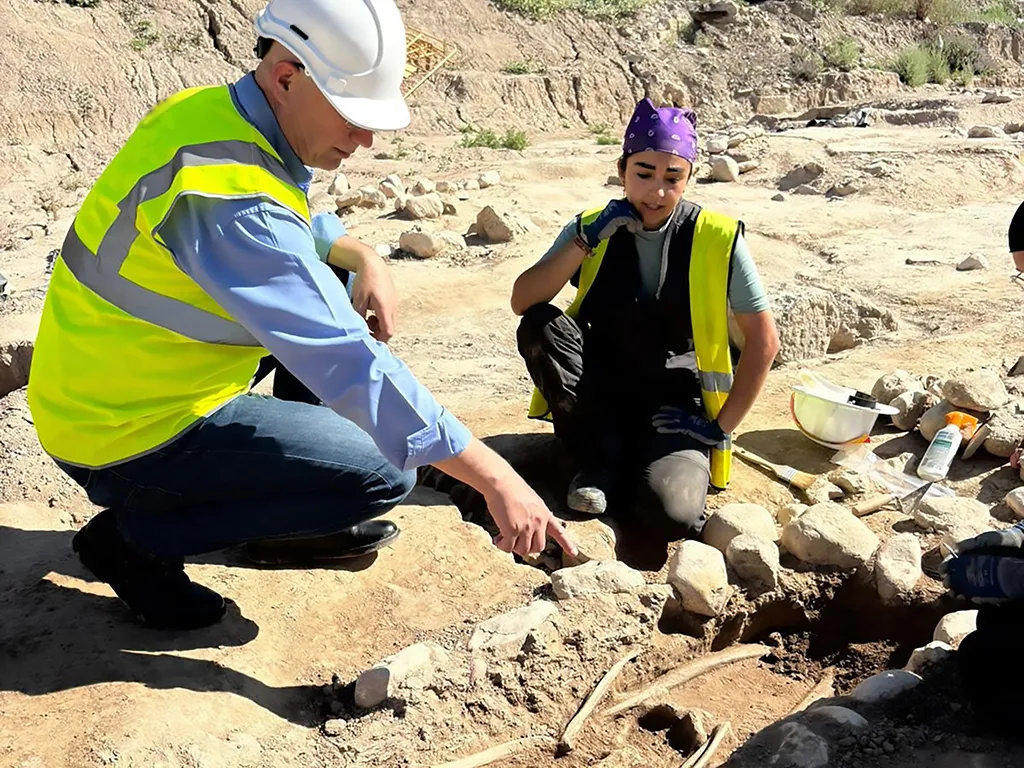
Ineco and Adif staff at the excavations at the La Gavia site, next to the high-speed bypass works, at the Atocha railway complex (Madrid), in 2025. Photo: Ineco
Ineco's cultural heritage and archaeology consultancy team is part of the PMO and construction management area and works in close coordination and collaboration with other professionals in the company and with the project promoters (Adif, Aena, Red Eléctrica, public administrations, etc.) on a wide variety of activities, largely railway-related, but also including roads, airports and ports.
Their work begins in the design phase, continues during project drafting and extends to on-site supervision throughout the execution phase, from the first earthworks to completion.
In addition, the team manages all permits and procedures required for archaeological work, prepares a wide range of reports and studies, and addresses the many challenges that may arise during a project, liaising with the relevant authorities and stakeholders. It also undertakes specialised studies in highly protected heritage environments, such as those carried out in 2025 to assess the impact of vibrations generated by passing trains on the Roman aqueduct of Los Milagros in Mérida and the Roman amphitheatre in Tarragona.
These tasks may include organising large-scale excavations and coordinating the interpretation and display of archaeological finds, as in the railway access project to the Port of Sagunto (2021–2025), which was completed after five years devoted to the study of the remains of the ancient Roman bridge.
Another case is the works on the Chamartín-Atocha bypass in Madrid, which began in 2020 and are still ongoing. In 2023, in the well-known archaeological area of Cerro de la Gavia, a Second Iron Age settlement was found, with a temple, a wine press and two dwellings, as well as a section of the 18th-century Real Canal del Manzanares, which are in addition to the abundant remains already discovered since 1919, and which span from the Neolithic to the Spanish Civil War.
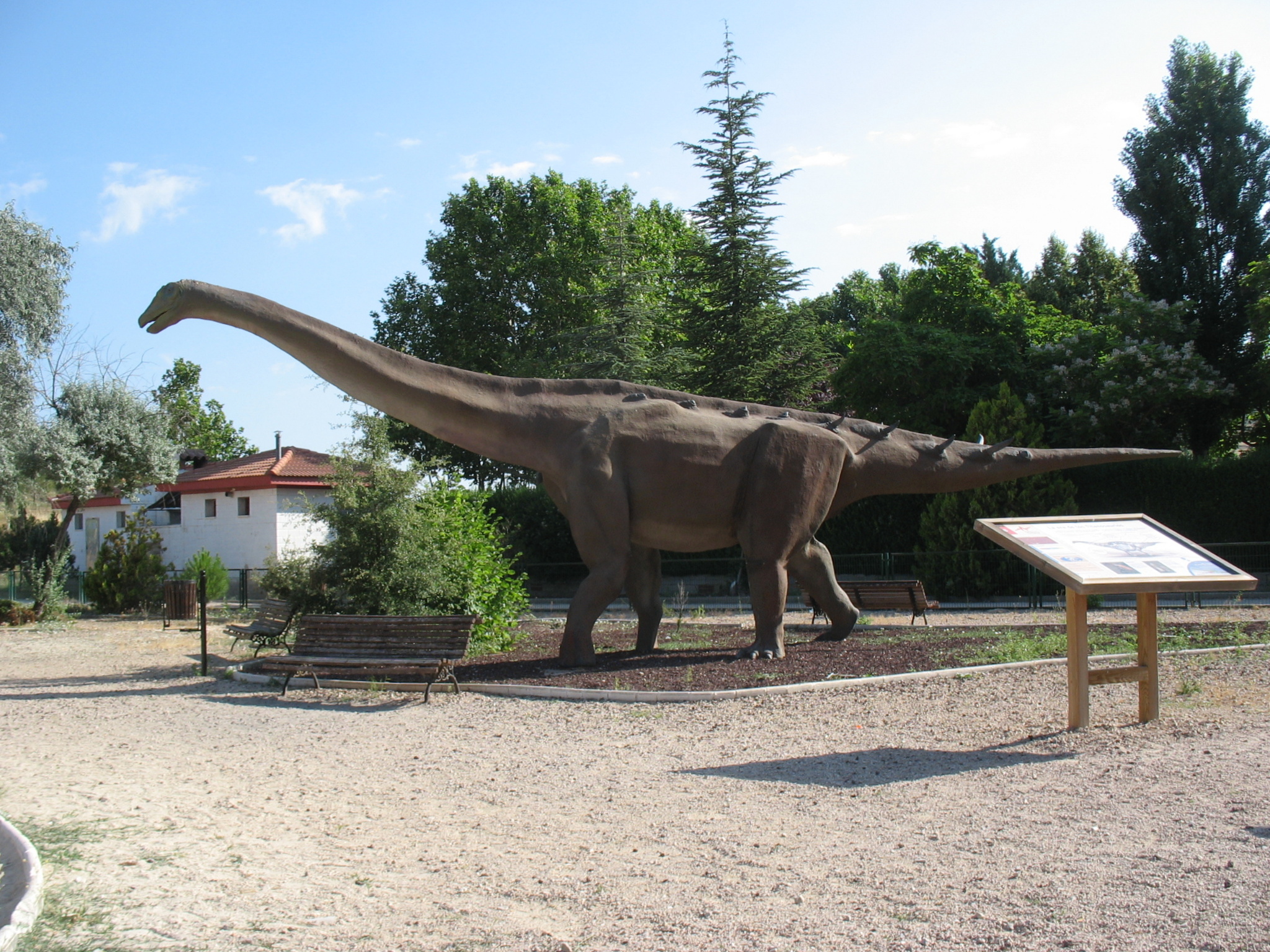
A classic example of an unexpected discovery is the Lo Hueco site, near Fuentes, in the province of Cuenca. Unearthed by chance in 2007 during the construction of the high-speed rail line to the Levante region, this extraordinary fossil deposit (often described as the “Atapuerca of dinosaurs”) has yielded more than 12,000 fossils, including a previously unknown species of giant sauropod. As a result, it is now regarded as one of the most important palaeontological sites in Europe.
Tombs and necropolises are frequent finds. Notable is the 'Neolithic Pit' of Barcelona, found in 2011 during the works at La Sagrera station: a huge hypogeum or collective tomb 4,900 years old with the remains of nearly 350 individuals. Between 2016 and 2019, in Utrera, Seville, two Roman necropolises with 59 burials (1st to 4th centuries AD) were discovered during the construction of the new El Torbiscal junction, at the intersection of the N-4 road and the regional A-471 road. Among other tasks, Ineco drafted the project and carried out environmental monitoring for the Directorate General of Roads, the project promoter.
The major airport expansions of the late 1990s and early 2000s also led to extensive archaeological activities in which the company was present. The largest of all was that of Madrid Barajas airport, between 1996 and 2005, for which it drafted the Master Plan and multiple projects, including those for the two new runways, and provided technical assistance for construction management and control. Ineco also produced a complex study, called FSAM or Future Madrid Airport System (1997-1999), in which it was specified that ‘the entire area was an archaeological site’.
And indeed, the enormous surface area of more than 12,000 m2, equivalent to 1,700 football pitches, soon became a gigantic excavation where mastodons and giant tortoises from the Miocene (23 million years ago) Bronze Age tombs (Las Quebradas and El Muladar), a 3rd-century Roman villa (El Rasillo and El Guijo), and Visigothic and Islamic settlements (El Encadenado-El Soto, Las Charcas and La Huelga), etc., were found. In total, 27 archaeological and 17 palaeontological sites.
Another major project was the expansion of Málaga Airport (the Málaga Plan), in which Ineco was responsible for, among many other tasks, the environmental management of the works between 2003 and 2013. During the construction of the new car park, archaeologists first uncovered a Roman necropolis containing more than 40 tombs dating from the 4th and 5th centuries AD. Later, during the extension of the airfield, an even older Phoenician settlement, La Rebanadilla, dating back some eight centuries earlier, was discovered. The site was subsequently studied and preserved in situ by reburial.
More recently, the works at Ibiza Airport (2018-2022), supervised by Ineco, brought to light a Punic-Roman agricultural complex (3rd century BC to 2nd century AD) and a Byzantine necropolis. In Galician airports such as those of Santiago de Compostela, Vigo and A Coruña, protection measures have been carried out such as the dismantling and relocation of hórreos (traditional raised granaries used to store grain and fodder) and mills, the reconstruction of the pazo (palace) of Culleredo and the relocation of traditional houses.
05
Protecting Heritage from Start to Finish
Heritage protection, both environmental and cultural, begins at the design stage. Previously known and identified cultural assets are included from the very first moment in the preliminary studies and their location is incorporated into the project's mapping. To this end, available documentation is analysed, such as inventories, catalogues and ‘archaeological charts’ (lists of sites by area), although in certain cases it may not be very precise and coordination with the competent bodies must always be carried out.
Different field works are also carried out in the area of operation in search of evidence, which require express authorisation. These may consist of visual or geophysical surveys (using non-intrusive methods), clearing and surface cleaning to locate possible elements of interest, or archaeological test pits and soundings, generally combining mechanical and manual means, unless the inspection specifies otherwise.
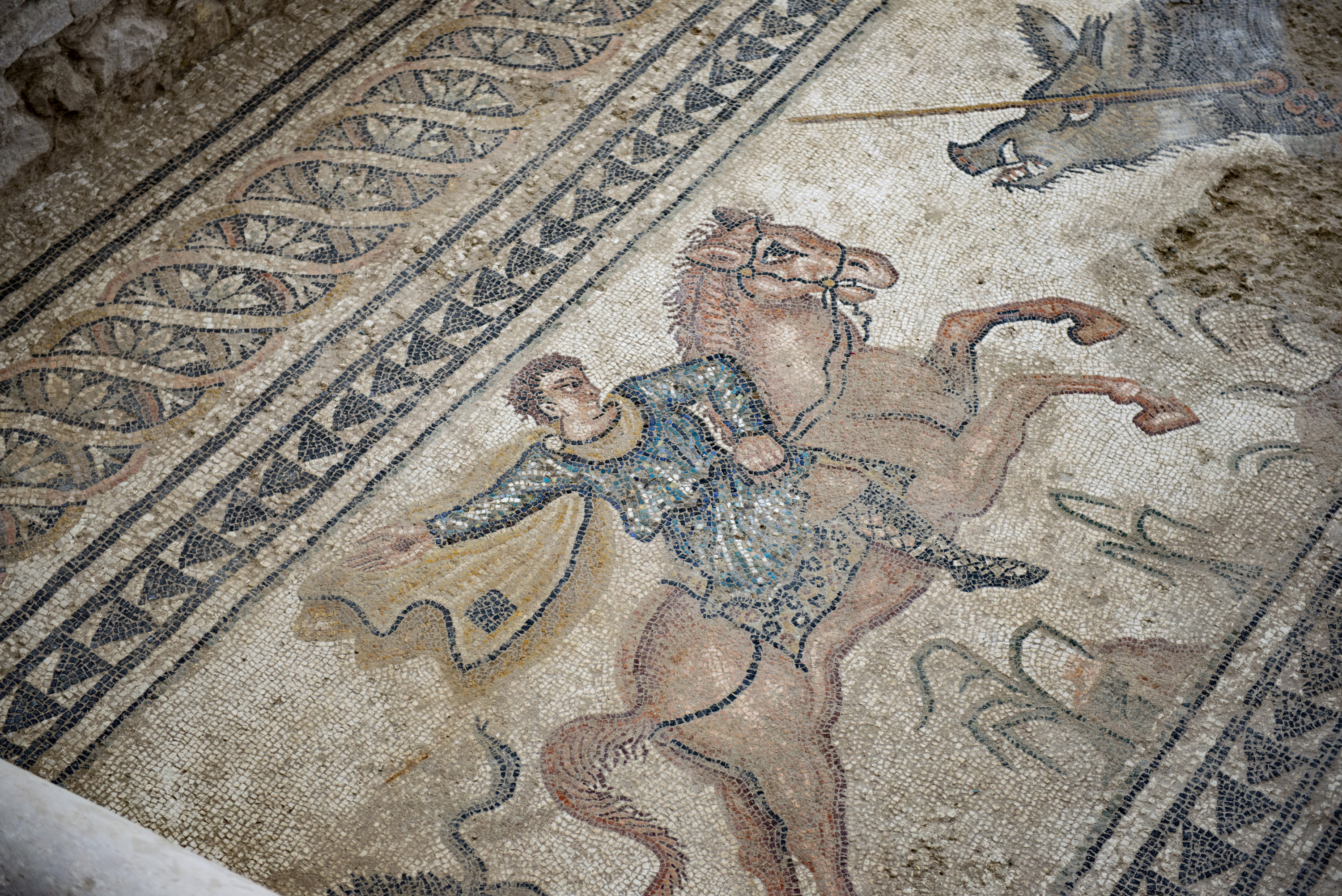
In the analysis of alternatives, the possible impacts on each of them are studied. A recent example is the route of the new A-76 highway in Ourense (Galicia), which crosses the archaeological site of the As Portas hillfort, declared Asset of Cultural Interest (BIC). Ineco has carried out the preliminary archaeological survey and a study of alternatives, as well as extensive mediation work with the heritage body, the developer and the project's technical team. Another case is that of the 693-metre viaduct on the Loja bypass of the high-speed line to Granada, which was included in the project to avoid affecting the Roman villa of El Salar, which stands out for its extraordinary mosaics.
After completing the documentation and the soundings, the heritage advisory team draws up an impact report detailing the possible points of interest and the preventive measures to be taken, and submits it to the competent regional body (or, where appropriate, to the Ministry of Culture) which must issue a favourable resolution in order to begin the work, also establishing the corresponding heritage protection measures (preventive, corrective or compensatory) which will be included in the project. It also grants permission to the specific professional who will be in charge of archaeological supervision throughout the execution.
Even if the preliminary results have been negative, once work has begun, findings may occur, which must be notified to the competent body.
The latter may request the developer to modify the project (for example, by diverting a route or building a viaduct or a tunnel) or request an excavation to identify the cultural and chronological affiliation to which the site belongs.
In other cases, the option is taken to study in situ, collect elements and subsequently cover the heritage element, to ensure its conservation for future studies. This was done with the Roman castrum (fortified camp) of La Gariposa, in Tafalla, Navarre, found in 2021 right on the route of the Zaragoza-Pamplona high-speed line. After considering several possibilities, the site was finally preserved on the surface, adequately protected, and a tunnel was built underneath for the train to pass through.
Frequently, both options are combined: the most valuable remains are moved to a museum while the rest are protected and reburied. In all cases, an archaeological report is drawn up that accounts for the findings during the work, independently of other studies that may be carried out.


