
Ineco is carrying out the studies required by FIFA as part of the Host City Mobility Plan, the framework used to assess transport capacity at each candidate host city.
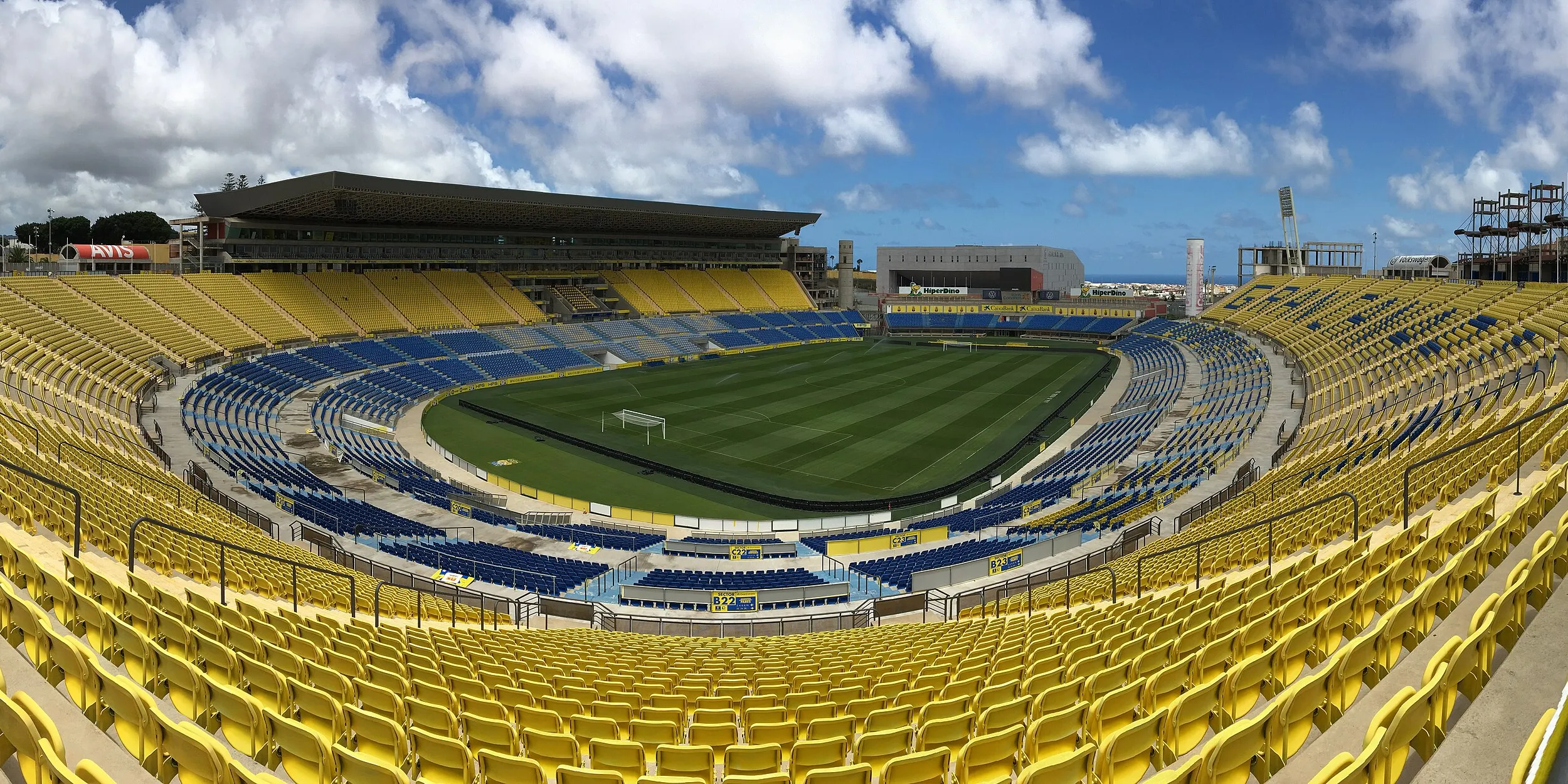
Ineco has begun developing the mobility study that will help support the Gran Canaria Stadium's bid to become a host venue for the 2030 FIFA World Cup. Mobility is one of the key factors in the selection of host stadiums, as, beyond the quality of the sporting facilities, a candidate venue must demonstrate its ability to manage the safe and efficient movement of tens of thousands of spectators before and after each match. To meet this challenge, Ineco is carrying out the studies required by FIFA as part of the Host City Mobility Plan, the document used to assess transport capacity at each candidate host city.
The study will make it possible to digitally recreate the behaviour of tens of thousands of people before and after matches through a dynamic microsimulation model that links spectator movements inside the stadium with their distribution across the surrounding urban area and the various modes of transport available. The objective is to verify that the mobility network can accommodate these flows without compromising safety, accessibility or the city's day-to-day operations.
The model will analyse pedestrian routes from the stadium exits, the performance of bus and shuttle services, special transport connections planned for match days, the capacity to disperse spectators once games have finished, and the integration of public transport with taxis, private hire vehicles (PHVs), park-and-ride facilities, parking areas and active mobility options. It will also assess traffic behaviour, road closures, traffic signal management, emergency access routes and dedicated itineraries for people with reduced mobility.
Simulating in Advance to Improve Planning
The simulation will enable planners to anticipate real mobility patterns during a major international event and to test different scenarios before implementation. These tools help identify potential congestion points, optimise journey times and define operational measures that ensure a safe experience both for spectators and for the normal functioning of the city.
The studies will need to demonstrate compliance with FIFA's stringent requirements. These include ensuring that public transport can accommodate at least 50% of the stadium's capacity within one hour before kick-off and 70% during the first hour after the final whistle, while also maintaining effective mobility operations during the three hours before and after each match.
Planning mobility for large-scale gatherings is one of Ineco's areas of expertise. Through simulation models and advanced analytical tools, the company supports public authorities in anticipating complex scenarios and designing solutions that guarantee safe and efficient travel.
A recent example is the work carried out for Spain's Ministry of Transport and Sustainable Mobility in preparation for the Solar Eclipse Trio of 2026, 2027 and 2028. In that project, Ineco employed big data, artificial intelligence and predictive models to analyse expected travel demand, assess the impact on transport infrastructure and develop measures to help manage an event expected to attract thousands of visitors.
This experience will now be applied to support the Gran Canaria Stadium's candidature as a host venue for the 2030 FIFA World Cup.