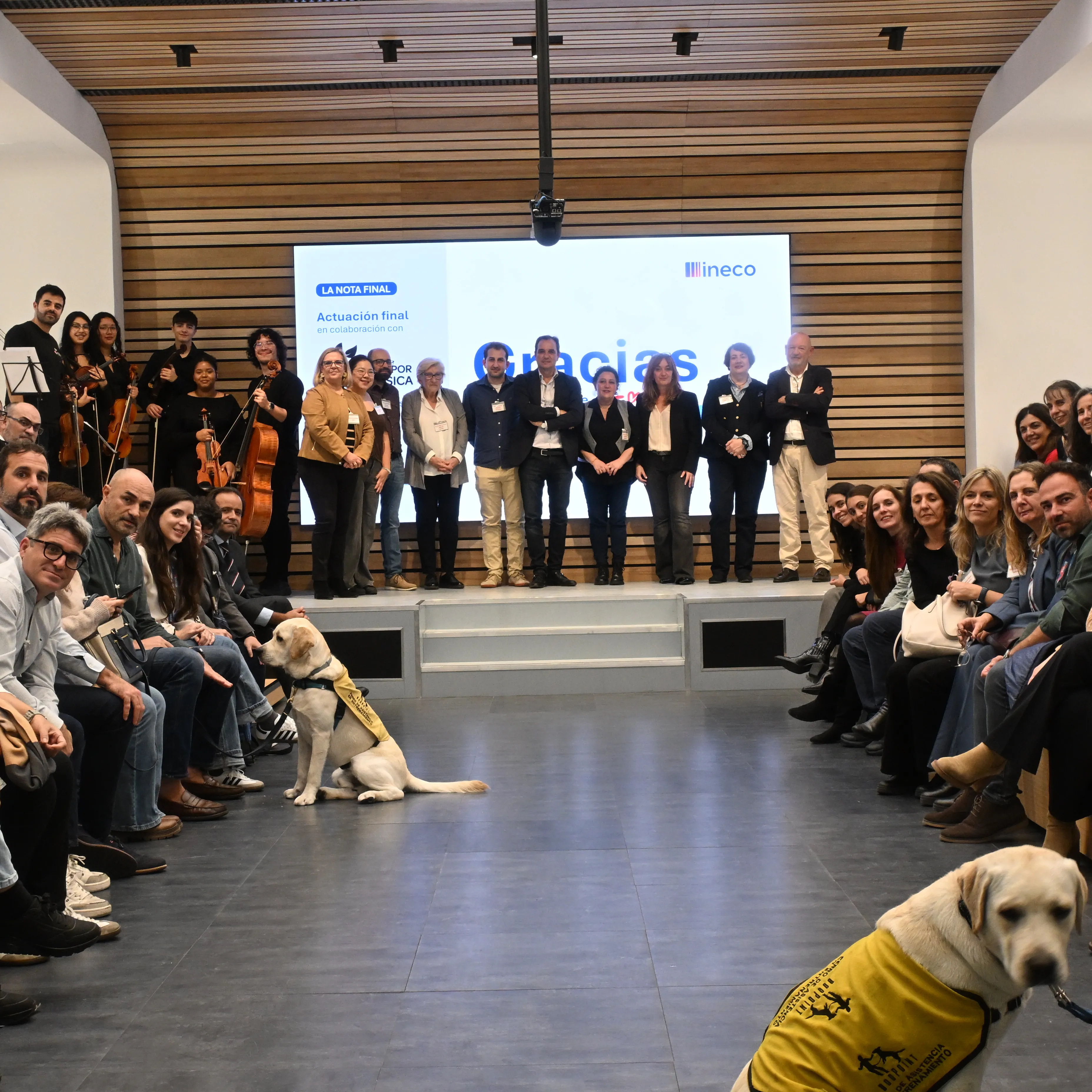
Innovating is not always about finding an answer. Sometimes it begins much earlier: looking at a problem from a different perspective, connecting disciplines that until then had advanced separately, or taking an idea outside the laboratory to see how far it can go. That is the philosophy of iCampus, Ineco's open innovation network that connects the company's technical expertise with universities and research centres. A space from which to explore solutions with potential applications in areas such as infrastructure, transport, sustainability, or digital transformation.
The initiative was launched in 2023 with the Universidade de Santiago de Compostela as the first university in the network, driven by a commitment to extend this model to other national and international institutions. Today, it has 12 ongoing projects addressing some of the challenges that are already transforming engineering: responding to more demanding scenarios, better understanding infrastructure behaviour, harnessing the potential of data, and translating scientific advances into tangible applications.
Preparing for changing scenarios
Phenomena such as floods, fires, high temperatures, and extreme events make it necessary to rethink how cities and infrastructures are planned and managed. Within iCampus, advanced methods applied to flood risk are studied, combining hydrological and hydraulic modelling, digital twins, and machine learning. Other research lines analyse the relationship between maritime climate and port operability, the vulnerability of transport networks, and the exposure of infrastructure to wildfires. The same perspective is applied to the urban environment. Together with Waseda University in Japan, evacuation and emergency management processes for fires, floods, earthquakes, and extreme heat events are being analysed.
Different approaches to a single need: to better understand complex scenarios in order to respond to them with greater anticipation.
Looking at infrastructure from a different angle
Innovation can also emerge from taking a fresh look at what we have known for decades. Another line of work focuses on better understanding how infrastructure materials and components respond to increasingly demanding conditions, while also exploring new ways to analyse their behaviour. Ongoing research includes studying the response of certain elements to high temperatures and the potential of techniques such as Raman spectroscopy, combined with machine learning models, to obtain new insights into their condition. These approaches are still evolving and require further testing and data, but they allow us to assess how far these technologies can go and what steps are needed to advance toward future applications.
That outcome is also part of the process. Not every path opened by research is ready to be immediately turned into an application; some serve precisely to identify what is missing, what works, and where it is worth delving deeper. In the port sector, a methodology has also been developed to study the noise associated with port activity, generating a valuable technical foundation for future applications.
Data to discover new relationships
Digital twins, simulation, and artificial intelligence are expanding the capacity to interpret increasingly complex systems. Within the Digital Twin for Infrastructures and Cities programme at the Universidad Politécnica de Madrid, students mentored by Ineco professionals have worked on use cases such as the impact of major events on urban mobility and the modelling of electricity consumption at the María Zambrano station in Málaga.
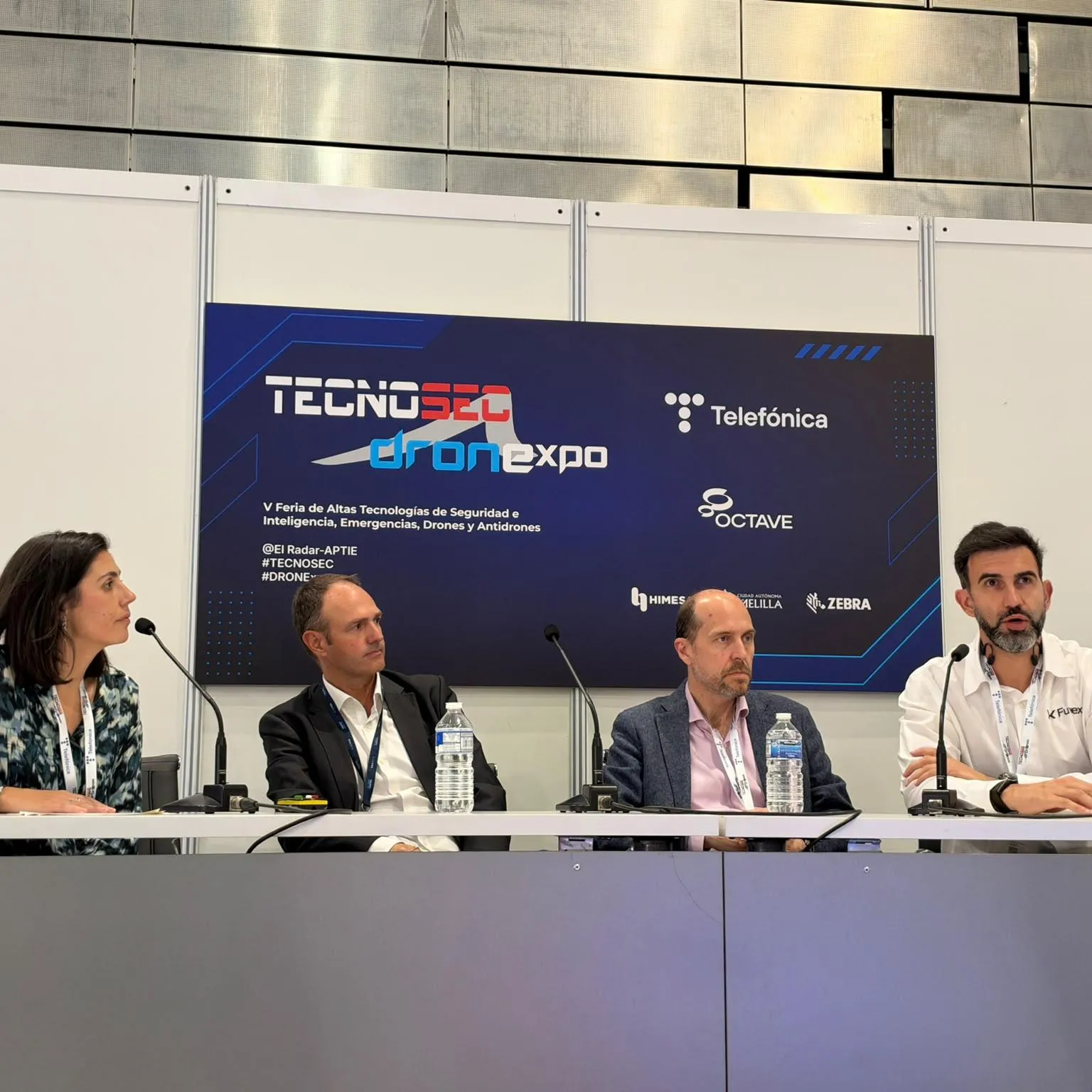
Artificial intelligence also raises questions that are not purely technical. The Observatory on Artificial Intelligence and Bias, developed with the Universitat Politècnica de València using mobility data, has given rise to a platform, reports, and a panel of experts. This experience has now made it possible to open a new line focused on the field of Justice. Tools are also being explored through various demonstrators to analyse drone trajectories and the conditions associated with their operations. In all these cases, technology is a means, not the end point. What matters is what it allows us to understand, anticipate, or decide better.
From idea to reality
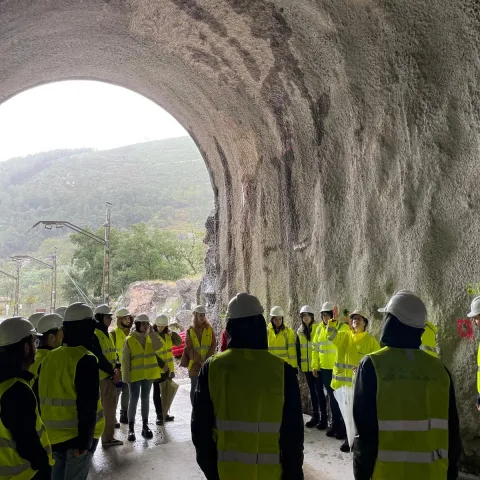
There is another essential field in iCampus: experimentation. In Lugo, for example, real-world tests have been carried out on Ferromora, a tool external to Ineco, contributing improvements and validations to some of its features. In parallel, the development of DOILI continues, aimed at the intelligent alignment design of linear infrastructure projects. Projects progress at different paces. Some have resulted in methodologies or tools; others are in the validation phase; and others still require further testing before taking the next step. This diversity is part of the very nature of innovation. Exploring also means testing an idea, learning from the results, and deciding where to go next.
In this way, iCampus creates a two-way street between academia and engineering. Scientific advances find real-world problems on which to test themselves, and Ineco's experience, in turn, generates new questions for the academic realm.
Climate change, materials, data, artificial intelligence, and experimentation are different fields. Yet they all respond to the same ambition: to better understand what lies before us in order to be prepared for what is to come.