
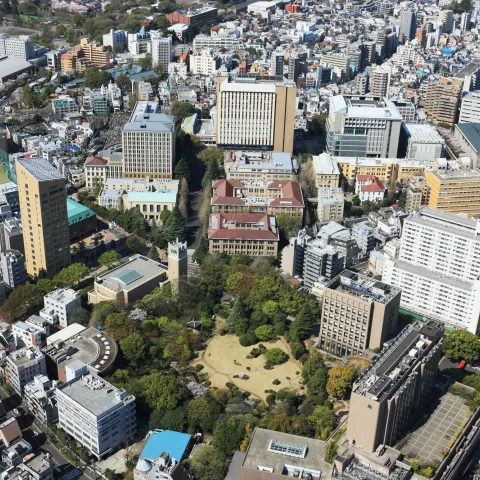
Waseda University, one of Japan’s most prestigious academic institutions, is to collaborate with Spanish engineering and consultancy firm Ineco on research into risk management and evacuation processes in urban areas during emergencies caused by floods, wildfires, earthquakes and heatwaves.
The partnership, which forms part of Ineco’s iCampus open innovation network, will support research aimed at improving public safety in high-impact emergency situations while enhancing the resilience of cities and critical infrastructure against increasingly frequent and severe extreme weather events.
The initiative will combine Waseda University’s expertise in disaster management and community resilience with Ineco’s experience in planning, operational management, risk analysis, and the development of safety and security strategies for transport infrastructure. The research will focus on risk management in complex urban environments and on evacuation planning for emergency scenarios.
The project will identify the types of emergencies to be examined and develop scenarios covering preparedness, response and recovery phases. These scenarios will incorporate inclusive population considerations and community-based approaches. A pilot simulation exercise will also be conducted to test and validate the proposed methodologies.
The collaboration comes at a time of growing concern over the impact of extreme events on communities and territories, with infrastructure playing a crucial role in mitigating risks. The ability to anticipate hazards, identify vulnerabilities and plan effective responses has become essential for strengthening public safety and ensuring the continuity of critical services.
Waseda’s participation also marks a further step in the international expansion of iCampus, Ineco’s open innovation programme designed to foster collaboration between universities, technology centres and industry professionals. Since its launch in 2023, the programme has promoted applied research projects across a wide range of fields, including infrastructure resilience to climate change, artificial intelligence, sustainable mobility, the digitalisation of cities and infrastructure, port operations, and risk management.
At present, iCampus maintains partnership agreements with twelve universities and five technology centres. Among the programme’s most notable achievements are tools for optimising railway alignments, studies on the behaviour of railway infrastructure under high-temperature conditions, advanced flood analysis models, methodologies for measuring noise in ports, and the development of the AI and Bias in Diversity Observatory.
Research to Anticipate Emerging Risks
Research into emergency management, urban resilience and climate adaptation is one of the areas in which Ineco is working to help public authorities and infrastructure operators prepare for increasingly frequent and intense extreme events. In this field, the company develops advanced methodologies and analytical tools to assess risks associated with hazards such as floods and wildfires, with the objective of strengthening prevention, planning and emergency response capabilities.
In relation to flooding, Ineco’s specialist teams undertake hydrological and hydraulic studies that model water behaviour across territories through digital simulations. These analyses help identify vulnerable areas, assess potential impacts on critical infrastructure and design adaptation measures to reduce exposure to risk. The resulting models support decision-making in areas such as spatial planning, the protection of strategic assets and the implementation of early warning systems.
The company has also developed its own methodology for assessing wildfire risk under different climate change scenarios. The approach combines climate science, territorial analysis and advanced modelling techniques to identify vulnerable areas, anticipate changes in risk levels and support the planning of preventive measures.
This methodology is already being applied in projects including the Climate Change Adaptation Plan for Spain’s State Road Network, as well as several initiatives for Adif aimed at adapting railway infrastructure to the impacts of climate change.
The collaboration with Waseda University is expected to contribute new perspectives and analytical approaches, supporting the development of enhanced tools and methodologies that improve the capacity of cities and infrastructure systems to respond to emergency situations and address increasingly complex risks.