Born out of the company’s internal innovation programme, ESCAI (Space for Innovative Commercial Air Services) connects Ineco’s technical expertise with the needs of local communities.
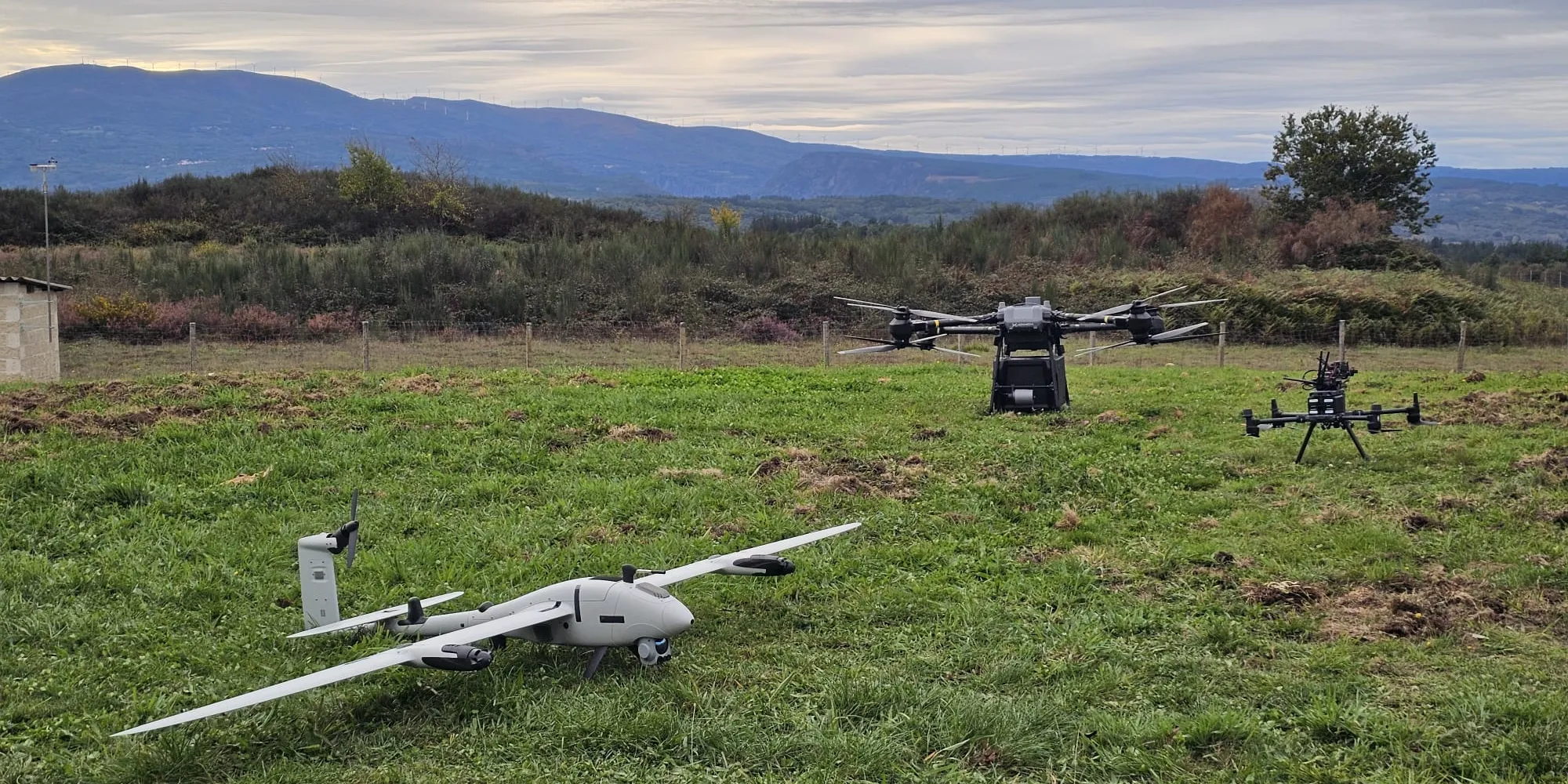
Ineco’s innovation project ESCAI has carried out its final flight campaign in the Ribeira Sacra, marking another step towards enabling new aerial services in rural areas. Over three days, the region became a living laboratory for testing technologies and procedures designed to support the safe coexistence of drones and crewed aircraft.
Created through the company’s internal innovation programme, ESCAI (Space for Innovative Commercial Air Services) brings together Ineco’s technical expertise and the needs of local communities. In previous phases, the project demonstrated logistics, agricultural, infrastructure inspection and emergency-response applications. It also developed a digital platform designed to connect local organisations and businesses with professional drone operators. This latest campaign focused on the capabilities required to support more complex operations in the future.
Working alongside the Spanish Aviation Safety and Security Agency (AESA) and with the collaboration of the Regional Government of Galicia, Ineco coordinated electronic conspicuity and satellite navigation trials, providing the infrastructure and operational organisation necessary for their execution. With the support of ENAIRE, the company deployed ground antennas and integrated this infrastructure with its own systems and those of EUROCONTROL to collect real-time flight data. EUROCONTROL will be responsible for analysing and processing the information gathered.
Ineco also participated as a drone operator, conducting flights to assess the coverage of Global Navigation Satellite Systems (GNSS), electronic conspicuity (e-Conspicuity) devices, which make aircraft electronically detectable, and Detect and Avoid (DAA) systems. Evaluating these technologies will provide valuable insight into their real-world performance and contribute evidence for the development of new operational procedures.
The campaign also marked a milestone in aeronautical experimentation. According to AESA, a Temporary Segregated Area (TSA) has been authorised for experimental purposes for the first time in Spain, following an initiative by the Directorate General for Civil Aviation. This framework enabled the trials to be carried out using specific communication, coordination and contingency-response procedures.
A Particularly Valuable Testing Environment
The activities took place at Aeródromo do Cadaval, Finca Millara and Miradoiro de Triguás. The combination of rural landscapes, complex terrain and varied flight profiles makes the Ribeira Sacra an especially suitable location for this type of work. According to AESA, its characteristics allow the results to be extrapolated to almost 80% of Spain’s territory.
Alongside Ineco, the campaign brought together AESA, ENAIRE, EUROCONTROL, ESSP, the European GNSS Service Centre, Aeromedia, AXPA, Bluenest, FUVEX, Gradiant and Umiles, as well as aerial units from the Customs Surveillance Service, the Spanish National Police and the Guardia Civil. Contributions from this collaborative ecosystem included electronic conspicuity coverage maps provided by AXPA and operational solution trials carried out by ENAIRE and Gradiant.
With this final flight campaign, ESCAI moves beyond demonstrating potential drone applications and towards evaluating the conditions that will enable their wider deployment. The project therefore places Ineco’s innovation capabilities at the service of a clear objective: helping new aerial services respond to challenges related to connectivity, economic activity and access to essential services in rural areas.