

The Anillo Vial Periférico is an infrastructure project that will transform metropolitan mobility in Lima
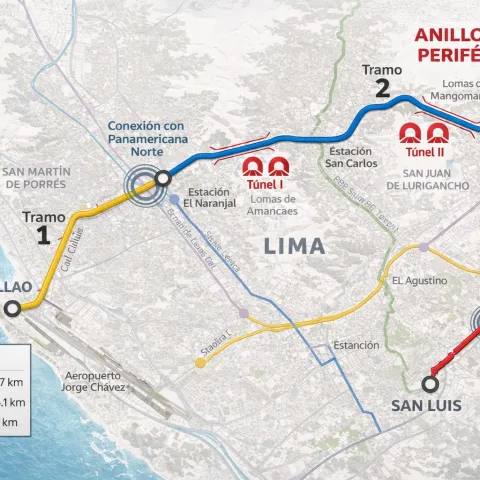
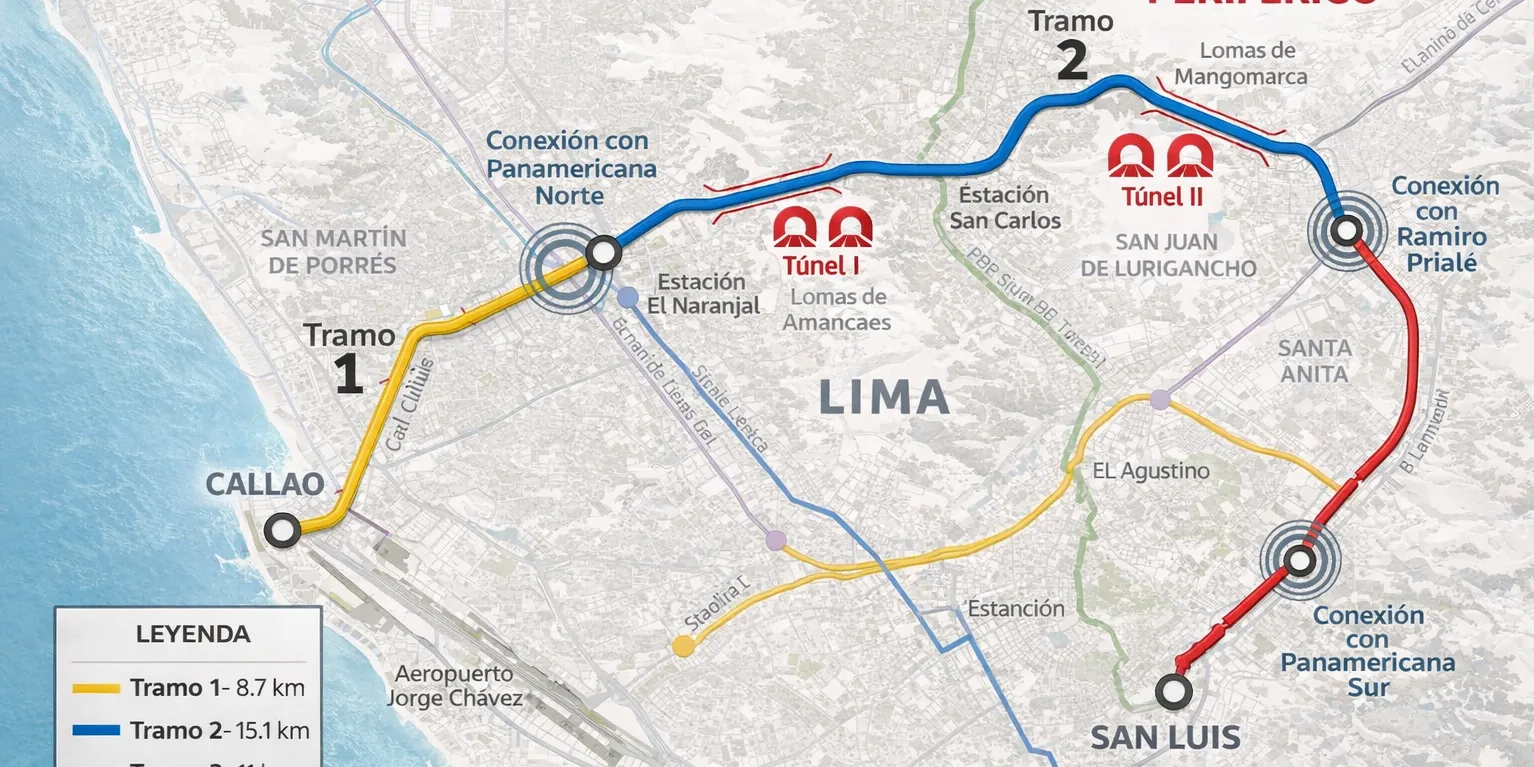
Ineco has been selected to supervise the design and construction of the Anillo Vial Periférico, the largest planned urban corridor in Peru. This new 34.8‑kilometre tolled urban motorway will connect 11 districts of Metropolitan Lima and one district in Callao, under a co‑financed Public‑Private Partnership (PPP) model.
The contract, awarded by the regulatory body OSITRAN, will be carried out by a consortium formed by Cesel, Ineco and MAB Ingeniería de Valor. With a total duration of 110 months, the scope includes reviewing the Final Engineering Studies (EDI), supervising civil works, structures and technological equipment, and implementing digital methodologies such as BIM (Building Information Modelling) for comprehensive project monitoring. The works will be executed by the Spanish companies Cintra, Sacyr and Acciona.
A Strategic Axis for Urban Mobility
The Anillo Vial Periférico is a high‑impact infrastructure project that will transform mobility across metropolitan Lima. It will be divided into three sections and will include two twin tunnels, eleven viaducts, sixteen underpasses, eighteen overpasses, three main toll stations and two side toll stations, as well as pedestrian crossings every 500 metres. The design speed is set at 80 km/h, and the project also incorporates service roads to enhance local connectivity.
Ineco will lead key disciplines such as road engineering, structures and drainage works, as well as the environmental component. The company will also oversee technical and administrative coordination of the supervision activities, ensure compliance with national and international standards, monitor onsite safety, verify materials quality and control the physical and financial progress of the works.
A Consolidated Presence in Peru
This new contract adds to two major projects currently being developed by Ineco in the country: the supervision of the expansion of Jorge Chávez International Airport (AIJCh), also for OSITRAN, and the Final Engineering Study for the new Daniel Alcides Carrión Central Highway, the first mountain motorway in Peru, along with other airport‑related projects nationwide. Through these initiatives, the company strengthens its role as a strategic partner in the development of essential mobility infrastructure and supports economic growth in Peru, where Ineco has maintained an uninterrupted presence for over ten years, with an office in Lima.
Spanish Engineering at the Forefront in the Americas
Ineco’s strong presence across the Americas since the 1970s and 1980s serves as a strategic driver for the international expansion of the Spanish transport infrastructure model, contributing to positioning Spain as a global benchmark in railway, airport, road and multimodal engineering. In this context, collaboration with nearly a dozen Spanish companies in the region is a clear example of Spanish engineering at the forefront, reinforcing business internationalisation and the collective positioning of the Spain brand.
This experience is reflected in the company’s extensive activity in some of the most significant road infrastructures in the region. In Mexico, Ineco has played a key role over the past 15 years in road supervision and management. Highlights include its work as supervising agent for the Guadalajara–Colima section, a strategic link within the Manzanillo–Tampico corridor connecting the Pacific Ocean with the Gulf of Mexico. More recently, the company also assumed the supervision of the Central Gulf Motorway in Mexico, which links the country’s southeast—particularly the Gulf region—with the central area, connecting the cities of Veracruz and Mexico City.
In Brazil, Ineco led the consortium responsible for coordinating contracts and the various agencies involved in constructing the Rodoanel Mário Covas ring road, a key infrastructure designed to improve access from São Paulo—Brazil’s financial hub—to the Port of Santos, the country’s principal port, and to Guarulhos International Airport. In Central America, the company has taken part in Costa Rica’s Infrastructure Programmes for the Ministry of Public Works and Transport, acting as an Executing Unit.
In Buenos Aires, Ineco contributed to the development of Paseo del Bajo, a semi‑underground four‑lane road for heavy traffic running through the Argentine capital, improving both mobility and urban integration.
With projects of this scale, Ineco not only helps enhance mobility and competitiveness across these countries, but also strengthens its position as a strategic partner in the development of major infrastructure—capable of transforming territories, stimulating economic activity and efficiently connecting key logistics and urban hubs.