


Sergio Vázquez Torrón highlighted the importance of long-term planning in the digital economy.
The President of Ineco highlighted the importance of technical expertise within the public sector as a key driver of European competitiveness during the CREO Forum, organised by Cinco Días. He also warned of the challenges involved in adapting Spain’s infrastructure to new demands and of the risks associated with a global rush to invest in artificial intelligence without a sufficiently long-term perspective.
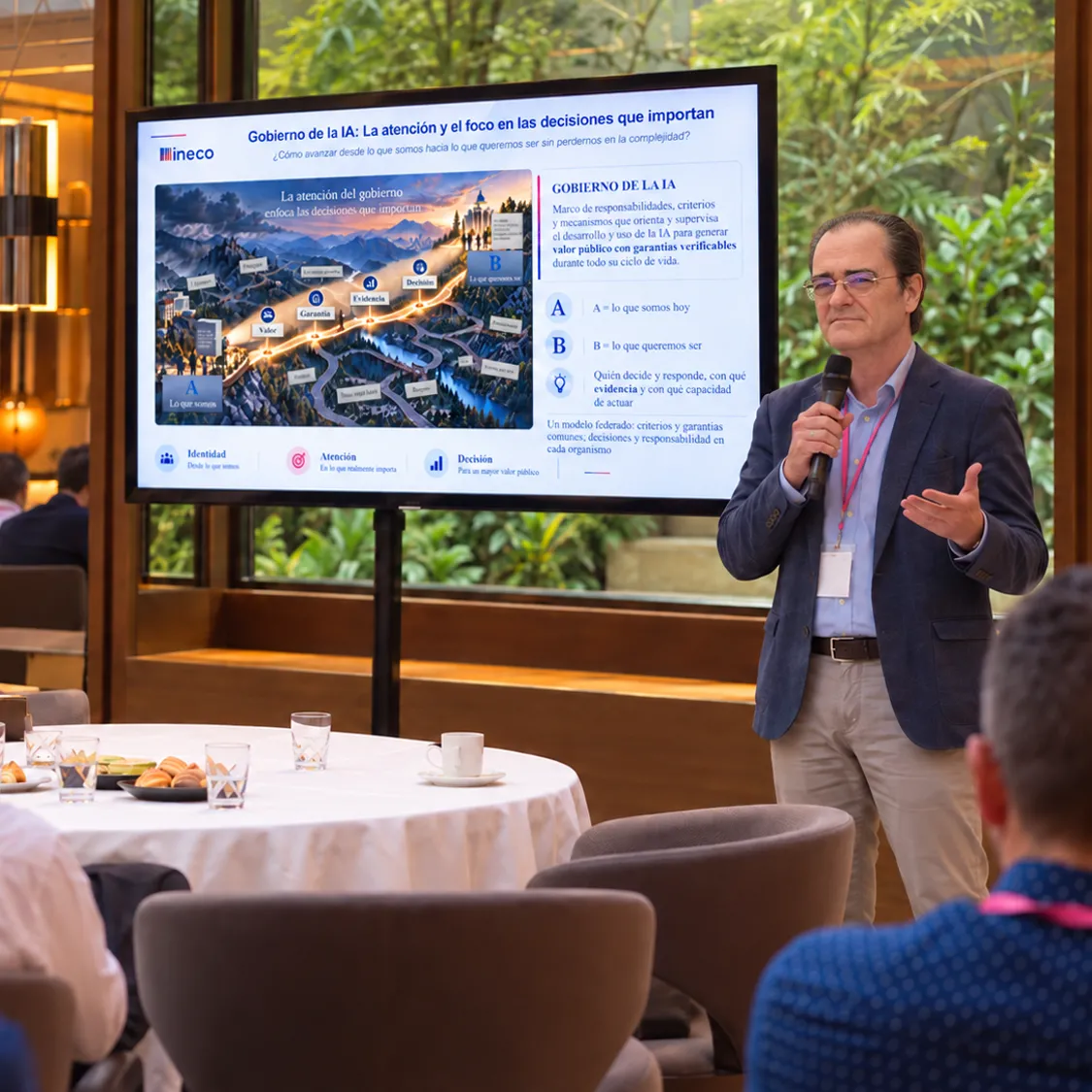
Major economic transformations depend not only on the amount of money invested but also on the ability to decide where, how and for what purpose resources are allocated. This was one of the key messages delivered by Sergio Vázquez Torrón, Chairman of Ineco, during his participation in the CREO Forum 2026, where he underscored the role of technical knowledge and public institutions in translating large-scale investments into tangible economic outcomes.
“Not everything is a matter of quantitative investment,” said Vázquez Torrón, who identified the availability of specialised talent and effective planning capabilities as decisive factors in addressing challenges such as the energy transition, digitalisation and the adaptation of infrastructure to climate change.
At a time when Europe is debating its loss of competitiveness compared with the United States and China, the Chairman of Ineco argued that investment efforts must be accompanied by stronger technical capabilities within the public sector. The challenge is not merely to mobilise resources but to ensure that professionals and institutions are able to guide investments, manage their complexity and align them with long-term objectives.
To achieve this, he stressed the need for public administrations to incorporate new professional profiles, particularly in technological fields, while encouraging greater mobility of talent between the public and private sectors. Rejecting the notion that these are separate worlds, Vázquez Torrón advocated making the most of their complementary strengths and highlighted the contribution that public companies such as Ineco can make by bringing together specialised expertise and extensive experience in the management of major projects.
From Building New Infrastructure to Managing Existing Assets More Effectively
Vázquez Torrón drew on Spain’s experience in transport infrastructure to illustrate the importance of these capabilities. Over recent decades, the country has developed an extensive network of roads, railways and airports that has transformed mobility and connectivity nationwide. According to the Chairman of Ineco, this achievement demonstrates Spain’s ability to plan and deliver projects of considerable technical complexity.
However, the nature of the challenge is now changing. After decades of expansion, Spain has a mature infrastructure system that must respond to new pressures, including demographic growth, increasing tourism-related travel, evolving mobility patterns and, above all, the effects of climate change.
“The climate is no longer the same as it was when these infrastructures were designed,” he noted, arguing that investment priorities should be reassessed, with greater emphasis placed on maintenance, adaptation and the management of existing networks. In his view, resilience cannot be limited to strengthening infrastructure against extreme weather events. It requires a system-wide perspective that encompasses operations, incident management and the ability to maintain services under increasingly demanding conditions.
The Artificial Intelligence Investment Boom and the Railway Precedent
Vázquez Torrón also extended the discussion on planning to the digital economy, at a time when major technology companies are investing vast sums in data centres and other infrastructure required to support the development of artificial intelligence.
To illustrate the risks associated with this investment race, he referred to a historical precedent: the expansion of the railway network in the United States during the nineteenth century. While that investment transformed the American economy and laid the foundations for industrial development, it was also accompanied by episodes of overinvestment, excessive debt and financial instability.
The comparison highlights a significant difference. Whereas railway infrastructure could remain useful for decades, technological assets are subject to far faster cycles of innovation. As a result, some investments may become obsolete before generating the expected economic returns.
This uncertainty, he argued, reinforces the need to incorporate principles of economic sustainability and a long-term perspective into major investment decisions. Vázquez Torrón advocated an active role for public authorities in strategic planning, while recognising the essential contribution of private-sector initiative.
Ultimately, the message conveyed at the CREO Forum centred on a fundamental issue for European competitiveness: having the resources to finance major transformations is only part of the equation. Equally important are the talent, institutions and technical capabilities needed to deliver them successfully. The challenge is not simply to invest more, but to invest better and ensure that those investments create lasting value.