
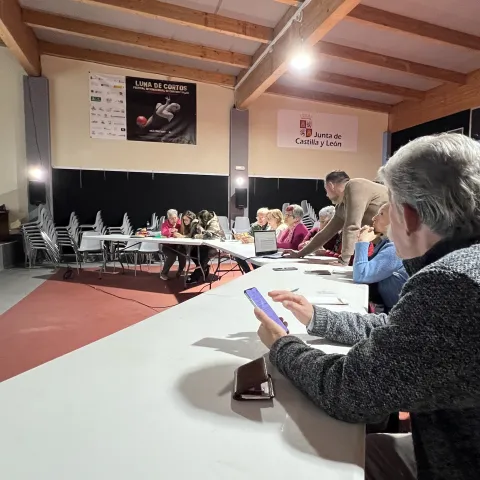
Early in the morning, in Riego de la Vega, León, Daniel Fernández switches on his laptop. A few metres away, Silvia Macías checks the materials for the afternoon workshop. Both work at Ineco in technology-related roles, but for these two weeks their office looks very different: a small rural town where, alongside their regular working day, they teach others how to navigate the digital world.
This is Ineco RuralTIC, the rural digitalisation programme promoted by Ineco. Now in its fourth edition, the initiative enables the company’s professionals to combine remote working with a form of technological volunteering in municipalities with fewer than 10,000 inhabitants.
The day unfolds with meetings, reports and technical tasks, but also with questions that go beyond their usual work: how to use email, how to make a video call, how to pay online safely or how to book an administrative appointment via the internet. Daniel, an IT Operations and Support specialist, and Silvia, a consultant specialising in IT and cybersecurity, are part of Ineco’s network of “digital nomads”, bringing their expertise to environments where technology is not always readily accessible.
They do so through practical, approachable workshops designed to address real, everyday needs. One of the local residents taking part puts it simply: “Nowadays, if it’s not through technology, how do you connect with others?” A couple of chairs away, another participant practises using ChatGPT to solve problems with houseplants: “I upload a photo, it tells me what’s wrong and how to fix it.”
The programme strengthens citizens’ digital skills, making it easier to access basic services and helping to reduce the digital divide. At the same time, it supports the local economy: small businesses learn how to build an online presence, manage electronic procedures and communicate more effectively with their customers.
More than 40 municipalities have signed up for this fourth edition. Since its launch, Ineco RuralTIC has reached over 100 towns and villages and nearly 285,000 people, through more than 1,000 workshops delivered by volunteer professionals from the company.
Its impact is felt in everyday life: in those who learn to write their first email, in those who discover they can run their business from a screen, and in those who gain the independence to complete administrative procedures on their own. Small changes that, taken together, transform how a territory relates to technology.