

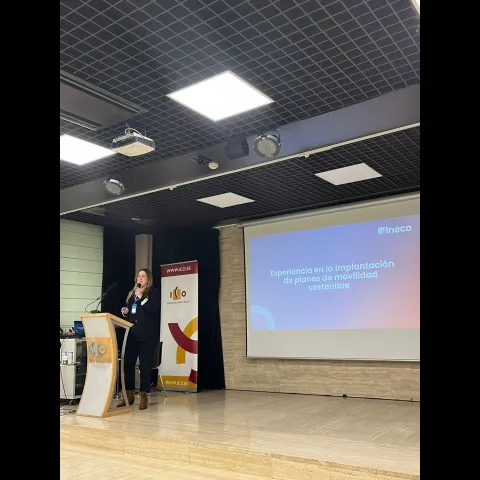
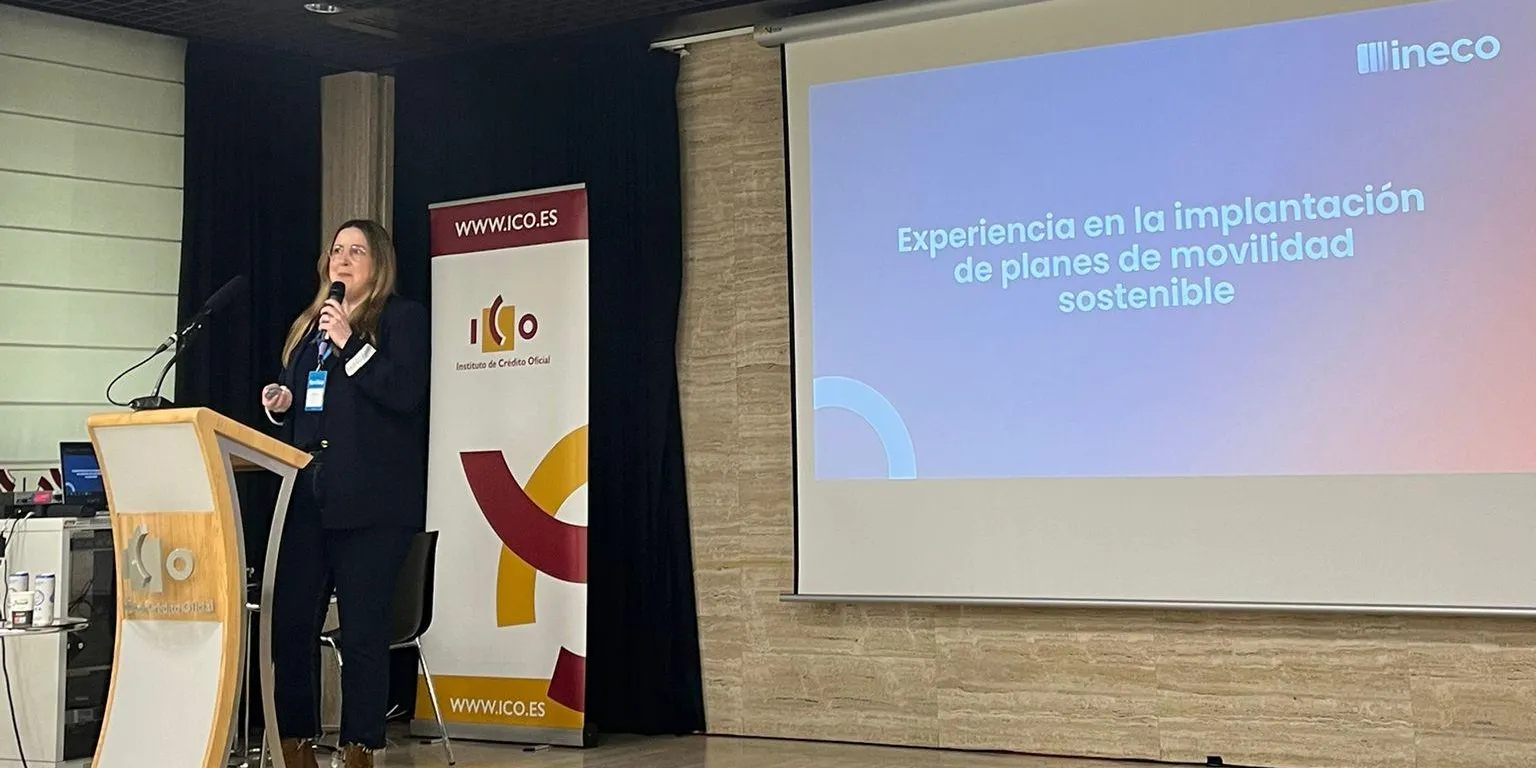
Carmen Benayas, General Services and Global Mobility Deputy Director at Ineco, presented the company’s experience in implementing sustainable mobility plans.
The way people travel to work is changing. It is no longer just about getting to the office, but about doing so with a lower environmental impact, reduced costs and greater efficiency. This was the focus of the meeting held by the Action Group on Sustainability and CSR in Public Sector Companies, led by Forética and made up of 27 public entities.
Among the speakers, Carmen Benayas, Deputy Director of General Services and Global Mobility at Ineco, presented the company’s experience in implementing sustainable mobility plans, an area that is gaining increasing prominence on both the corporate and regulatory agendas. The context is significant. The recent update of the Sustainable Mobility Law shortens deadlines and raises requirements for companies, which will need to have specific mobility plans in place for their workplaces before December 2026. These plans must include measures such as promoting collective transport, active mobility, car sharing and teleworking.
In this scenario, Ineco has a head start. The company, which is linked to Spain’s Ministry of Transport and Sustainable Mobility, has been working in this field for years, both in the design of public policies and in the internal rollout of solutions. It has contributed to the development of the 2030 Safe, Sustainable and Connected Mobility Strategy and to the Sustainable Mobility Law itself, as well as delivering urban and regional plans in Spain and abroad.
However, the shift is not only regulatory but also cultural. As Carmen Benayas explained, the most effective measures combine incentives, infrastructure and awareness-raising. At Ineco, this has translated into initiatives such as car-sharing systems with hundreds of users, the incorporation of low-emission vehicles and an expanded use of teleworking. The challenge now lies in scaling up these solutions and adapting them to an environment in which commuting costs have risen and the pressure to cut emissions continues to grow. In this context, digitalisation—platforms that integrate different transport modes or make it easier to share journeys—emerges as one of the key levers.
Commuting mobility is therefore becoming an issue that goes beyond logistics and extends into the strategic and regulatory sphere. Companies that anticipate these changes will not only comply with the law, but also enhance their competitiveness and reduce their environmental footprint at a time of profound transformation.