


The initiatives now enter a maturation phase in which they will be developed into deployable solutions, strengthening Ineco’s position as a benchmark for innovation in engineering and consultancy.
Ineco will develop six new innovation projects under its 2026 Intrapreneurship Call, an initiative that has mobilised 120 professionals and received 40 ideas. The selected proposals now move into a development phase focused on real-world application in areas such as transport, energy, defence and public administration.
The chosen innovations share a common objective: to turn advanced technologies into practical solutions capable of anticipating risks, enhancing safety and optimising the operation of critical infrastructure.
In the field of cybersecurity, initiatives include PQC-COMM, which proposes a new communications protection model against quantum computing threats through message-by-message independent encryption, and AEGIS, a system designed to detect and manage threats such as unauthorised drones by integrating multiple sensors. These are complemented by CYBERTWIN – Intelligent Shield, a digital twin-based platform that replicates real infrastructure to simulate attacks, validate solutions and anticipate incidents without disrupting operations.
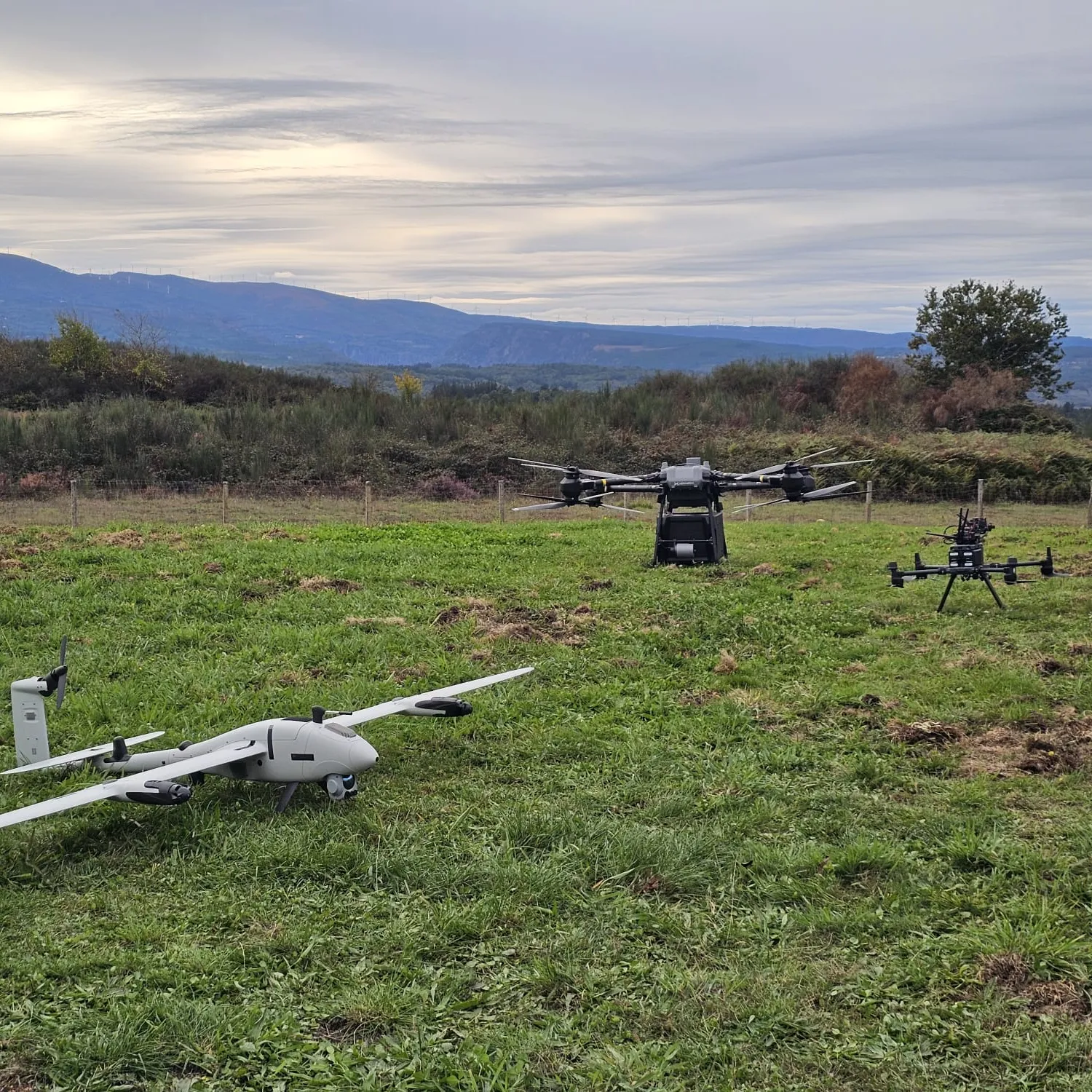
Emergency management and climate change adaptation represent another key focus area. In this domain, Belenos FirePredict Geoportal enables the prediction of wildfire behaviour using geospatial models and simulations, supporting proactive decision-making. Meanwhile, FIRE NEST combines cameras, sensors and autonomous drones to detect, verify and report fire outbreaks in real time, reducing response times and improving coordination between agencies.
Alongside these initiatives, FARO introduces an approach based on advanced analytics and artificial intelligence, integrating data from multiple sources—such as sensors, environmental conditions and operational data—to identify patterns, anticipate anomalies and optimise the maintenance of railway infrastructure.
Taken together, the selected projects demonstrate Ineco’s commitment to solutions that integrate artificial intelligence, data analytics, simulation, advanced sensing and digital platforms, enabling a shift towards more predictive, efficient and resilient management models.
The initiatives now enter a maturation phase in which they will be developed into deployable solutions, strengthening Ineco’s position as a benchmark for innovation in engineering and consultancy.