
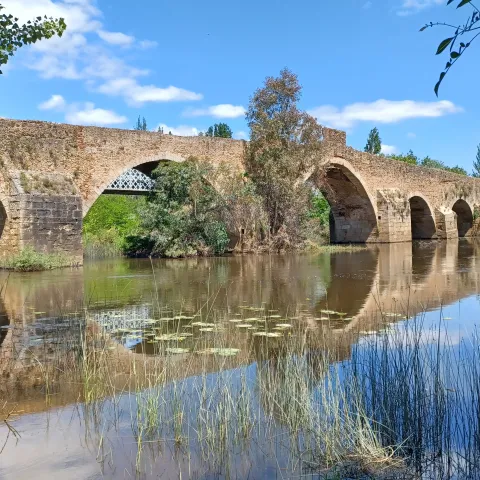
Five kilometres from Badajoz, spanning the River Gévora, the Cantillana Bridge has been defying time for almost five centuries. Built between 1531 and 1535 during the reign of Charles V, this structure of 17 semicircular arches not only linked the routes between Badajoz and Cáceres for centuries, but today also stands as a singular piece of Spain’s historical heritage.
In recent decades, however, its story has been one of silent deterioration. Declared a Site of Cultural Interest in 2022, the bridge is currently impassable, affected by widespread structural damage: the collapse of its central vault, the destruction of the access area following flood events, and the progressive tilting of several piers all threaten its stability.
Faced with this scenario, Ineco has taken on the challenge of restoring both the bridge’s integrity and its function. The task goes far beyond a purely technical intervention: it seeks to reconcile history, engineering and landscape.
The rehabilitation project for the Cantillana Bridge, recently presented at the 2nd International Congress on Public Works and Civil Engineering Heritage, is the result of a collective effort. A multidisciplinary team from Ineco — bringing together specialists in historic structures, geotechnics, hydrology, environmental studies and heritage — is defining an intervention that respects the bridge’s original essence while ensuring its long-term durability.
A project that blends memory and innovation
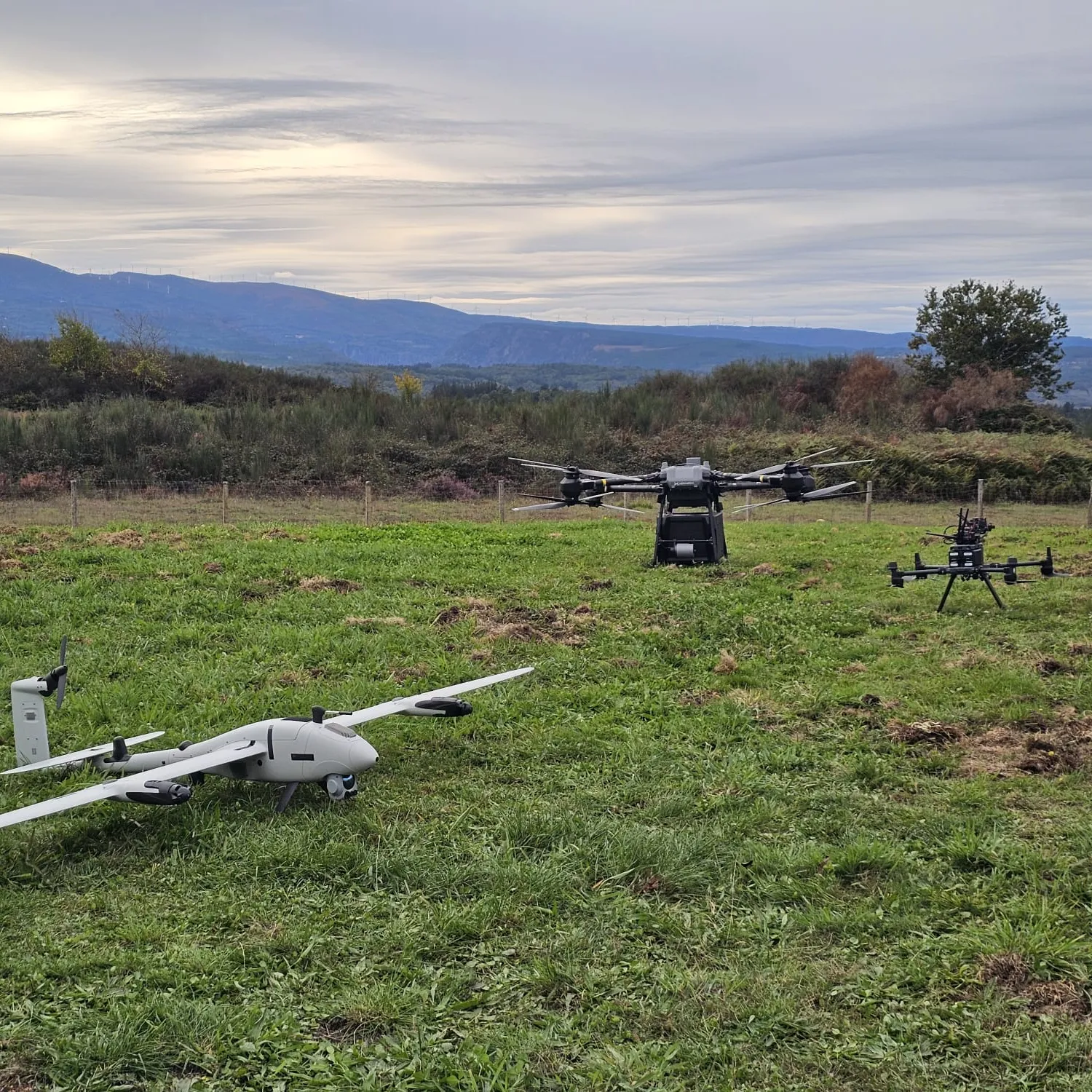
The absence of historical documentation on its original construction meant that work had to begin almost from scratch. To address this, advanced technologies such as drone-based photogrammetry were employed, making it possible to generate a georeferenced, photorealistic 3D model of the bridge — a key tool for understanding its geometry and planning the works. This approach, in which technology is placed at the service of heritage, is one of the project’s defining features.
The planned intervention is based on a clear principle: reconstruction without altering the original character. Collapsed arches will therefore be rebuilt using granite ashlar masonry, replicating historic construction techniques; the piers will be stabilised through invisible micropiles; and the materials used — lime mortars and traditional masonry — will remain faithful to the original fabric of the structure. Even symbolic elements will regain their place: the project includes reinstating the historic plaques that once crowned the main span, one of which is currently preserved at the Archaeological Museum of Badajoz.
The ultimate aim is not merely structural. The bridge is set to become part of a future greenway for cyclists between Badajoz and Cáceres, thus reclaiming its role as a territorial connector, updated for the 21st century.
Engineering with a vocation for permanence
The Cantillana project is yet another example of Ineco’s ability to tackle complex challenges in the field of structural conservation. With a team of more than 100 specialists, the company has established itself as a benchmark in pathology studies and infrastructure assessment, combining technical expertise, innovation and a holistic approach that spans from inspection through to execution.
Its experience ranges from the assessment of more than 1,000 motorway bridges in 2025 to the rehabilitation of iconic infrastructures and international high-speed rail projects, all while maintaining a strong commitment to research and technological development, including initiatives such as the use of drones and satellite-based monitoring.
At a time when heritage conservation is gaining increasing significance, projects like this demonstrate that engineering can be a decisive tool in safeguarding collective memory without renouncing innovation.