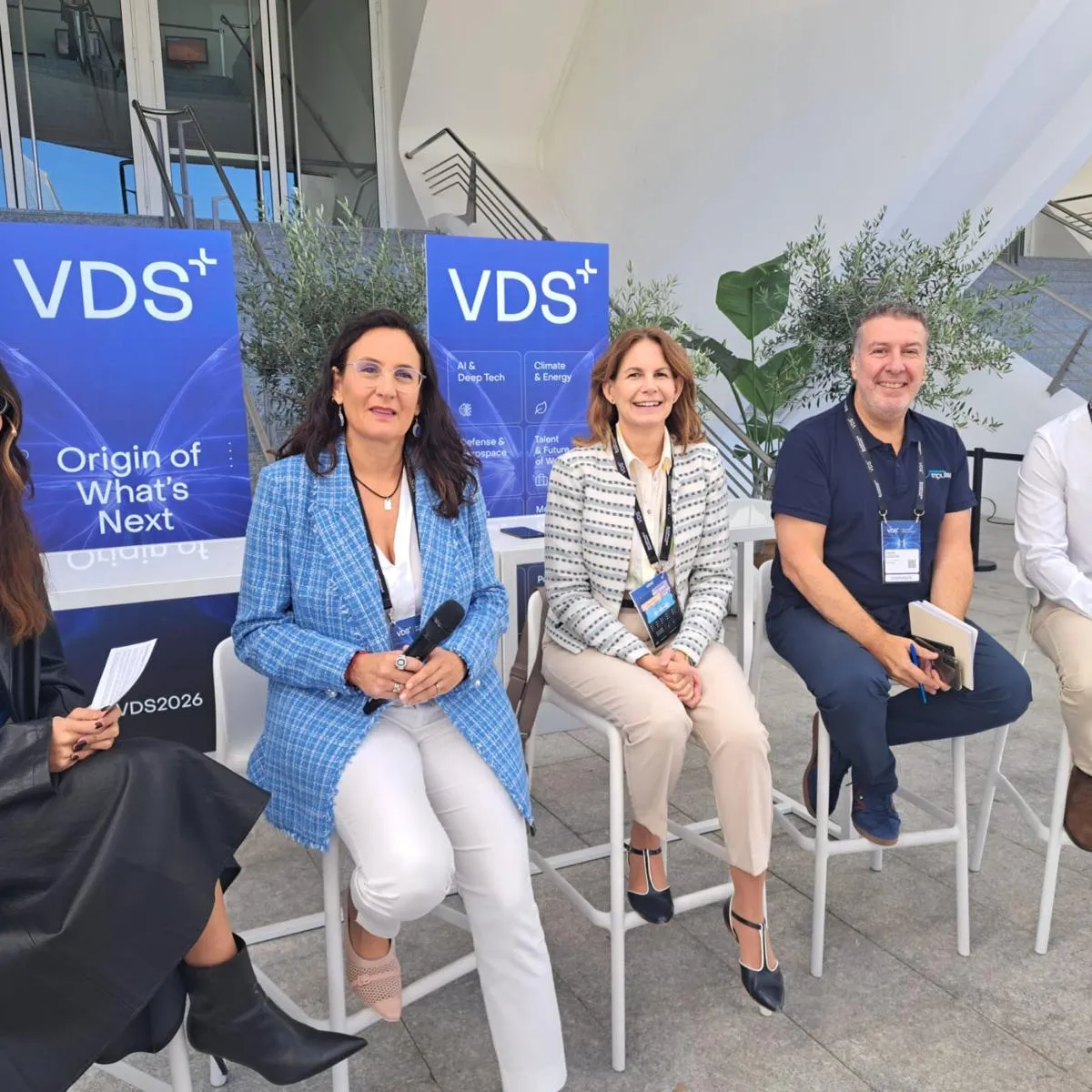



Ana Criado, second from the left, together with the participants in this event.
Diversity has ceased to be an aspirational value and has become a strategic lever. In this context, Ineco took part in the breakfast forum “Breaking Biases: Towards Safe and Inclusive Working Environments”, organised by Equipos y Talento, which brought together leading companies to discuss how to build organisations that are more open, equitable and resilient.
At the event, Ana Criado, from the Talent Training and Development Department, highlighted the fundamental role of psychologically safe environments in fostering high‑performing teams. “Inclusive teams are born in safe environments where every individual can express their talent. And these environments not only make people feel better – they also make companies work better,” said Ana Criado.
The gathering, which included representatives from companies such as Iberdrola, Abanca, Randstad Spain, Tendam and Endesa, provided an opportunity to share experiences and make progress in the implementation of organisational models that embrace diversity as a competitive advantage.
During her contribution, Ineco underlined its commitment to a corporate culture based on equal opportunities, driven by initiatives such as Plan Iguales, a programme aimed at the socio‑occupational inclusion of people in vulnerable situations. Since its launch, this initiative has enabled the recruitment of more than 400 professionals through different pathways, with impact both in Spain and internationally. In addition, the company’s Equality Plan reflects a sustainable commitment to continuous improvement through 79 measures related to recruitment, training, work–life balance, occupational health, communication and promotion, among others, with the aim of building a more equal, diverse and talent‑driven Ineco.
Beyond the figures, Ineco’s participation in forums of this kind points to an underlying trend: the consolidation of business models that link people’s wellbeing with organisational efficiency. A paradigm shift in which inclusion is no longer seen as an add‑on, but as a structural element of growth.