
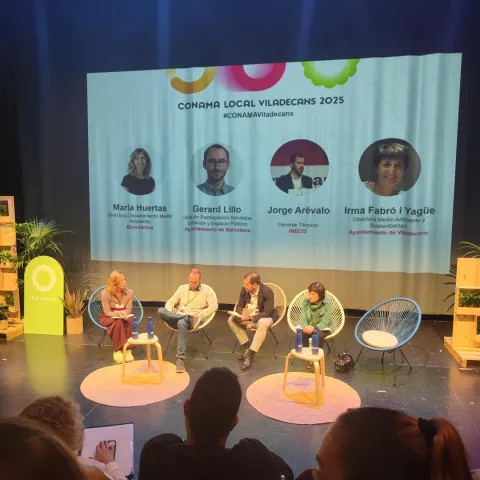
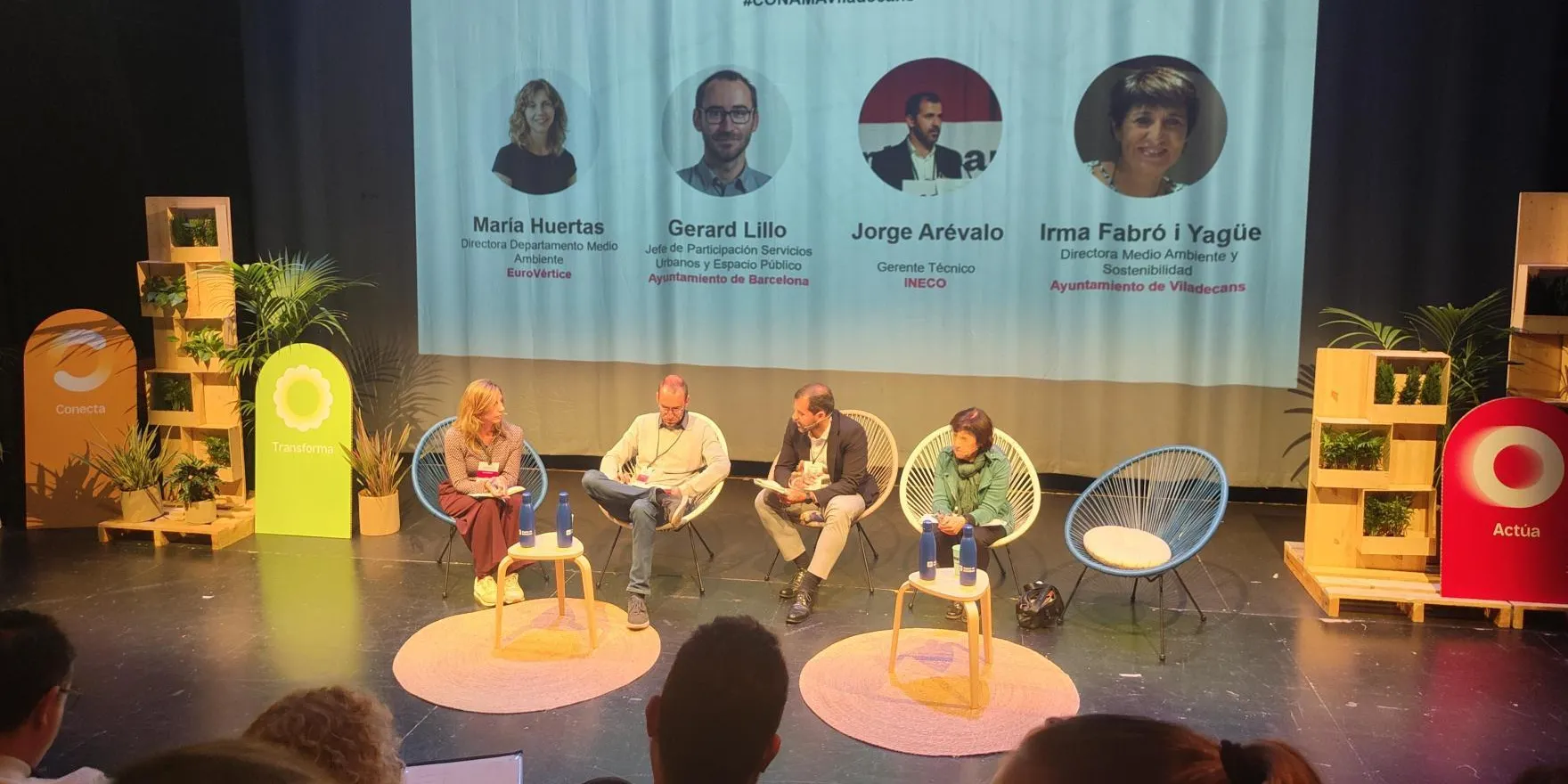
Image of the panel at CONAMA Local
CONAMA Local 2025, the event held in Viladecans focused on the challenges of decarbonization and urban resilience, featured the participation of Jorge Arévalo, Technical Manager for Environment and Territory at Ineco, who introduced and moderated the panel “A Green City Designed for Citizens.”
The conference, organized by the Conama Foundation, brought together local administrations, experts, and territorial professionals to reflect on the role of green infrastructure as a transformative axis for cities. In this context, Ineco shared its vision and experience as an urban consultancy specializing in integrated solutions for planning, citizen engagement, and ecological regeneration.
Opening the session, Arévalo emphasized that “green infrastructure must stop being understood merely as a measure to mitigate impacts and instead take on a central role as a driver of social and ecological regeneration.” He also highlighted the importance of involving citizens as active agents in the design, governance, and maintenance of green spaces, building stable and effective co-responsibility models.
The panel included Irma Fabró i Yagüe, Director of Environment and Sustainability at Viladecans City Council; Gerard Lillo, Head of the Participation Department at Barcelona City Council; and María Huertas Rubio, Head of the Environment Department at Eurovértice. Discussions focused on tools, frameworks, and best practices to integrate local knowledge into urban planning and advance toward more livable, inclusive, and resilient cities.
Green Infrastructure as a Comprehensive Urban Solution
Ineco’s participation in this forum also served to showcase its sustainable urban planning model, which combines territorial analysis, an ecosystem-based approach, digital technologies, and social participation. This approach enables local and regional governments to design urban strategies that address climate change challenges, improve public spaces, and optimize resource use.