
Ineco has maintained a long‑standing collaboration with Spain’s Ministry of Transport and Sustainable Mobility since 2013 in the development, maintenance and operation of the Observatory of Transport and Logistics in Spain.
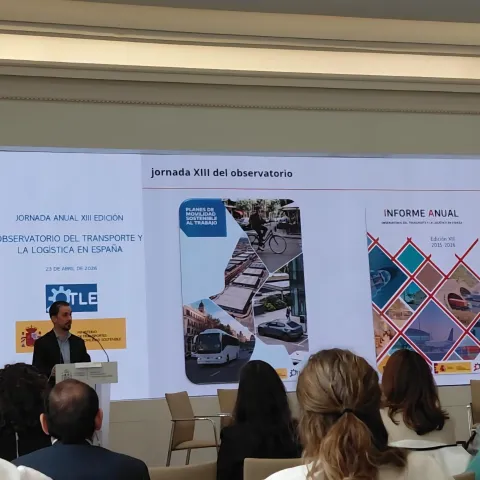
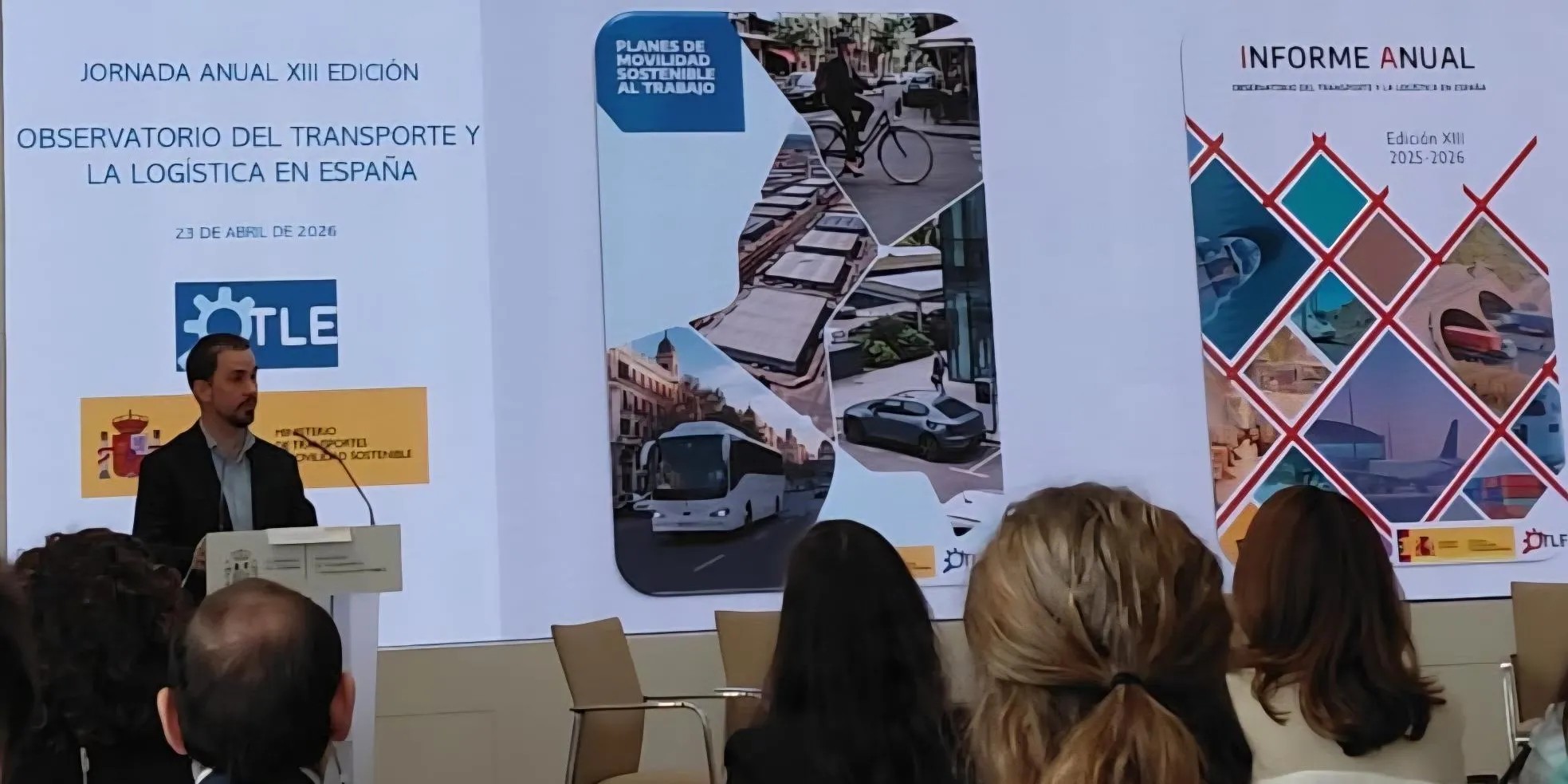
Spain’s Ministry of Transport and Sustainable Mobility has set out figures, diagnosis and a roadmap for workplace mobility in the latest edition of the Observatory of Transport and Logistics in Spain (OTLE). The monographic report presented at the organisation’s 13th annual conference places Sustainable Workplace Mobility Plans (SWMPs) at the centre of the debate, an instrument that will soon move from being voluntary to mandatory.
The new Sustainable Mobility Act requires companies with workplaces employing more than 200 workers( or more than 100 per shift) to design and implement these plans by December 2026. This deadline has been brought forward to one year following the recent approval of Royal Decree‑Law 7/2026, adopted as part of the response plan to the international crisis.
In Spain, private cars continue to dominate commuting patterns, with impacts that go well beyond environmental concerns. According to the report, more than 420 hours a year are lost in traffic congestion, a cost that erodes quality of life, increases stress and reduces rest time. Another significant figure highlights the safety dimension: in 2024, 14% of occupational accidents resulting in sick leave occurred “in itinere”, during journeys to or from work. Yet the problem is not limited to congestion or emissions, it is also about inequality. More than 5,000 industrial estates in Spain lack adequate public transport connections, restricting access to employment for people without a private vehicle.
Against this backdrop, sustainable mobility plans propose a transformation that goes far beyond replacing the car with another mode of transport. They range from organisational measures, such as remote working and flexible hours, to structural solutions including collective transport services, car‑sharing schemes, cycling infrastructure or fleet electrification.
The OTLE conference also served as a showcase for real‑world experiences and proposals. From company shuttle services to changing facilities that encourage cycling, as well as adapted working hours or incentives for shared transport, practical solutions are beginning to take shape.
Within this context, Ineco maintains a long‑standing collaboration with the Ministry of Transport and Sustainable Mobility, dating back to 2013, for the development, maintenance and operation of the Observatory of Transport and Logistics in Spain. Over the past year, this partnership has also materialised in the preparation of the 13th edition of the OTLE.
The Observatory draws on its own database, a wide range of indicators and several analytical products, notably annual reports, methodological annexes and monographic studies such as the one presented at this edition. Ineco plays an active role in the preparation, maintenance and updating of these contents through a multidisciplinary team of more than 20 professionals.
“The aim is to support companies in finding the most effective way to implement these plans,” said José Antonio Santano, Secretary of State for Transport, during the conference. This view was echoed by the Secretary General for Sustainable Mobility, Sara Hernández, who described the plans as an “opportunity” to enhance business competitiveness and improve employee wellbeing.